
Italian Prime Minister Giorgia Meloni has announced plans for new rules that would ban burqas and niqabs in schools and limit the number of foreign students allowed in individual classrooms.
Meloni announced the proposals on Sunday, September 20, while speaking at an event organised by the youth wing of her Brothers of Italy party in Rome. She said people who choose to make Italy their home should learn the Italian language, understand the country’s culture and respect its laws and rules.
The planned changes are mainly focused on schools and the integration of foreign families into Italian society. Under the proposals, there would be a legal limit on the number of foreign students who can be placed in the same classroom.
Meloni argued that schools should help children from different backgrounds integrate properly rather than allowing language and cultural differences to create divisions. She said Italian children should not find themselves becoming a minority within their own classrooms. However, she did not announce the exact number of foreign students that would be permitted in each class under the proposed rules.
Another part of the plan would require some parents of foreign students to attend Italian language lessons. This would apply particularly to parents whose children are experiencing serious difficulties integrating into the Italian school system.
Meloni said learning the language is an important part of building a future in Italy. She told supporters that people who come to the country should be prepared to learn Italian, understand Italian culture and follow the country’s rules. She described this approach as a serious way of welcoming and integrating newcomers.
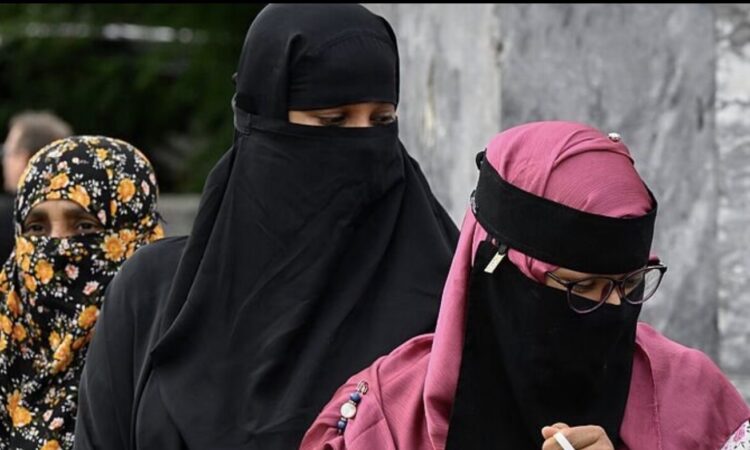
The government is also planning restrictions on face-covering clothing in schools. Meloni specifically said burqas and niqabs would be banned.
A burqa generally covers the whole body and face, including the eyes behind a mesh covering. A niqab covers most of the face but normally leaves the eyes visible. Both garments are worn by some Muslim women.
Meloni said students should attend school with their faces visible. She also linked the proposal to her government’s position on equality between men and women, saying this principle should apply both in Italian schools and wider society.
The proposals have not yet completed the process required to become law. The measures would first need government approval before going through the necessary parliamentary process.
The announcement is likely to add to the continuing debate across Europe about immigration, integration, religious freedom and face coverings.
Supporters of restrictions on burqas and niqabs argue that showing the face can be important for identification, communication and integration, particularly in places such as schools. Some also argue that full-face coverings raise questions about equality between men and women.
Critics, however, argue that Muslim women should generally be free to decide what they wear and that governments should be careful not to unfairly restrict religious expression.
Italy is not the only European country where face coverings have become a political and legal issue. Several other European countries already have restrictions on face coverings in certain public places.
Italy already has rules concerning clothing that makes identification difficult, although religious and cultural circumstances have previously been treated differently in some situations. The new proposal would create a clearer restriction specifically affecting schools.
Meloni’s announcement also comes as immigration remains an important political issue in Italy. Her government has repeatedly pushed for tighter migration controls while also arguing that people who legally settle in Italy should integrate into Italian society.
For Meloni, the latest proposals place schools at the centre of that approach. Her message is that foreign families who decide to build their lives in Italy should be given the opportunity to become part of the country, but they should also be expected to learn the language and follow its laws and social rules.
The proposals will now face further political and parliamentary debate as Italy considers how far the government should go in setting rules on integration, foreign students and religious clothing in schools.