More Than 100 Mosques Across the UK Reveal Why They Have Chosen to Start Opening Their Doors to the Public

More than 100 mosques across the UK have opened their doors to members of the public as Muslim communities try to encourage better understanding, friendship and communication between people from different backgrounds.
Mosques in cities including London, Birmingham, Sheffield, Manchester, Glasgow, Southend and Cardiff took part in the annual Visit My Mosque event. Members of the public, whether they are Muslim or not, were invited to enter the mosques, meet worshippers, ask questions and learn more about Islam and the lives of British Muslims.
Visitors were offered tea and cultural food, while some mosques organised talks, art exhibitions, workshops and activities involving people from different faiths. Organisers said the aim was to create an environment where people could speak openly, ask questions and learn directly from Muslims instead of depending only on information they see online or hear from other people.
The Visit My Mosque programme, organised by the Muslim Council of Britain, is now in its 11th year. Organisers said they believe the event has become increasingly important because of concerns about anti-Muslim hatred and tension between different communities.
Dr Wajid Akhter, secretary general of the Muslim Council of Britain, raised concerns about the way people receive information about Muslims online. He argued that social media and other online sources can sometimes contribute to hostility towards religious communities.
Sufia Alam, head of the Maryam Centre at the East London Mosque and London Muslim Centre, said their participation was intended to show that friendship and solidarity could be stronger than hatred.
She said people can sometimes have stereotypes or fears about Muslims without having had the opportunity to meet Muslim families, volunteers or worshippers personally. According to her, simply entering a mosque and having conversations with people can help challenge some of those assumptions.
The open days are taking place at a time when Muslim organisations have raised concerns about attacks and intimidation directed at mosques. According to figures cited in the original report from the British Muslim Trust, a mosque is attacked somewhere in Britain roughly every five days. The incidents recorded include intimidation, violence, damage to property, harassment, hate speech, online abuse and vandalism.
One mosque that has experienced serious incidents is the London Islamic Cultural Society in Haringey, north London. According to the report, a woman previously shouted abuse at worshippers and made a disturbing comment about Muslim children. In another incident, gas pipes at the building were reportedly damaged and altered in a way that allowed leaking gas to build up inside.
Despite those experiences, the mosque decided not to close itself off from the wider community. Instead, it joined the nationwide programme and welcomed people inside.
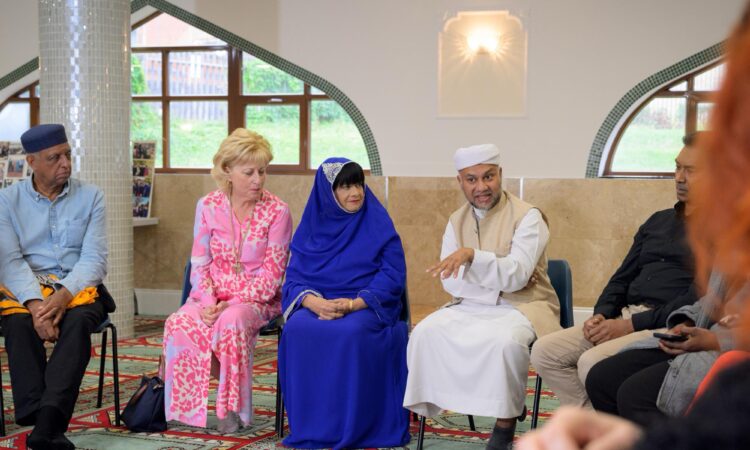
During the open day, people from different religious backgrounds visited the mosque. There was also a noticeable police presence, with officers greeting visitors as they arrived. Around two dozen people took part in a roundtable discussion where Muslims and non-Muslims talked about their experiences, their communities and why they wanted to learn more about each other.
Bibi Khan, who runs the London Islamic Cultural Society and is described in the report as the first woman to become president of a mosque in the UK, said it was important for Muslim communities to communicate directly with their neighbours.
She said some things people see in the media do not necessarily reflect what is happening inside local communities. She therefore believes mosques need to reach out and explain their faith, their work and what they believe.
The event also brought together members of Muslim and Jewish communities. Judith Prinsley, a deputy for Muswell Hill United Synagogue, attended the open day and spoke about the importance of communities supporting one another.
Both Muslim and Jewish communities have reported increased hostility following the Hamas-led attacks on Israel and the subsequent war in Gaza. Haringey has significant Muslim and Jewish populations, making communication between the communities particularly important.
Khan said people from the two communities should try to understand and support each other even when they disagree about certain issues. Prinsley also spoke about antisemitic graffiti near her synagogue and said some worshippers had become frightened about attending.
Meanwhile, another mosque in Peterborough also invited members of the public inside as part of the nationwide event. Faizan-E-Madina Mosque on Gladstone Street welcomed people of different faiths, as well as those with no religion, to visit the building.
Visitors were given an opportunity to observe prayers, speak with members of the Muslim community and ask questions about Islam.
Abdul Choudhuri, chairman of Peterborough’s Joint Mosque Council, said the aim was to break down barriers between communities and help people understand that they live and work alongside one another.
He said visitors were free to ask questions about Islam, Muslim beliefs and anything else they wanted to understand better. The organisers hoped that open conversations and information displays would help explain the basic principles of Islam and challenge misunderstandings.
For the Muslim communities taking part, the message behind the event was that people should have the opportunity to meet each other face to face. Organisers believe that allowing people to enter mosques, speak directly with worshippers and ask difficult or sensitive questions can help reduce suspicion and encourage greater understanding between Britain’s different religious and cultural communities.