Every Brit will have to pay BBC license – even without a TV Because Of This Shocking Reason

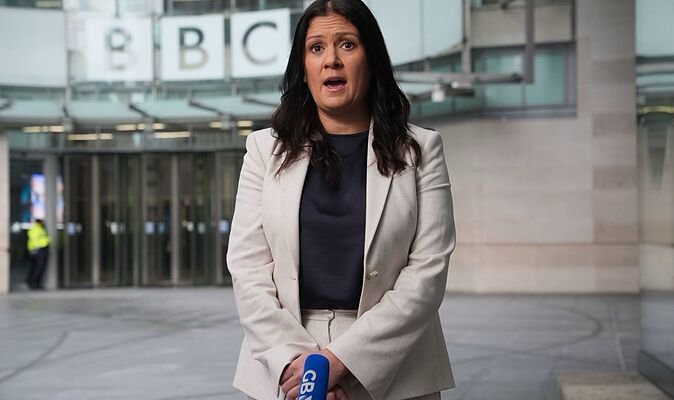
Millions of households across the UK could eventually be required to contribute towards funding the BBC, even if they do not own a television or regularly watch BBC programmes, under proposals being discussed by MPs.
Culture Secretary Lisa Nandy has been urged to consider major changes to the way the BBC is funded as the government looks at what should replace or reform the current TV licence system.
One proposal is a compulsory household levy. Instead of people paying for a TV licence based largely on whether they watch live television or use BBC iPlayer, households could be charged regardless of how they access television or BBC content.
The charge could potentially be collected through existing household bills, such as council tax, or possibly through internet service providers. However, the exact system has not been decided, and the government is considering a number of different options.
The idea comes as concerns grow about the long-term future of the BBC’s current funding model. The broadcaster depends heavily on income from the TV licence, but fewer households are now paying for one.
Around 23.3 million households currently have a TV licence, according to figures cited during the debate, but the number reportedly fell by more than half a million in the previous year. There are estimated to be around 27 million households with televisions in the UK.
The BBC also says its television, radio and online services reach around 94% of individuals each month, while a smaller proportion of households pay the licence fee.
Under the current rules, people generally need a TV licence if they watch or record live television on any channel or service. A licence is also required to use BBC iPlayer. However, people who only watch other on-demand streaming services and do not watch live television generally do not need one.
MPs on the House of Commons Culture, Media and Sport Committee believe this system is becoming increasingly outdated as viewing habits change.
More people now watch programmes through streaming platforms, smartphones, tablets and computers rather than relying on a traditional television set. MPs therefore argue that connecting BBC funding to television viewing may no longer provide a sustainable source of income.
The committee acknowledged that making every household contribute would be controversial. People who rarely or never use BBC services could question why they should be required to pay.
Despite those concerns, MPs said some form of universal funding could be necessary if the BBC is to continue operating as a national public service broadcaster.
The government is examining the issue as part of discussions over the BBC’s future Charter. The current Charter is due to expire at the end of 2027, meaning ministers will have to make important decisions about how the corporation operates and receives its funding in the years ahead.
Several alternatives are also being considered.
One possibility would be allowing more advertising on BBC services. Another would involve introducing a subscription system similar to commercial streaming platforms, where people pay only if they want access.
However, MPs warned that each alternative comes with disadvantages. A subscription model, for example, could mean the BBC would no longer be universally available, while greater reliance on advertising could significantly change the way the broadcaster operates.
The committee therefore argued that reforming the existing licence fee may be a more practical option. It suggested that BBC funding should no longer be directly connected to owning or using a television and said the government should remain open to a household levy as a possible long-term replacement.
Committee chair Dame Caroline Dinenage described the current debate as an important moment for the broadcaster’s future.
She warned that continuing with the existing system without reform could lead to the BBC gradually declining as its traditional source of funding becomes less reliable.
Dinenage also defended the BBC’s wider role in British life, pointing to its contribution to the country’s creative industries, news coverage and entertainment.
BBC leadership has also shown support for exploring a broader household-based funding system, arguing that it could be simpler than the existing licence arrangements.
Nandy has acknowledged that the fall in the number of people paying the licence fee represents a serious financial challenge for the broadcaster.
However, she has also raised concerns about simply introducing a new compulsory household charge.
She told the inquiry that although a household levy could make the funding system simpler, it could also place an unfair burden on some families.
With many households already facing pressure from everyday living costs, she suggested that asking every family to pay what could effectively feel like another household tax would be difficult.
For that reason, ministers are examining a wider range of possibilities rather than committing to one proposal.
The debate is therefore far from settled. A universal household charge has been recommended for consideration, but it has not yet been confirmed as government policy.
The committee also raised concerns about the amount of older BBC programming available through iPlayer. Some programmes cannot simply be uploaded because their rights belong to independent production companies rather than the BBC itself.
MPs encouraged the broadcaster to negotiate agreements that could make more of its historic programmes available to viewers online.
Another recommendation focused on social media and online news. The committee called for measures that would give trusted public-service news greater visibility on major digital platforms, arguing that this could help people find reliable information in an online environment where misleading content can spread rapidly.
The biggest issue, however, remains how the BBC will be paid for in the future.
With fewer households buying traditional TV licences and viewing habits continuing to move towards streaming and online services, pressure is growing for the government to find a replacement or significantly reform the existing system.
If a universal household levy were eventually introduced, it would represent one of the biggest changes to BBC funding in decades and could mean households contributing even when they do not own a television or personally choose to use BBC services.