
A group of activists closely connected to the MAGA political movement has reportedly written a detailed draft executive order that they believe could dramatically change how elections are handled in the United States.
The proposal suggests giving the president extraordinary powers to step in and directly control parts of the country’s election system if he declares that the nation is facing an emergency related to election security.
According to reports, the document is 17 pages long and was created in April 2025. It carries a formal title about protecting election integrity and preventing foreign interference. Supporters of the proposal argue that America’s election systems are under serious threat and that normal election procedures are no longer enough to guarantee fair results.
They claim that because elections involve national security concerns, the president could legally use emergency powers to override certain state authorities that traditionally manage voting.
In the United States, elections are normally run by individual states, not the federal government. Each state sets its own voting rules, manages voter registration, and oversees ballot counting.
The draft executive order challenges that long-standing system by suggesting that federal intervention could become necessary if election security is considered compromised. Critics say such a move would be highly controversial because it would shift power away from states and concentrate it in the hands of the president.
The proposal relies heavily on claims connected to the 2020 presidential election. Some MAGA activists continue to argue that foreign governments interfered with the vote, with China often mentioned as the main suspect in their theory.
These allegations echo earlier accusations made after the 2020 election, when mail-in voting was repeatedly attacked and electronic voting companies like Smartmatic and Dominion were accused of manipulating machines to help Joe Biden win.
Those accusations were investigated by courts, election officials, cybersecurity experts, and bipartisan review panels. No evidence was found to support claims that voting machines were rigged or that widespread fraud changed the election outcome.
Because of the false allegations, both Smartmatic and Dominion filed defamation lawsuits against media organizations and political figures who promoted the conspiracy theories, eventually winning major settlements after the claims collapsed under legal scrutiny.
Despite those outcomes, the draft executive order argues that election vulnerabilities still exist and may even be worsening. The document claims that foreign actors, possibly working together with people inside the United States, have exploited weaknesses in election infrastructure.
It alleges unauthorized remote access to election equipment, manipulation of vote totals, illegal ballots being counted, and voter registrations involving people who should not be eligible. The authors of the proposal describe these alleged problems as an “extraordinary threat” to national security.
Based on that reasoning, the draft suggests the president could declare a national emergency related to elections. Under U.S. law, a national emergency allows the president to activate special powers that are normally not used during peacetime. Supporters of the plan believe those powers could temporarily place federal authorities in charge of enforcing new election rules across the country.
Among the measures listed in the proposal are strict identification requirements for voters. States would reportedly be required to demand proof of identity, proof of U.S. citizenship, and confirmation of permanent residency before someone could cast a ballot.
Advocates argue these steps would prevent fraud and restore public confidence in elections. Opponents, however, worry such requirements could make voting more difficult for certain groups of people and could lead to legal battles over voting rights.
Legal experts have noted that such an executive order would almost certainly face immediate challenges in court. The U.S. Constitution gives states significant authority over elections, and any attempt by the federal government to take control could spark a major constitutional conflict between the presidency, Congress, state governments, and the judiciary.
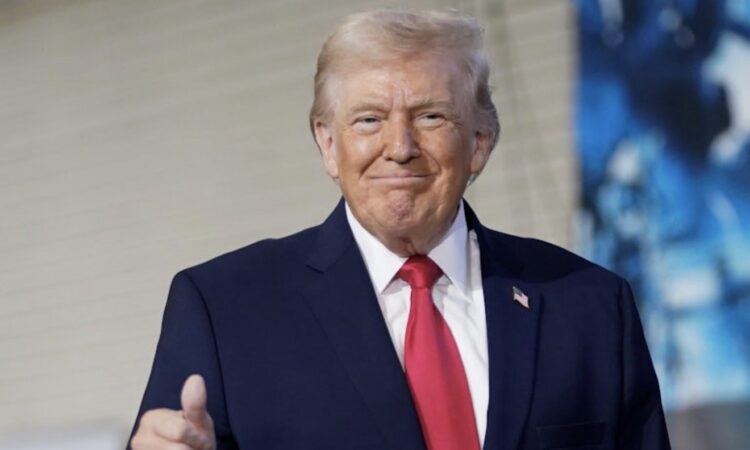
When journalists asked Donald Trump about the proposed executive order, he appeared surprised by the question. He asked reporters where they had heard about it and said he was not pursuing such a plan. Trump added that he had never heard about the draft order, distancing himself from the activists who created it.
Even though Trump denied involvement, the existence of the proposal has fueled debate among political observers, lawmakers, and election experts. Supporters see it as a strong response to what they believe are unresolved election security concerns. Critics view it as a dangerous idea that could undermine democratic norms by allowing a sitting president to interfere directly with how elections are conducted.