President Donald Trump Blames Joe Biden for What Angry Americans Are Now Accusing Him of Causing


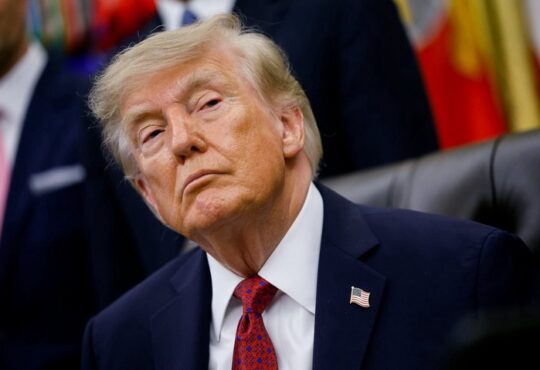
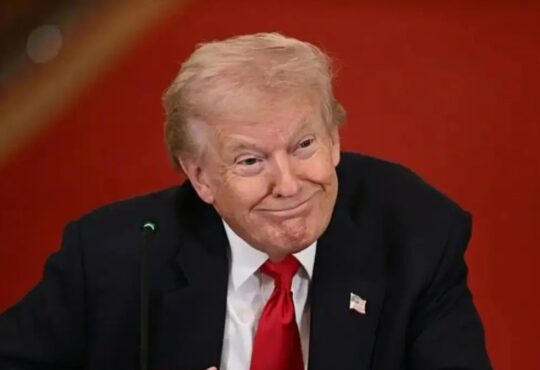
Nearly two years after returning to the White House, President Donald Trump is blaming former President Joe Biden and his administration for the higher prices many Americans are still facing.
In a post on Truth Social on September 14, Trump said the price increases seen across the United States were caused by Biden’s administration, not his own.
Trump also spoke about the cost of oil, arguing that oil prices had been higher under Biden. He claimed that, apart from the temporary situation with oil, prices in the country were falling sharply.
The president also predicted that oil prices would fall significantly once the military conflict involving Iran comes to an end. He suggested that he believes this could happen soon.
Trump has repeatedly argued that his administration is bringing prices down. During a Republican midterm convention in Dallas on September 9, he used the price of eggs as one example.
Trump said egg prices had fallen below the level seen during his previous administration. He also claimed that food prices and the prices of many other goods were falling quickly.
There has indeed been a major fall in some individual prices, including eggs. However, the latest official inflation figures show that the overall picture is more complicated.
According to the U.S. Bureau of Labor Statistics, consumer prices were 3.4 percent higher in August 2026 than they were in August 2025. Prices also increased by 0.4 percent between July and August after seasonal adjustment.
Food is one area where American families are still paying more overall. Food prices were 2.7 percent higher than a year earlier, while the cost of food bought for use at home was 2.2 percent higher. This means Trump’s broad claim that food prices are rapidly falling does not describe every part of the official data.
Energy costs have also increased significantly. The official figures show that energy prices were 16.3 percent higher than a year earlier, while gasoline prices were up 27.4 percent. Gasoline also increased by 3.9 percent between July and August after seasonal adjustment.
At the same time, not everything became more expensive. Some categories recorded falling prices. Dairy and related products were down 0.3 percent compared with a year earlier, used cars and trucks were down 2.3 percent, and motor vehicle insurance was down 5.1 percent.
This mixed picture is important because inflation does not mean that every product changes in price at the same time or by the same amount. Some goods can become cheaper while the overall cost of living continues to rise.
Trump’s comments have also attracted criticism from people who argue that, as the current president, he should take responsibility for economic conditions during his administration rather than continuing to blame Biden.
Others, however, point out that presidents inherit economic conditions from previous administrations and that changes in inflation can be affected by many factors beyond the direct control of one president.
The debate also involves an important difference between inflation and actual prices.
Inflation measures how quickly prices are changing. If inflation falls, that does not automatically mean groceries, fuel, rent and other everyday expenses become cheaper. It can simply mean that prices are still increasing, but at a slower rate.
For example, if something rises from $10 to $12 during a period of high inflation and later rises from $12 to $12.20 when inflation slows, inflation has fallen but the item itself has not returned to $10.
That helps explain why Americans can hear that inflation has fallen significantly from its previous peak while still feeling that everyday life is expensive.
Inflation reached 9.1 percent in June 2022 during Biden’s presidency, when the United States was dealing with strong price pressures following the pandemic and disruptions to global energy and food markets.
Inflation is now far below that 2022 peak, but prices for many goods and services remain higher than they were several years ago.
The latest August 2026 figures show just how mixed the situation has become. Overall inflation stood at 3.4 percent, food prices were up 2.7 percent and gasoline was up 27.4 percent compared with a year earlier. At the same time, some individual categories became cheaper.
So while Trump says prices are rapidly coming down and argues that Biden is responsible for the higher costs Americans experienced, the official figures show a more complicated situation. Some prices have fallen, but the overall Consumer Price Index remains higher than it was a year ago.
For American households, the biggest question is not simply which president gets the blame or credit. What matters in everyday life is whether the cost of groceries, fuel, housing and other necessities becomes more affordable over time.