Obama Stops Pulling Punches and Calls Trump’s Press Ban What It Is As Other Networks Hit Trump with Major Blow

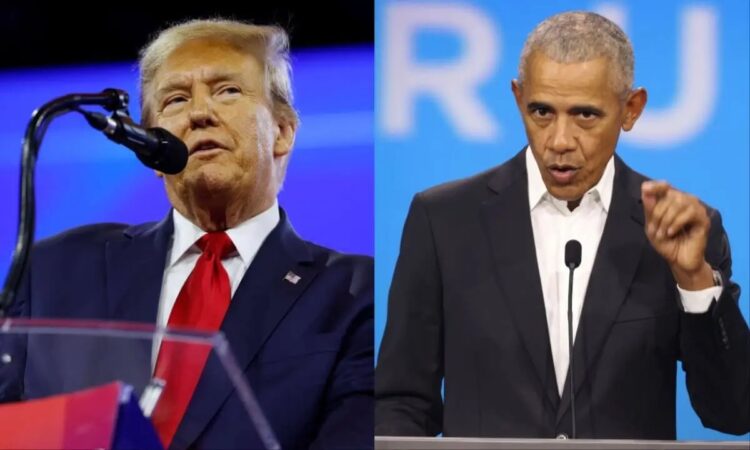
Former President Barack Obama has criticised President Donald Trump over his decision to block CNN, MS NOW and Politico from the White House, saying he could hardly imagine what the reaction would have been if he had taken similar action against Fox News while he was president.
Obama made the comments while speaking about democracy during an event at Colgate University in Hamilton, New York. His remarks came as the dispute between the Trump administration and several major American news organisations continued to grow.
During the discussion, Obama asked his audience to imagine what would have happened if, during his time in office, he had simply decided that Fox News reporters were no longer allowed into the White House because he did not like the network’s coverage.
He said such a situation would have been difficult for him to imagine, despite the often difficult relationship his administration had with Fox News.
Obama used the example to make a wider point about democracy. He argued that having laws and democratic institutions is not enough on its own. In his view, political leaders and the public must also respect the principles and traditions that allow those institutions to work properly.
He said recent events had gone beyond some of the things he thought he would ever see in American politics.
Obama said he tried to imagine what would have happened if he had announced during his presidency that Fox News was no longer welcome at the White House. He described the idea as “unimaginable.”
His comparison has also attracted criticism because his own administration had a serious dispute with Fox News in 2009. At the time, the Obama White House attempted to exclude Fox from one round of interviews with a senior administration official. Other television networks objected, and Fox was ultimately included. That episode was different in scope from the current dispute, but it has resurfaced as critics challenge Obama’s comparison.
The latest controversy began after Trump announced that CNN, MS NOW and Politico would be banned from the White House. Trump accused the organisations of repeatedly publishing what he considers false and unfair reporting about him and his administration.
Journalists from the three organisations were subsequently denied access to the White House, and press credentials were taken from reporters.
Trump has strongly defended his decision. He has argued that he supports freedom of the press but believes news organisations should report fairly and accurately. His administration has also argued that access to the White House is a privilege rather than an automatic right.
CNN, MS NOW and Politico strongly disagree.
The three organisations filed a federal lawsuit against the Trump administration, arguing that their exclusion from the White House violates constitutional protections for freedom of speech and freedom of the press, as well as due-process protections. They are asking a federal judge to restore their access.
The organisations argue that allowing a president to remove journalists because he dislikes their reporting could create a dangerous precedent. Their position is that the government should not be allowed to decide which journalists receive access based on whether their coverage is favourable or critical.
The dispute has now grown beyond the three organisations directly affected.
The major television networks that normally take turns providing White House pool coverage also became involved. ABC News, CBS News, CNN, NBC News and Fox News agreed to suspend pooled television coverage of Trump’s presidential events after CNN was prevented from carrying out its scheduled pool responsibilities.
The White House press pool plays an important role because there is not always enough space for every journalist or television crew to follow the president. Selected journalists and camera crews therefore cover certain events and share their material with other news organisations.
The decision by other networks to suspend their participation showed how quickly the dispute had developed from a disagreement involving three organisations into a much broader argument about presidential power, media access and press freedom.
The White House Correspondents’ Association has also opposed restrictions based on a news organisation’s coverage. Its position is that constitutional press protections should not depend on whether a president approves of a particular organisation’s reporting.
Republicans and Democrats have offered sharply different views of the controversy.
Republican Senator John Barrasso defended Trump’s position and emphasised that journalists have a responsibility to report fairly. He also compared the controversy with Trump’s removal from major social-media platforms following the January 6, 2021 attack on the U.S. Capitol.
Barrasso argued that Trump had previously faced restrictions of his own and said he did not believe the current media dispute would have a major effect on voters in the approaching midterm elections.
Democratic Senator Cory Booker took a very different position. He argued that the White House’s actions violated the First Amendment and accused Trump of targeting journalists who report critically on his administration.
The disagreement reflects a much wider debate in the United States over the relationship between presidents and the media.
Presidents from both major parties have regularly complained about news coverage they considered unfair, inaccurate or politically motivated. The Obama administration itself had serious confrontations with news organisations, including Fox News, and faced criticism over investigations involving journalists.
However, the current legal dispute centres on whether the Trump administration can deny entire news organisations White House access because of objections to their reporting.
Trump maintains that his action is aimed at organisations he believes repeatedly spread false information. The affected outlets argue that allowing the government to punish news organisations over their coverage would threaten independent journalism.
That question is now before a federal court. CNN, MS NOW and Politico are seeking restoration of their White House access, while the Trump administration is defending its authority to control access to the White House complex.
Obama’s comments have added another high-profile voice to the argument. His Fox News comparison was intended to show how unusual he believes the current situation is, but it has also renewed discussion of his own administration’s past clashes with the media.
For Americans watching the dispute, the issue now goes beyond whether someone likes CNN, Fox News, MS NOW, Politico or any other particular organisation. The larger legal question is how far a president can go in restricting journalists’ access to the White House and whether such restrictions can be based on dissatisfaction with their reporting.
The courts will now have an important role in determining whether the Trump administration’s actions are consistent with the First Amendment and other constitutional protections.
Until that question is resolved, the confrontation between the White House and the media organisations is likely to remain part of the wider national debate over press freedom, government power and the role of independent journalism in American democracy.