
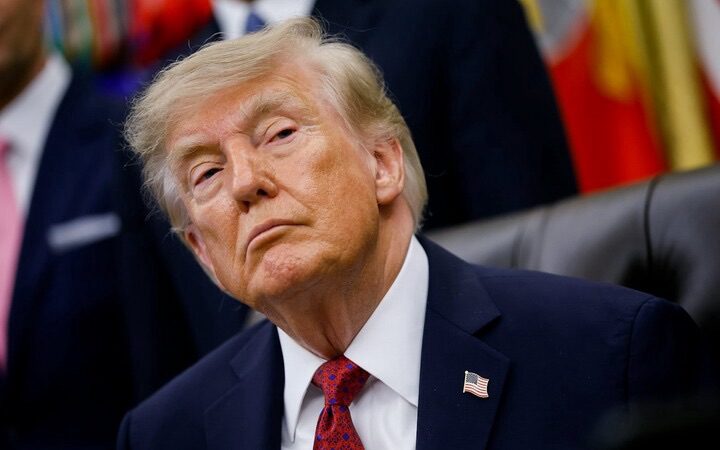
Donald Trump’s attempt to stop some news organisations from accessing the White House is now creating a much bigger dispute over press freedom and the limits of presidential power.
The controversy began after Trump openly said that certain media organisations had been excluded because he was unhappy with the way they were reporting on him and his administration. His comments have now become important because the affected news organisations are challenging the decision in court.
The outlets filed a lawsuit on Monday, arguing that the White House punished them because of their journalism. They are pointing to Trump’s own public comments as evidence that the decision was connected to dissatisfaction with their coverage rather than ordinary security or administrative reasons.
The legal dispute could therefore become an important test of how far a president can go when deciding which journalists and news organisations are allowed access to White House events.
The situation has also produced an unexpected response from other members of the media. Some news organisations reportedly showed support for the excluded outlets by suspending their participation in pooled White House coverage. Pool arrangements normally allow a smaller group of journalists to attend events and then provide information, photographs and video to a much wider group of media organisations.
That response reportedly resulted in Trump receiving less television coverage from some White House events, meaning an effort intended to restrict particular organisations may have reduced the amount of media attention available more broadly.
At the same time, Axios reported that some Trump advisers believe the president has become increasingly frustrated by political setbacks. According to the report, advisers privately described Trump as feeling “powerless” as his administration faces mounting political difficulties ahead of the midterm elections.
Axios linked those frustrations to the dispute with the media, reporting that people around Trump believe he has been returning to more confrontational tactics as pressure increases.
However, those descriptions represent the reported views of advisers and should not be treated as an independent assessment of Trump’s motives or state of mind.
The bigger question is whether the White House can legally restrict access to journalists because officials dislike their reporting.
Kristy Parker, counsel at Protect Democracy, argued that the dispute raises serious constitutional questions. She believes the restrictions are unlikely to survive legal scrutiny if the news organisations can demonstrate that they were excluded in retaliation for their reporting.
The First Amendment protects freedom of speech and freedom of the press in the United States, but the exact legal questions surrounding White House access can be complicated. Presidents and their administrations have authority over security and access arrangements, but courts have previously recognised that government officials cannot necessarily use access decisions simply to punish journalists for protected reporting.
That distinction could become central to the lawsuit.
If the White House can show that restrictions were based on legitimate operational, security or administrative reasons, its legal argument could be stronger. But if the organisations can establish that they were specifically targeted because Trump disliked their coverage, the president’s own public statements could become significant evidence in the case.
Parker also suggested that the controversy should be viewed as more than an argument between Trump and journalists. In her view, it raises a wider question about whether government power can be used against institutions that criticise those in office.
The courts will ultimately have to determine whether the White House acted unlawfully. Until then, the dispute is likely to remain part of the wider debate over presidential authority, press access and First Amendment protections.
What initially appeared to be another confrontation between Trump and the media has therefore developed into a legal battle that could have wider consequences for how future administrations deal with journalists whose reporting they strongly dislike.