Muslims say it is racist to tow cars parked illegally outside a mosque Because of These Strong Reasons

People who attend the Masjidu Salaam Mosque in Lewiston say they feel singled out and unfairly treated after a series of incidents where cars were ticketed and towed during prayer times.
Many of them believe the situation goes beyond simple parking enforcement and has started to feel like a pattern of targeting, especially on Fridays when attendance is highest.
According to the mosque, police officers carried out repeated parking checks around the area during services, leading to multiple cars being fined or removed.
A spokesperson said this level of enforcement felt excessive and unnecessary, and accused authorities of focusing on complaints driven by political or cultural tensions instead of handling more serious community safety concerns.
On the other side, nearby businesses strongly disagree with that view. Owners say the problem has been building for a long time, with worshippers regularly parking in private lots without permission, blocking entrances, and taking up spaces meant for customers.
Businesses including a butcher shop, a bakery, and the towing company Mid Valley Motors say they have lost customers and faced daily disruptions because of it. From their perspective, the issue is not about religion at all, but about people ignoring parking rules and expecting special treatment.
Matthew Theriault, who runs the towing company, has been very direct about his stance. He says anyone who parks illegally will have their car towed, no matter who they are.
He pushed back strongly against accusations of racism, saying the same rules apply to everyone and pointing out that he has even towed non-Muslims, including a government worker, for breaking parking rules. To him, it is simply about enforcing property rights and keeping access clear for businesses.
The situation became even more heated when loud music started being played from the towing company’s property during mosque services. Songs like the US national anthem, children’s tunes, and novelty tracks such as “What Does the Fox Say?” were blasted at high volume.
Some mosque attendees felt this was disrespectful and deliberately disruptive, especially during prayer. A few also believed certain songs were chosen to mock them, which added to the sense of tension and hostility.
Theriault rejected those claims and said there was no hidden message behind the music. He described it as normal activity at his business and even said his child had been dancing to some of the songs, suggesting it was harmless. He also defended playing patriotic music, saying being proud of the country should not be seen as offensive.
Police were called about the noise complaints and did speak to the business, but according to some worshippers, the music continued afterward. This added to their frustration, as they felt their concerns were not being taken seriously.
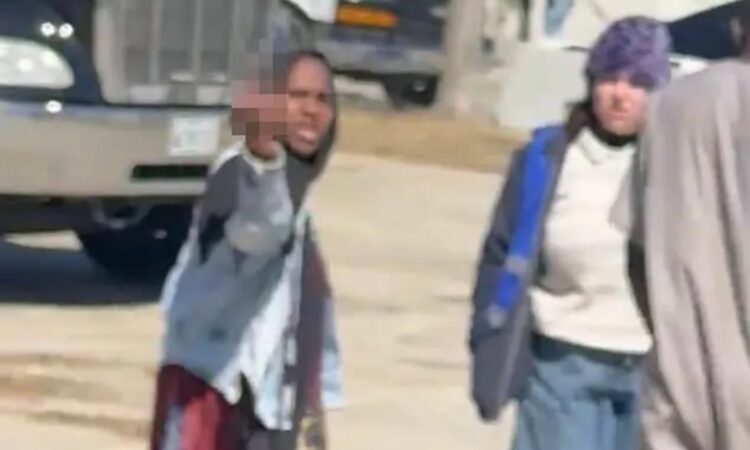
Images and posts shared online have made the situation more public and more emotional. One widely shared photo showed a woman wearing a hijab reacting angrily after her car was towed, which sparked further debate and strong opinions from both sides.
Supporters of the businesses say the reaction shows people refusing to take responsibility for breaking rules, while supporters of the mosque say it shows how upsetting and unfair the situation feels to those affected.
The mosque itself operates from early morning until late at night, and Friday prayers draw the largest crowds, which puts the most pressure on parking in the area. Recently, permission was granted to expand the mosque’s parking lot, which could help reduce the problem in the future. However, that change will take time, and for now, tensions remain high.
At its core, the situation has turned into a bigger argument about fairness, respect, and where to draw the line.
One side sees strict enforcement of rules that are necessary to protect businesses, while the other side sees a pattern of actions that feels targeted and disrespectful toward a religious community. Both sides feel they are in the right, and without a clear compromise, the conflict continues to grow.