Donald Trump will go nuts if this happens after his big State of the Union speech

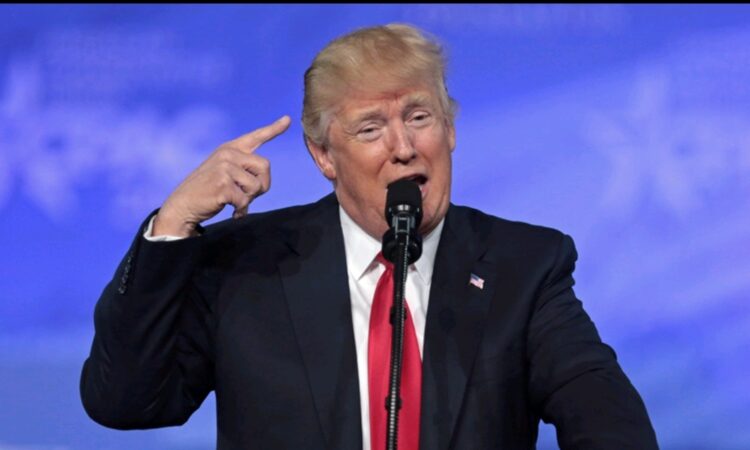
Security fences have been put up around the U.S. Capitol before the State of the Union speech. I’m not planning to watch the speech on Tuesday night, and I suggest you consider skipping it too.
I actually hope that the TV ratings show that fewer people watched this speech than any other State of the Union in recent years. That would probably bother Trump a lot.
But there are more important reasons not to tune in.
For one thing, I don’t think he deserves our attention. In my view, he has damaged the presidency even more than he did during his first term. I believe he has disrespected the office and the responsibilities that come with it.
He has been accused of taking bribes and using his power in ways that go beyond what the Constitution allows. He has tried to take over powers that belong to Congress.
He has used the Justice Department against people he sees as enemies and rewarded people who are loyal to him. He has ignored laws and treaties, clashed with long-time allies, and failed to carry out his duty to make sure the laws are properly enforced.
He repeats false statements so often that it feels constant. To me, that pattern of behavior shows dishonesty and a lack of loyalty to the country.
Another reason not to watch is that we already know what he’s going to say. He has repeated the same claims again and again. He says the economy is doing great, that he has ended multiple wars, that he has brought peace to the Middle East, that the country is safer, and that the 2020 election was stolen from him.
He keeps repeating these points in speeches and interviews. If someone keeps repeating the same claims, the goal is often to make people believe them through repetition. There’s no need to give more time and attention to statements we’ve already heard many times.
He also speaks as if he represents only the people who voted for him. He praises “his” supporters and speaks negatively about those who didn’t vote for him or who criticize him. A president is supposed to serve the entire country, not just one group.
When he talks about cutting funds to so-called “blue states,” including more than $1.5 billion in grants that Congress had approved, it sends the message that he does not see himself as responsible for all Americans. If he does not act like the president of everyone, it’s hard to feel motivated to treat him that way by watching and supporting the event.
Beyond that, many people feel they already understand the real condition of the country. Large corporations and wealthy Americans may be doing well, but small businesses and many working families are struggling.
Trump promised that tariffs would reduce imports, shrink the trade deficit, and bring manufacturing jobs back. Instead, the trade deficit in goods reached a record high last year, and manufacturers cut 108,000 jobs.
During the 2024 campaign, he also promised to lower prices. However, inflation has continued, with prices rising at a 3 percent annual rate in December. Many Americans are struggling with the cost of living, yet he has described concerns about affordability as “fake news,” which makes him seem out of touch with everyday problems.
He said he would control immigration, but many Americans think his approach has gone too far. Sending federal agents into cities has led to chaos and serious harm.
He also promised to avoid getting involved in foreign conflicts, yet he has taken aggressive actions abroad, including actions involving Venezuela, and is now considering attacking Iran. Tensions in the Middle East have increased the risk that key oil routes could be disrupted, which has already pushed up the price of Brent crude oil and could make inflation worse.
For all of these reasons, I’ve decided not to watch the State of the Union. I think others might consider doing the same.
Some members of Congress are planning to boycott the speech and instead attend a separate event called “The People’s State of the Union” on the National Mall. Supporters believe this is a way to express disagreement peacefully. Some people also question why Supreme Court justices would attend after he publicly criticized several of them for rulings that went against him, using harsh and insulting language.
Choosing not to watch is a small but symbolic act. For some, it feels like one way to express disapproval.
On a related note, I recently asked readers whether I should attend a dinner party where a strong Trump supporter would be present. About 31 percent said I should go but avoid talking about Trump, while 29 percent suggested I decline the invitation. I decided to go. The evening did not go well. Even though I tried to avoid politics, I was drawn into an argument. I may have felt that I won the debate, but I didn’t handle myself well and regretted going. In hindsight, I probably should have skipped it.