I’m An Outsider Living Deep In MAGA Country. This Is What Most People Will Never Know About Life Here.

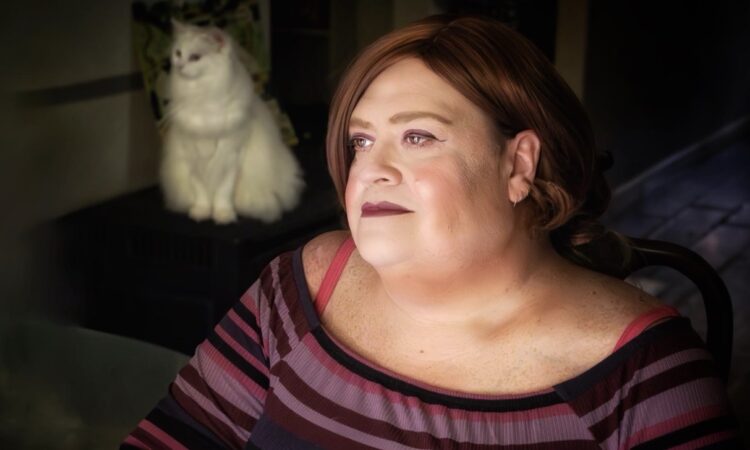
I still don’t know if I truly belong here.
The morning air smells like damp metal and old cigarette smoke. I rest my coffee on the porch railing and watch a woodpecker pecking hard at a dead tree like it refuses to give up. Somewhere down the road, an ATV engine roars to life. A rooster crows late, as if it overslept. Out here, noise feels important. It’s how people remind the world and maybe themselves — that they’re still here.
They call this place a holler, but most days it feels more like an echo. Sounds travel through these hills and come back weaker, like even the mountains get tired of carrying people’s stories. The creek keeps flowing no matter what happens in the world. Frogs sing without caring who’s running the country. The trees whisper things older than religion. And me? I’m still learning how to exist inside all of it.
I live at the bottom of a hollow in Dickenson County, Virginia. Mist hangs low in the mornings, and the past never really leaves. The dirt road curves down like an old scar that healed but never quite faded. Everyone here knows everyone’s history. People remember what your family did decades ago. They remember who you loved, who you hurt, and who you were supposed to be. Appalachia can love you deeply, but it rarely forgets the version of you it decided was real.
These days, people call me Maya. Some folks still pause when they say it, even though it’s been more than five years. I imagine the gossip spreading quietly through gas stations and small diners, growing like vines in hidden corners. I came out as a transgender woman at 44, right in the middle of the pandemic, in one of the most conservative counties in the state. While the world on television seemed to be falling apart, I was finally starting to put myself together.
When I told people who I really was, there were no celebrations. No big dramatic moment. Just silence. Heavy, pressing silence. I had spent most of my life pretending to be someone easier for this place to accept. I was the reliable one, the funny one, the man people expected me to be even though I never felt right in my own skin. Then the pandemic came. Everything slowed down. Streets emptied. Time stretched endlessly. For the first time, I couldn’t run from myself anymore.
One morning, I looked in the mirror tired, unshaven, worn down and realized I would rather live honestly and face rejection than keep living a lie just to be accepted. I told my daughter first. She smiled, hugged me tightly, and told me she understood. I cried harder than I had in years. Some friends stayed. Some didn’t. The ones who stayed became my foundation.
Coming out wasn’t rebellion. It was survival. I knew I might lose safety, friendships, even belonging. But the alternative felt like slowly disappearing while still breathing.
I had already learned something about survival years earlier when I lost my leg below the knee. Even now, I sometimes dream I can still feel it — the weight, the movement, the phantom itch that never fully goes away. Losing my leg taught me how much the body can endure. Transitioning taught me how much the soul can endure. I joke about being part machine now, but honestly, my prosthetic feels more real than the person I used to pretend to be.
Hormones didn’t just change my body. They changed how I felt the world. Emotions came back — grief, joy, calm moments, even boredom. I used to fear boredom. Now it feels peaceful, like finally breathing after holding air too long. Becoming myself wasn’t one single moment. It’s something that keeps happening, little by little, every day.
Living as a transgender woman with progressive views in a deeply conservative area is complicated. People here can be warm and harsh at the same time. They’ll pray for you on Sunday and vote against people like you on Tuesday. You learn quickly how to read a room the long stare at the grocery store, the cashier avoiding eye contact, the neighbor suddenly fascinated by the ground when you walk past.
There’s a maintenance worker who fixes things at my house for almost nothing but refuses to say my name. A cashier once whispered, “You look nice today,” like kindness itself might get her in trouble. Even family members who won’t speak to me still quietly follow my writing online. Around here, kindness often arrives disguised.
I remember standing in line at Food City when a man in camouflage muttered something cruel about “men in dresses.” His wife smacked his arm and told him to stop. She didn’t even look at me, but her words gave me space to keep my dignity. Out here, small moments like that matter. Sometimes the same person who insults you might also help pull your car out of a snowy ditch. People rarely talk about it afterward. Life moves on.
This region has struggled. Coal jobs disappeared. Work became scarce. Hope sometimes feels like something being sold cheap at the dollar store. Yet flags still hang proudly in yards, bigger than the homes themselves. I drive past political signs and think about how people struggling to afford medicine still believe powerful leaders will save them. It’s complicated. Pain and loyalty live side by side here.
Despite everything, I still love this place — or maybe I love what it used to be, or what it could become again. I want to believe people can find their way back to compassion somewhere between fear and understanding.
When the world feels too small, I create new worlds. I paint miniature battle scenes, build fantasy landscapes, and lose myself in colors and imagination. Creation feels like prayer to me. Art becomes a way to rebuild myself again and again.
I’m part of a small mutual-aid art group called Patchwork Kinfolx. We share food, art, warmth, and whatever resources we have. None of us are rich, but we show up for each other. We help queer people pay rent, organize art shows in borrowed spaces, and create gatherings filled with laughter and acceptance. For a few hours at a time, fear disappears and belonging takes its place.
In a place where art funding disappears and creativity is often dismissed, we built our own community with folding chairs, paint-stained tables, cheap coffee, and open hearts. When someone’s heater breaks, someone brings blankets. When someone has no groceries, food appears without questions. Compassion becomes our currency.
But even with that support, loneliness still visits often. Living where your identity feels foreign creates a quiet isolation. I see vibrant queer communities online and wonder what it would feel like to walk freely without calculating safety first. Sometimes exhaustion wins, and I let people misgender me just because correcting them feels too heavy.
One night, I almost erased myself online — my writing, my art, everything. I thought maybe silence would be easier. Then I received a message from a young trans person who said my book helped them feel real. I sat in the dark crying, realizing that staying visible might help someone survive.
People call me resilient. They mean it as praise, but resilience isn’t strength. It’s simply continuing to breathe when life keeps trying to quiet you. I’m not unbreakable. I’m soft, stubborn, and held together by hope, paint, memories, and a titanium leg.
People say Appalachia is dying, but I don’t believe that. I think it’s changing, just like I did — slowly, painfully, but beautifully. These mountains are harsh, yet they hold me. When sunlight hits them just right, even rusted trucks and broken glass glow gold. Beauty doesn’t ask permission to exist.
I’ve learned the hollow isn’t empty. It’s waiting — waiting for laughter, art, resistance, and new stories. Every person who stays here while being different plants a quiet flag that says, “I exist.”
I’ve been called many things in my life — sinner, survivor, mistake, miracle. But above all, I’m a storyteller. Stories are how we survive silence. Every time I tell mine, I make space for someone else to speak theirs.
At sunset, the creek starts talking again. I sit on the porch, cigarette glowing in the dark, listening to the echo returning through the hills. Maybe survival is simply answering your own voice when no one else does.
I still don’t know if I belong here. Maybe belonging isn’t the goal. Maybe the goal is to live so honestly that even those who disagree cannot deny your existence.