
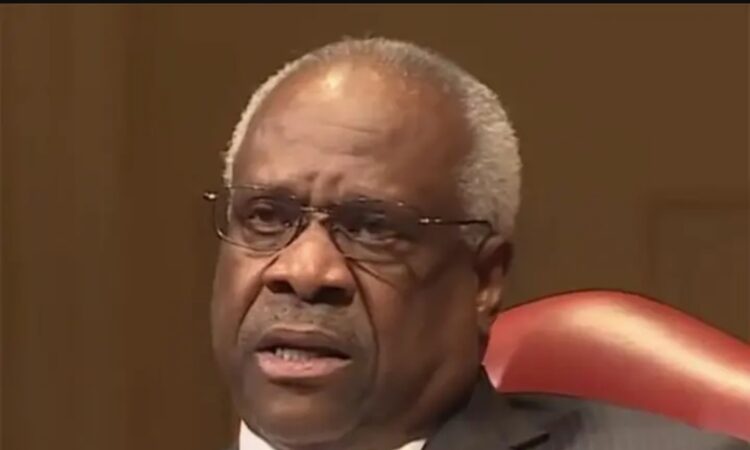
A former judge raised serious concerns this week about Supreme Court Justice Clarence Thomas after reading his opinion in a recent case. The retired judge, Thomas G. Moukawsher, wrote that he was troubled by the idea that Congress might be allowed to hand over nearly all of its power to the president. He believes this kind of thinking could put American democracy at risk.
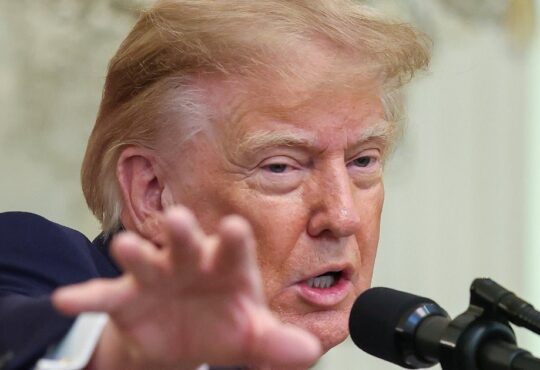
Moukawsher shared his thoughts in an opinion piece for Newsweek. He explained that the Supreme Court had just ruled 6–3 against former President Donald Trump over tariffs. The Court decided that Trump had acted illegally when he imposed certain tariffs, and Justice Thomas was one of the three justices who disagreed with the majority.
According to Moukawsher, the Court’s written opinions spent a lot of time discussing a legal idea called the “major questions doctrine.” This doctrine says that if Congress wants to give the president very significant powers, it must clearly and specifically say so in the law. The former judge felt that while this legal debate was interesting, it avoided what he sees as a much bigger and more urgent issue: whether Congress can give away so much of its authority that the president effectively becomes unchecked.
What especially worried him was Justice Thomas’s view. Thomas argued that, except for a few very limited situations, Congress can give almost all of its power to the president. Moukawsher said it was a relief that Thomas was alone in holding that opinion.
The case itself centered on how Trump used trade laws. Existing laws allow the president to “regulate” or “prohibit” imports during times of national emergency related to national security, foreign policy, or the economy. Trump interpreted the word “regulate” to include the power to impose tariffs. He declared issues like fentanyl trafficking and trade imbalances to be national emergencies. Then he used tariffs on countries around the world as a bargaining tool. Countries that cooperated with him sometimes received lower tariffs, while those he viewed negatively were hit with higher ones.
Six justices concluded that this went too far and broke the Constitution. They said Trump was not just carrying out policy but replacing Congress’s role with his own judgment. Chief Justice John Roberts wrote for the majority. The Court rejected Trump’s argument that tariffs are different from taxes and ruled that he could not impose what are essentially taxes without approval from Congress.
Still, Moukawsher believes the Court did not go far enough. In his view, the real danger is not just whether Congress clearly authorized these specific tariffs, but whether Congress can ever hand over such sweeping powers in the first place. He argues that if Congress gives away its core constitutional responsibilities, it weakens itself and damages democracy. Even if lawmakers have good intentions, giving up their fundamental powers could make the presidency too powerful.
Justice Neil Gorsuch came closest to addressing this deeper concern. Gorsuch suggested that when it comes to taxes, decisions made collectively by Congress are wiser and more balanced than decisions made by a single president. However, Moukawsher felt that none of the justices strongly enough highlighted the basic risk of concentrating too much power in one person’s hands.
In the end, the Court focused mainly on whether Congress had clearly granted Trump the authority to impose these tariffs, not on whether Congress even has the constitutional right to give away that kind of power. Two justices disagreed with the majority’s use of the major questions doctrine. But Justice Thomas went further than anyone else, arguing that Congress can delegate almost all of its powers to the president, except in very narrow cases. That is the position the former judge finds most alarming.