
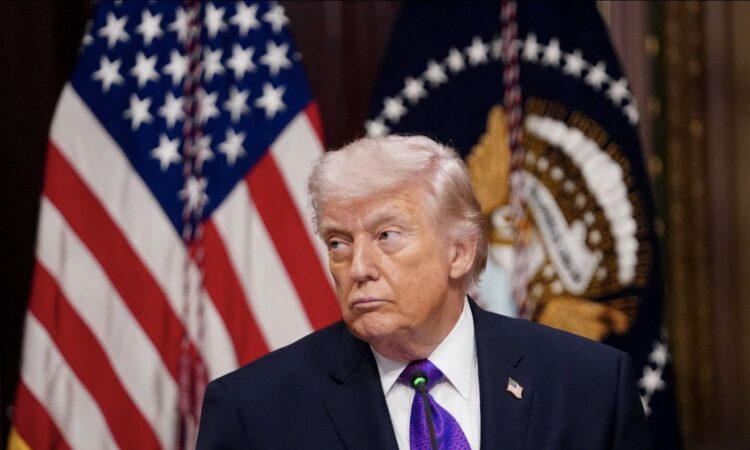
As of now, at least six American soldiers have lost their lives. Donald Trump himself has suggested that the number may rise as the conflict continues. On the other side, more than 1,000 people in Iran have reportedly been killed, and that number is also expected to increase as the fighting intensifies.
Across the Middle East, the situation is becoming extremely dangerous. Airstrikes, explosions, and military movements are spreading across the region under what has been called “Operation Epic Fury.” Yet despite the seriousness of the situation, only about 27 percent of Americans support the war.
Because of that, the real question many people are asking is not whether the United States can win this war. Instead, the question is how quickly Donald Trump will declare that victory has already been achieved.
Trump has already begun making bold claims. He has said that Iran allegedly tried to assassinate him three different times, and he has bragged that he managed to “get Khamenei on the first try.”
Meanwhile, Secretary of Defense Pete Hegseth praised the action and described it as an act of courage. But critics argue that it is not courage at all. They believe it is reckless bragging by a leader who is treating a potential global conflict like it is a television spectacle, something dramatic that grabs attention and headlines before the consequences fully unfold.
However, in Iran the situation is much more complicated than simple bragging or political statements. The deeper truth about why this war started is still unclear, and many analysts believe the situation has trapped Trump in a very difficult position.
Trump has openly talked about the idea of regime change in Iran. But historians and military experts often point out that removing a government from power almost always requires ground troops. Airstrikes alone rarely accomplish that goal. Trump has repeatedly said that he does not want American troops on the ground, although his statements sometimes change depending on the day or the pressure he is facing.
At one point, Trump even said he does not get nervous about sending troops into combat zones. Critics found that comment disturbing because previous presidents were cautious about deploying troops precisely because they understood the human cost involved. Sending soldiers into war means risking lives, and many believe that any leader should feel the weight of that responsibility.
Meanwhile, the explanations for why the United States entered this war remain confusing. Nearly a week after the fighting began, Americans are still being given different reasons. Secretary of State Marco Rubio suggested the goal was to stop an immediate threat to Israel.
Trump, however, claimed that he was the one pushing Israeli Prime Minister Benjamin Netanyahu to take action, not the other way around. Other officials have offered their own explanations, creating a situation where the public feels uncertain about what the true objective actually is.
Because of this confusion, many Americans were skeptical from the beginning. As the days pass and more information emerges, frustration is growing. People are asking whether the war was truly necessary and whether there was ever a clear justification for launching it.
At the same time, the economic effects are already starting to appear. Gas prices are rising rapidly, and economists warn that inflation connected to oil and fuel could soon increase even more. Several refineries in the region have been damaged or destroyed, disrupting global energy supplies. Financial markets are reacting nervously, and the Dow Jones has already shown signs of instability.
This is particularly significant because Trump built much of his political reputation around promises of a strong economy and avoiding new wars. During his political campaigns, he often said the economy under his leadership would be the best ever. He also claimed that he would prevent major international conflicts and avoid what he called “forever wars.”
Now, however, critics say he is facing both an economic shock caused by rising oil prices and a dangerous international conflict that some fear could escalate into a much larger global war.
Many observers are also drawing comparisons to the early days of the Iraq War in 2003. At that time, President George W. Bush appeared aboard the aircraft carrier USS Abraham Lincoln beneath a large banner reading “Mission Accomplished.” The moment was meant to signal that major combat operations were finished. In reality, the war continued for many years afterward and turned into a long and difficult conflict.
Back then, the Iraq War was justified by claims that Iraq possessed weapons of mass destruction and posed an immediate threat. Later investigations revealed that those claims were incorrect. The war eventually became widely viewed as a costly mistake built on flawed intelligence.
Some analysts fear that the same pattern could be repeating itself today. Early justifications for the current conflict included warnings about an imminent nuclear threat from Iran. But as the situation develops, the explanations seem to shift. Some critics now believe the conflict is increasingly driven by personal rivalries and political calculations rather than a clear national security strategy.
Trump is expected to eventually declare victory, possibly sooner rather than later. Not necessarily because the situation on the ground has been resolved, but because the political and economic pressure may force a quick exit.
Markets are already reacting negatively, and rising oil prices could create major problems for the U.S. economy. If those pressures become too severe, Trump may attempt to claim success and withdraw from deeper involvement in the conflict.
Unlike past presidents who began wars with strong public support, Trump entered this conflict with relatively low approval ratings. Polls suggest his approval rating sits around 36 to 39 percent, while roughly 60 percent of Americans disapprove of his performance as president. That means he began the war without broad public backing.
Historically, wars are easier to sustain when leaders have strong public support. Without that support, political pressure can build quickly, especially if casualties continue to rise.
Critics argue that Trump is highly sensitive to public perception and political losses. A long and difficult war in the Middle East could damage his political standing even further. For that reason, many analysts believe he may try to end the conflict quickly, at least from the American side, by declaring that key objectives have already been achieved.
If that happens, Trump may announce that Iran’s nuclear program has been destroyed, its missile capabilities weakened, and that American security has been protected. He may also claim personal vindication for the alleged assassination attempts he says Iran carried out against him.
After making such a declaration, critics believe the United States could step back from the conflict, leaving the region to deal with the aftermath.
For many people watching the situation unfold, the biggest concern is the human cost. Six American soldiers have already died, and many families are now grieving. If the war continues, more lives could be lost on both sides.
At the end of the day, critics say the central issue is not simply military strategy or geopolitical competition. Instead, they argue the deeper concern is whether the war was started for national security reasons or for political advantage.
As the conflict continues, the world will be watching closely to see how it ends and who ultimately pays the price for the decisions being made today.