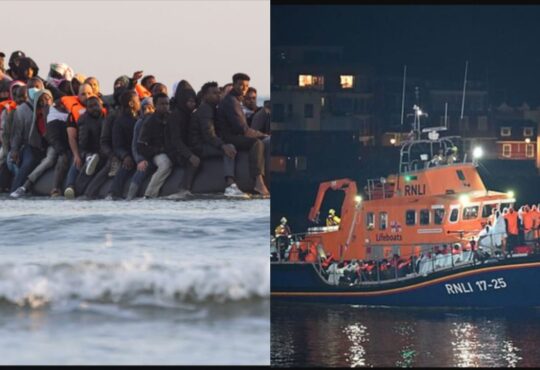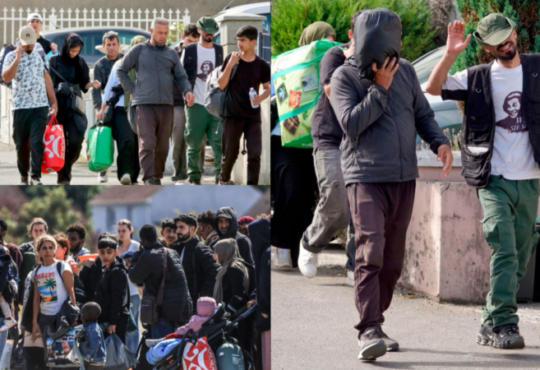
Authorities Expose the Country Where People Smugglers Get Inflatable Boats Used to Transport Dozens of Illegal Migrants Across the English Channel to the UK

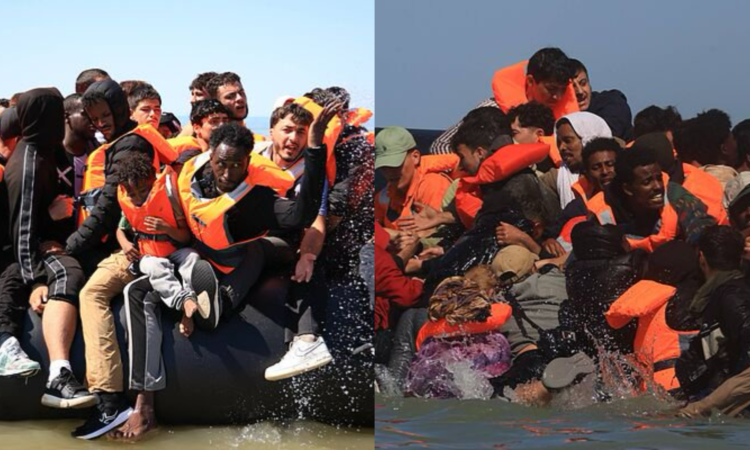
A series of international criminal investigations has been launched into the supply of small inflatable boats that are believed to be reaching people-smuggling gangs through the UK. Investigators are trying to stop criminals from getting hold of the boats, engines and other equipment they use to transport migrants across the English Channel.
Authorities believe some of the boats are being shipped from China and moved through different countries before eventually reaching criminal gangs. The boats can be extremely unsafe, yet smugglers continue to use them to carry large numbers of people across one of the busiest shipping routes in the world.
Dan Cannatella-Barcroft of the National Crime Agency (NCA) said there are several important investigations looking into how this equipment is supplied. He explained that following the supply chain could give authorities more opportunities to disrupt the criminal networks wherever they operate.
The investigations come after officials seized a shipping container at the Port of Felixstowe in Suffolk last month. The container had arrived from China and contained at least 25 inflatable dinghies along with outboard engines.
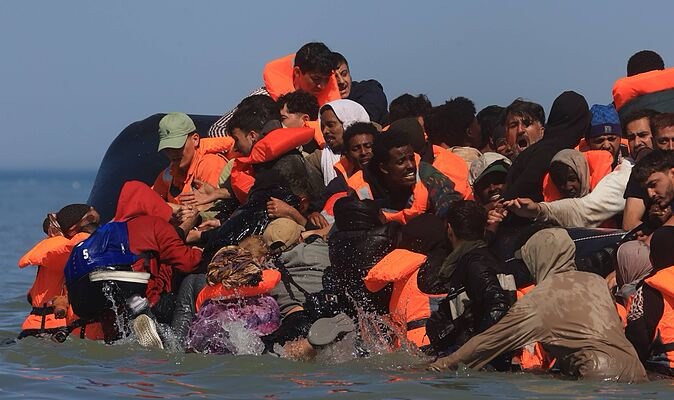
The boats were reportedly being transported towards Hamburg in Germany. Investigators believe criminals may have planned to sell the equipment to gangs involved in organising Channel crossings. Some of the boats were large enough to carry around 80 people, showing how smugglers can pack dozens of passengers onto vessels that may not be designed or built for such dangerous journeys.
Investigators believe that a large proportion of the small boats used for Channel crossings originate from China. The equipment can include inflatable boats, engines, pumps, fuel and life jackets, which can be put together as a complete package before being sent towards the French coast.
The scale of the problem was also highlighted by an operation in Germany in May. German police, working with the NCA, seized thousands of life jackets, hundreds of pumps and more than 30 boats near Düsseldorf. Some of the equipment was reportedly prepared in what officials described as “go kits”. These kits can contain almost everything a smuggling gang needs to get a boat ready for a crossing, including the boat, engine, pump and fuel.
The concern among authorities is that these criminal networks are becoming increasingly organised. Rather than simply finding individual boats, investigators are now looking at the people and businesses involved in supplying the equipment, moving it between countries and eventually getting it into the hands of gangs.
The latest figures also show that the UK is increasing its efforts against organised immigration crime. Home Office figures showed that arrests connected to organised immigration crime rose by 74% over the previous year, reaching around 1,900 arrests. Most of those arrests were made in the UK, while around 200 were carried out with the help of overseas law-enforcement partners.
The NCA also seized 634 boat engines in the year to April, almost twice the number seized during the previous year. At the same time, several small-boat pilots have been prosecuted and sentenced in the UK after being involved in crossings that put people’s lives at serious risk.
The Government has said it wants to increase pressure on the criminal gangs behind the crossings. Ministers have promised to step up efforts to prevent dangerous boats from reaching the Channel and to target the networks supplying them.
Home Office minister Anna Turley said that, although a boat carrying a record 230 people recently reached the UK, the overall number of small-boat crossings had fallen by around 40%. She argued that the reduction showed some progress, but warned that the Government could not become complacent.
She also said that smugglers appeared to be becoming more desperate. According to her, gangs are putting more and more people onto boats that are clearly not safe for the journey and are also changing the areas from which they operate.
The recent use of larger boats has added another concern for authorities. A vessel capable of carrying hundreds of people can create an even greater risk if something goes wrong in the middle of the Channel. The waterway is busy with commercial ships, while weather and sea conditions can change quickly.
Officials therefore face two challenges at the same time: trying to prevent dangerous crossings from taking place and breaking up the international criminal networks that provide the boats and equipment in the first place.
The latest investigations show that the problem does not simply begin when a migrant steps onto a boat on the French coast. Authorities are increasingly trying to follow the entire chain, from the production and shipping of the boats to the criminals who buy them and eventually organise the crossings.
The Government says there is still a long way to go, particularly as smugglers continue to find new ways to move people and equipment. The recent record-sized crossings have also shown that criminal gangs are willing to use increasingly large and overcrowded vessels, despite the obvious danger to everyone on board.