Here Is Why Sagal Abdi-Wali Was Elected as Labour MP and What She Did to Qualify for the Position

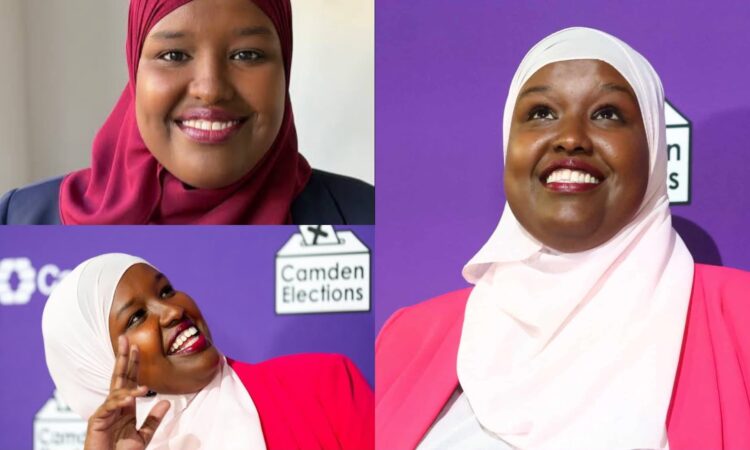
A Somali-born woman who came to Britain as a child refugee has made history after winning an election to become a Labour Member of Parliament. Her victory has attracted attention across the country, especially because of her journey from fleeing war in Somalia to becoming one of the people making decisions in the British Parliament.
Sagal Abdi-Wali, 42, was elected as the new MP for Holborn and St Pancras in London after winning a by-election held on Thursday, October 8, 2026. She took over the parliamentary seat previously held by former Prime Minister Sir Keir Starmer, who resigned from Parliament in September.
But why was she elected, and what made Labour choose her to represent the constituency?
The election became necessary after Starmer stepped down as an MP, leaving the constituency without a representative in the House of Commons. Under British election rules, voters had to choose someone new to represent their area.
Labour selected Abdi-Wali as its candidate because of her political experience, strong connections with the local community and previous work helping residents in Camden.
Before entering Parliament, she had already spent years working in local government. She was elected as a Camden councillor in 2022 and later became the leader of Camden Council in May 2026.
Her experience in housing and community services became an important part of her election campaign.
Abdi-Wali had previously worked as a housing officer, helping residents deal with accommodation problems and other difficulties affecting their daily lives. She also worked with local charities and community organisations.
During her campaign, she focused on issues such as homelessness, affordable housing, the rising cost of living and improving opportunities for children and families.
These were particularly important issues in Holborn and St Pancras, where many residents have faced increasing housing costs and difficulties finding affordable places to live.
Labour also highlighted her long history in Camden, where she had lived for about 35 years. The party presented her as someone who understood the problems facing local people because she had grown up and worked in the same community.
However, she did not automatically become an MP simply because Labour selected her. She had to compete against candidates from other political parties and convince voters to support her.
When the votes were counted, Abdi-Wali received 12,292 votes, defeating Green Party leader Zack Polanski, who secured 8,928 votes.
Conservative candidate Ewan Cameron received 1,922 votes, while Reform UK’s Pete Newman finished with 1,612 votes.
Her victory gave Labour a majority of 3,364 votes over the Green Party, allowing the party to retain the parliamentary seat.
Although Labour won, the election also showed that the Green Party had attracted considerable support, making the contest more competitive than Labour might have expected.
Abdi-Wali’s personal history made her election particularly significant.
She was born in Somalia and arrived in Britain with her family during the 1990s after they fled the civil war that had devastated their home country.
At the time, she was a young child whose family needed somewhere safe to rebuild their lives.
They eventually settled in London, where she grew up, attended school and became involved in her local community.
Over the years, she moved from working with residents and community organisations into local politics before eventually becoming a Member of Parliament.
Her journey has attracted attention because she is the first British Somali woman elected to the House of Commons.
After winning the election, Abdi-Wali spoke about what her victory meant for people from different backgrounds who now call Britain their home.
She said she hoped her achievement would encourage others to believe that they also had a place in British society, regardless of where they were born.
She also made clear that her priority would be helping the people who elected her, particularly families struggling with housing problems and homelessness.
Abdi-Wali explained that homelessness was one of the main reasons she became involved in politics in the first place.
Her election also came after political arguments about her background.
During the campaign, Reform UK’s home affairs spokesperson Zia Yusuf questioned Labour’s decision to select a candidate who had been born in Somalia.
His comments attracted criticism, with some Labour politicians describing them as racist.
However, Abdi-Wali is a British citizen, not someone currently seeking asylum. She came to Britain as a refugee many years ago and has since built her life and political career in the country.
Following her election victory, she officially took the parliamentary oath on Monday, October 12, 2026.
During the ceremony in the House of Commons, she held a copy of the Quran and pledged allegiance to King Charles III and his successors under British law.
The ceremony was an important moment because newly elected MPs must take the oath or make a formal affirmation before they can fully participate in parliamentary business.
With that process completed, Abdi-Wali can now speak in parliamentary debates, vote on legislation and raise concerns affecting residents in Holborn and St Pancras.
Her election is also significant for Labour because the party managed to retain a seat previously represented by a former Prime Minister.
For Abdi-Wali, however, the challenge now is to turn her campaign promises into action.
Residents will expect her to address housing problems, support struggling families and make sure their concerns are heard in Westminster.
Her story has also become part of the wider debate about immigration, integration and what it means to belong in Britain.
While some people have celebrated her achievement as an example of the opportunities available to refugees who rebuild their lives in the country, others have questioned Labour’s political direction and the growing diversity of Parliament.
Abdi-Wali’s election was ultimately decided by voters in Holborn and St Pancras, who chose her over the other candidates.
From arriving in Britain as a young refugee to taking her seat in the House of Commons more than three decades later, her journey marks a major change in her life.
The new Labour MP now faces the responsibility of representing thousands of residents, delivering on her election promises and proving that the experience she gained in local government can make a difference at the national level.