Man Sends Shocking Message Revealing How He Planned to Assassinate Donald Trump at the White House

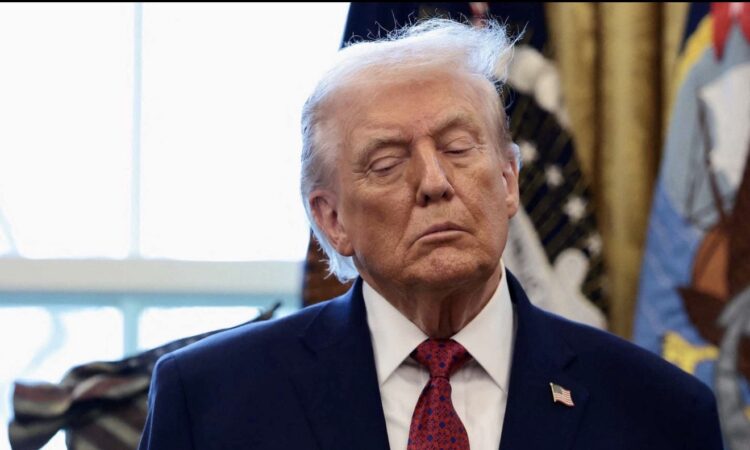
A man sent deeply disturbing and violent messages straight to the Central Intelligence Agency and the White House, clearly saying he wanted to kill the president. The messages were not vague or unclear — they were detailed, aggressive, and written in a way that showed strong intent.
Authorities later identified the man as 29-year-old Michael Kovco from Chicago. According to officials, he made repeated threats against Donald Trump, his son Barron Trump, and members of the U.S. Secret Service.
In several messages, he described step-by-step how he believed he could carry out an attack. He spoke about using a powerful, military-style rifle and said he wanted to position himself somewhere near the White House where he could clearly see the president. He even mentioned watching for the president’s movements and waiting for the right moment to strike.
The man also made extremely violent threats toward Barron Trump. He claimed he would try to find out where Barron was staying or moving around — whether in New York, Washington, or anywhere else — and then attack him. His words were graphic and showed a clear desire to cause harm.
According to the U.S. Department of Justice, this was not just one message. It was a pattern. Back in August 2025, he had already contacted the CIA, openly saying, “I am plotting to kill the president.” He described it as an ambush and talked about using a heavy weapon designed for serious destruction.
In another message, he even asked for a clear shooting path between the White House and Marine One, the president’s helicopter, showing that he had thought about specific locations and timing.
His threats did not stop with the president and his family. He also warned that if Secret Service agents came to his home, he would go after them too. He said he would buy a small, easy-to-hide gun and attack anyone connected to the investigation if they revealed any personal details to him.
What made the situation even more serious was the timing. Officials said that some of his most recent threats were sent just two hours after federal agents and Secret Service officers had already visited his home because of earlier warnings. This showed he was not backing down, even after being contacted by law enforcement.
Investigators were able to track him down quickly because he made a major mistake — he included his own phone number and email address in the messages. This allowed authorities to connect everything directly to him without much difficulty.
He was arrested on April 3. A few days later, on April 9, officials confirmed that he had been charged with sending threats across state lines, which is a serious federal crime. If he is found guilty, he could face up to five years in prison.
Officials also made it clear that threats like this are always taken very seriously, especially when they are detailed and repeated. Over the years, Donald Trump has faced multiple threats, and each one is carefully investigated to prevent any real danger. Law enforcement agencies continue to monitor and respond quickly to anything that could put the president, his family, or others at risk.