
Suspected ISIS Fighter Who Arrived in UK on Small Boat and Claimed Asylum Now Fights Deportation After Revealing Shocking Reasons That Could Stop Him Being Sent Away

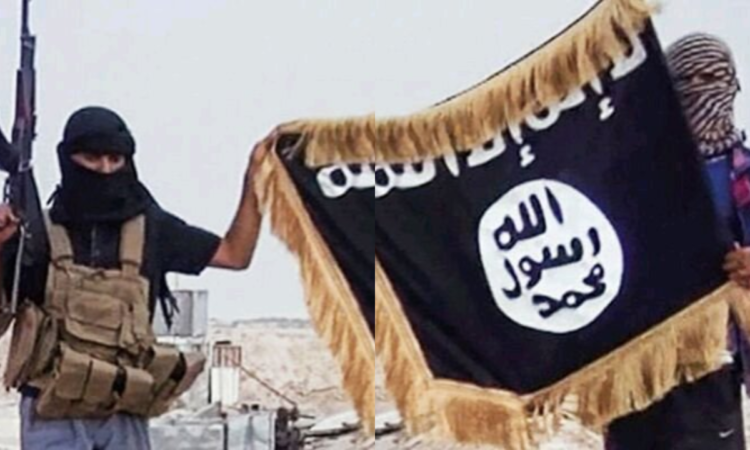
A 39-year-old man suspected of having links to the terrorist group ISIS is fighting against being sent out of Britain after arriving in the country on a small boat across the English Channel.
Layth Ibrahim Mohammed travelled to the UK in August 2025 and later claimed asylum. He is now trying to stop British authorities from sending him to Germany, where he is wanted over serious allegations, including terrorism and rape.
According to reports, Mohammed is suspected of having connections with ISIS, the extremist group that once controlled large areas of Iraq and Syria. He has also been accused of making dangerous homemade bombs and teaching children whose parents were members of the terrorist organisation.
However, these are allegations, and he has not been found guilty of the offences mentioned in the report.
After arriving in Britain, Mohammed was given accommodation at a hotel in Oldham, Greater Manchester. His stay was funded by the Home Office, meaning public money was used to provide his accommodation while his immigration case was being handled.
He was later arrested at the hotel by officers from the National Crime Agency after authorities became aware of the allegations against him in Germany.
German authorities want him returned to their country to face the charges, but Mohammed is challenging the extradition request through the British courts.
His lawyer, Joanna Curtis, reportedly told a hearing in London that sending him to Germany would be inhumane because of his mental health problems and other medical complaints.
She explained that Mohammed suffers from severe anxiety and depression. He has also complained about experiencing pins and needles, a condition that can cause tingling or numbness in parts of the body.
According to his lawyer, some of his mental health difficulties are connected to a traumatic experience in Iraq, where his son was reportedly killed in a bomb attack.
She argued that his health problems should be considered before any decision is made about sending him to Germany.
The court is expected to decide on November 3 whether Mohammed should be extradited to face the allegations.
The case has raised fresh concerns about Britain’s border security, particularly how someone suspected of involvement in terrorism was able to enter the country by crossing the English Channel in a small boat.
It has also renewed questions about the checks carried out on people arriving in Britain without permission and how authorities identify individuals who may be wanted by police in other European countries.
The news comes at a time when immigration and small boat crossings remain major political issues in the UK.
During a debate in the House of Commons on Monday, October 12, politicians argued over what the Government should do to stop migrants entering Britain through the Channel.
Figures mentioned during the debate showed that 20,935 people had arrived by small boats so far in 2026, compared with 25,931 during the same period in 2023.
Reform UK’s Robert Jenrick called on Prime Minister Andy Burnham to take stronger action, including using the Royal Navy to prevent small boats from reaching Britain.
Jenrick argued that the country was facing serious problems with its borders and called for the Government to declare a national security emergency.
However, Burnham rejected his suggestions and insisted that his Government was making progress in reducing the number of small boat arrivals.
The Prime Minister said crossings were falling under his administration and accused Jenrick of failing to deal with the problem when he previously served as immigration minister.
Meanwhile, Conservative MP Dame Caroline Dinenage raised concerns about migrants arriving on the coast of Hampshire, far away from the usual crossing routes near Dover.
She questioned what discussions the Government was having with France to stop people smugglers from using different departure points, including areas around Normandy.
Burnham responded that people smugglers were changing their methods because cooperation between Britain and France was making some of their previous routes more difficult.
He promised that the Government would continue changing its approach to stop criminal gangs from bringing migrants across the Channel.
As the political debate continues, Mohammed’s case remains before the courts.
For now, he is challenging extradition on health grounds, while German authorities are seeking his return to answer the serious allegations against him.
The final decision will depend on the evidence presented to the court and whether the judge accepts the arguments made against his extradition.