Andy Burnham Dismisses Calls to Use Royal Navy to Stop Migrant Boats in English Channel for Chillling Reasons That Spark Heated Debate

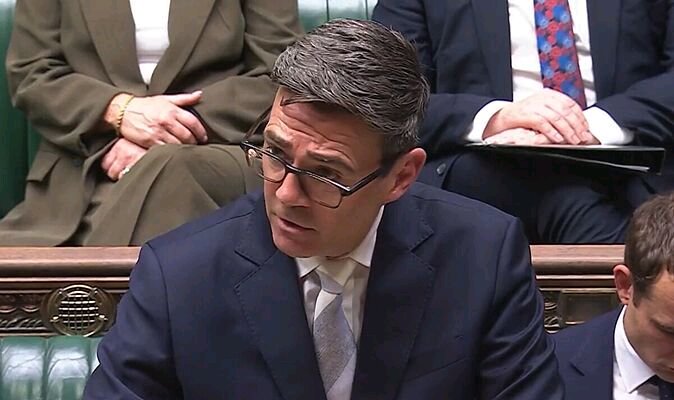
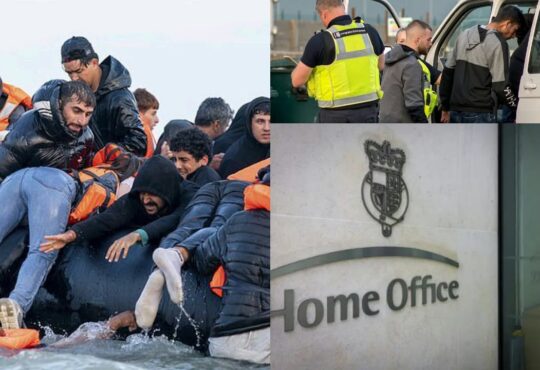
Prime Minister Andy Burnham has rejected calls to send the Royal Navy into the English Channel to stop migrants arriving in Britain on small boats, saying the proposal is not a serious solution to the country’s immigration problems.
The disagreement began in the House of Commons when Reform UK MP Robert Jenrick urged the Prime Minister to take stronger action against illegal Channel crossings.
Jenrick said Britain was facing a serious border security problem and called on the Government to declare a national security emergency.
He argued that the Royal Navy should be sent into the Channel to stop small boats and bring an end to what he described as the country’s failed asylum system.
However, Burnham dismissed the suggestion and criticised Jenrick for putting forward what he considered an unrealistic proposal.
The Prime Minister said he remembered when Jenrick used to make serious suggestions in Parliament, but believed his latest comments were different.
Burnham also defended his Government’s record on immigration, claiming that the number of migrants crossing the Channel in small boats had fallen since Labour took office.
He pointed out that crossings had continued to rise when Jenrick was serving as immigration minister under the previous Conservative government.
Jenrick later responded on social media platform X, accusing Burnham of ignoring the seriousness of Britain’s border problems.
According to figures mentioned in the report, 20,935 migrants had crossed the English Channel in small boats so far this year. This represented a 42% decrease compared with 36,244 arrivals during the same period last year.
The figure was also said to be 19% lower than the 25,931 arrivals recorded at the same point in 2023.
The disagreement became even more controversial after Jenrick suggested that Royal Marines should be deployed to the Channel and given the authority to use lethal force if necessary.
Speaking to Talk, Jenrick said the military should be sent to stop migrant boats and return those on board directly to France.
He explained that using lethal force was not something he wanted to happen, but argued that military personnel should have that option if the situation required it.
Jenrick said his preferred approach would be for migrants to be safely removed from small boats and taken back to France.
He believed such action could stop the crossings within days because people would realise they could no longer use small boats to enter Britain.
However, his comments attracted strong criticism from senior Labour politicians.
Labour Party Chairwoman Bridget Phillipson condemned the suggestion, describing it as “disgusting and illegal”.
She made it clear that Britain’s armed forces would not be ordered to shoot unarmed civilians trying to cross the Channel.
Phillipson also accused Reform UK of damaging its reputation by suggesting that military force could be used against migrants.
The controversy follows separate comments made by a former senior British military commander who suggested that boats carrying migrants should be shot at to stop illegal crossings.
Major-General Julian Thompson, 92, who served during the Falklands War and commanded 3 Commando Brigade, made the remarks during a YouTube documentary produced by journalist Steven Edginton.
Thompson said he believed Britain could stop the crossings quickly if the authorities were prepared to take much tougher action.
He openly stated that he would shoot at the boats, arguing that Britain had allowed the situation to continue because its leaders were unwilling to take strong measures.
His comments caused anger and raised further questions about how far the Government should go when dealing with people attempting to enter the country illegally.
The latest disagreement has once again highlighted the deep divisions between Labour and Reform UK over immigration and border security.
While Jenrick believes stronger military action could bring small boat crossings to an end, Burnham and other Labour figures argue that such proposals are unacceptable and that the Government should focus on lawful measures to reduce arrivals.