
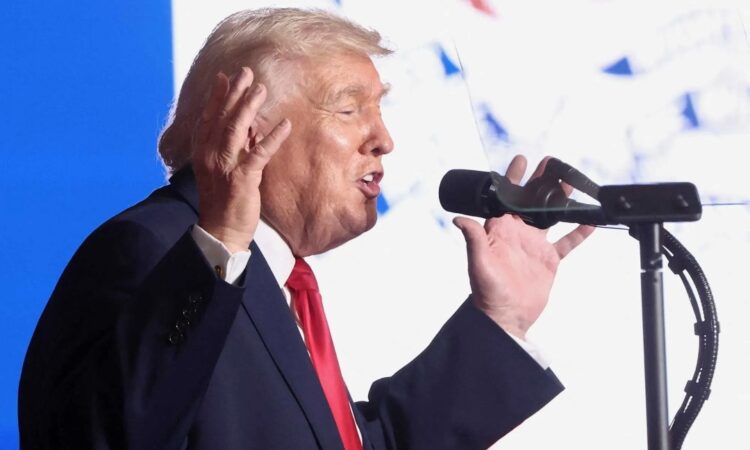
Donald Trump was seen watching before boarding Air Force One at Pope Army Airfield in North Carolina on February 13, 2026.
A new analysis says that his early support from Black Americans has fallen sharply in just one year. During the 2024 election, Trump received more support from Black voters than any Republican presidential candidate had in many years.
When he first returned to the White House, nearly one out of three Black Americans approved of how he was doing his job. But since then, that support has dropped steeply. By last month, his approval rating among Black voters had fallen to around 13 percent. Reports say his numbers are now close to where they were just before he lost the 2020 election, according to The Washington Post.
Columnist Theodore R. Johnson questioned what happened to the strong backing Trump once had from some Black supporters. He suggested that the drop in support shows that the connection between Trump’s MAGA movement and Black voters may not have been based on deep loyalty or long-term political identity. Instead, it may have depended more on whether Trump could deliver real results and make supporters feel included and respected.
Johnson explained that many Black voters who supported Trump wanted clear policies they could feel proud of. They also wanted to feel like they truly belonged to the movement, despite racial differences, and to feel protected from criticism both inside and outside their communities. At first, there may have been hope and excitement. But now, according to Johnson, that early excitement is gone.
He wrote that many Black supporters were looking for economic growth, stable leadership, and better opportunities. Instead, they feel they have seen confusion and disorder.
The Black unemployment rate has risen to 7.2 percent, which is close to recession levels and nearly double the unemployment rate for white Americans. Cuts to federal jobs have also hit Black workers especially hard. On top of that, Johnson argues that Trump has failed to keep many of the promises he made to Black voters during his campaign.
While many of Trump’s Black supporters share tough views on immigration, Johnson wrote that the way deportation efforts have been carried out described as chaotic and violent makes it difficult for them to defend the administration’s actions.
Like many other MAGA supporters, Black voters who backed Trump expected fewer foreign conflicts and a strong, growing economy. According to Johnson, they feel they have received neither. Instead, they have seen shifting tariff policies, repeated government shutdowns, and what some describe as a lack of attention to long-standing security agreements.
Johnson also pointed to a recent controversy. He wrote that Trump marked Black History Month not with a traditional White House event, but by posting a video on social media that critics called racist and that involved former President Barack Obama and former First Lady Michelle Obama.
Combined with concerns about immigration enforcement, high living costs, and a feeling that the government is not listening to ordinary people, Johnson concluded that whatever support remains is likely not strong enough to keep a large number of Black voters aligned with the MAGA movement.