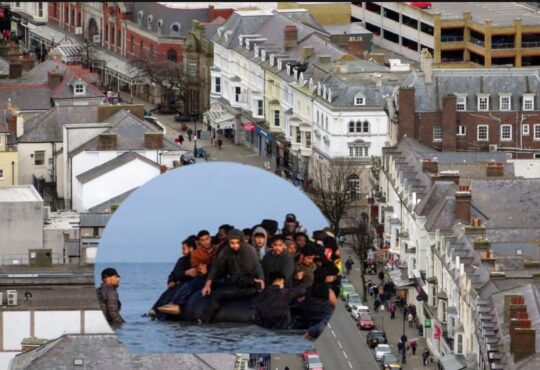


Some small boat migrants who were selected to be sent back to France were reportedly upset and worried after discovering that they would be held in an immigration detention centre instead of being taken to a hotel.
The migrants had crossed the English Channel and arrived in the UK, with some apparently believing they would be taken to asylum accommodation while their cases were considered. However, some were instead detained at Tinsley House immigration removal centre, near Gatwick Airport.
The situation was described in a report by Charlie Taylor, the Chief Inspector of Prisons. His report looked at conditions inside the centre and the experiences of migrants being held there.
According to the report, many of the detainees were anxious about what was going to happen to them. Some had expected to be placed in a hotel after arriving in Britain, so being taken to a detention centre came as a surprise.
Others had already been staying in asylum hotels before they were selected for detention. They were then moved to Tinsley House as the authorities considered returning them to France.
Many of the men were reportedly unhappy about the possibility of being removed from Britain. They were also uncertain about what would happen after they arrived back in France.
This lack of information appeared to increase their worries.
Inspectors said there was very little information available about what the migrants should expect once they were returned to France. The report also said that, at the time of the inspection, the centre had not made contact with French officials who could potentially provide more information about what would happen after their return.
For some detainees, the uncertainty became difficult to deal with.
Several men became emotional when they spoke to inspectors about their situation. Some said they were struggling with anxiety, depression and problems sleeping while waiting to find out what would happen to them.
One migrant explained how worried he was about his future. He asked what his fate would be and said the uncertainty was making him very stressed.
For people being held in the centre, the situation could be particularly difficult because they did not know whether they would remain in Britain, be released from detention or be returned to France.
The report also raised concerns about how vulnerable migrants were being identified.
Mr Taylor said the Home Office process for identifying men who might be too vulnerable to remain in detention was too slow and was not thorough enough.
This was important because some people in immigration detention may have serious physical or mental health problems, while others may have experienced difficult or traumatic situations before arriving in Britain.
The report suggested that these circumstances needed to be identified quickly so that decisions could be made about whether detention was appropriate.
Another major issue raised by the report was the number of detainees who were eventually released.
Mr Taylor said more than half of the people being detained were later released rather than removed from the UK.
He questioned why so many people had been detained in the first place if they were eventually going to be released.
He also pointed to the financial cost of immigration detention, saying keeping large numbers of people locked up could come at a huge cost to taxpayers.
The report did not only focus on the migrants’ immigration cases. Inspectors also examined what daily life was like inside Tinsley House.
They found that many detainees spent their mornings sleeping instead of taking part in activities available at the centre.
Facilities including the gym and sports hall were more popular later in the day, particularly during the afternoon and evening.
However, inspectors believed staff could have done more to encourage detainees to participate in activities.
This was considered especially important for people struggling with their mental health.
Spending long periods with little to do while worrying about possible deportation could make an already stressful situation more difficult. Activities, exercise and opportunities to spend time outside their rooms could help detainees stay occupied while waiting for decisions.
The report comes as the UK Government continues to use its “one in, one out” agreement with France as part of its attempt to deal with small boat crossings in the English Channel.
Under the arrangement, some migrants who arrive in Britain after making the Channel crossing can be returned to France.
In return, the UK accepts some people from France through a legal route, provided they meet the requirements of the scheme.
The agreement was introduced as part of efforts to discourage dangerous Channel crossings and reduce the number of people paying smugglers to bring them to Britain in small boats.
However, operating the scheme has proved expensive and complicated.
Home Secretary Shabana Mahmood recently told MPs that the cost of returning migrants under the agreement had increased to around £56,000 for each person.
She also said that more than 1,400 migrants had been deported under the arrangement so far.
Despite those removals, Mahmood said the scheme had dealt with relatively small numbers of people compared with the wider number of migrants arriving across the Channel.
She also explained that it had been difficult to increase the number of removals significantly because returning very large numbers of people every week would put pressure on the French system.
This means the agreement has faced practical limits on how quickly and how widely it can operate.
The deal is currently expected to expire next month, raising questions about what Britain and France will decide to do afterwards.
The two governments could decide to continue the arrangement, make changes to it or introduce another approach to dealing with people crossing the Channel.
Meanwhile, the experience of migrants being held at Tinsley House shows how quickly circumstances can change after someone arrives in Britain.
Some migrants may have believed that reaching the UK meant they would be taken to a hotel or other asylum accommodation while their claims were considered.
Instead, those selected under the returns arrangement could find themselves detained and facing the possibility of being sent back to France.
For some of the men interviewed by inspectors, this appeared to come as a major shock.
They had questions about where they would go, what would happen when they reached France and whether they would have accommodation or support there.
Without clear answers, some were left worried about their future.
The report therefore raises wider questions not only about the Government’s returns policy, but also about how migrants are informed about decisions affecting them.
It also highlights the difficulties authorities face when deciding who should be detained, who should be released and who can legally and practically be returned to another country.
While the Government continues to argue that returns are an important part of reducing dangerous small boat crossings, the inspection shows the uncertainty experienced by some of the people caught up in the system.
For those migrants, arriving in Britain did not lead to the hotel accommodation they had expected. Instead, some found themselves inside an immigration removal centre, waiting to discover whether they would soon be put on a journey back to France.