Influencer Who Posed as an Asylum Seeker Blasts ‘Council Estate Scruffs’ for Saying Something He Doesn’t Like


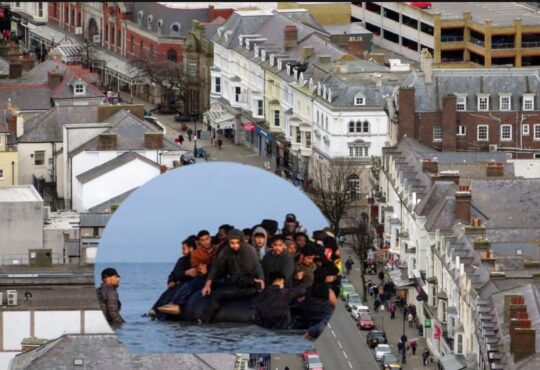
An influencer has caused a strong reaction online after revealing that he pretended to be an asylum seeker so he could enter a migrant hotel and see for himself what life was really like inside.
YouTuber and social media influencer Husnain Asif said he wanted to go beyond what he had been reading and watching online. Instead of relying only on political arguments and social media posts about asylum seekers, he decided to enter a hotel where migrants were being accommodated and speak directly to some of the people staying there.
Asif, who is also known online as “Massive Asif”, later spoke about the experience during an interview with LBC in January 2026. He explained that he wanted to understand why the migrants had come to Britain, what their lives were like inside the hotel and what they hoped to do in the future.
However, comments he made during the interview have now resurfaced online and caused anger, particularly his description of some people criticising migrants on Facebook as “council estate scruffs”.
The comments have returned at a sensitive time, with immigration and the use of hotels to accommodate asylum seekers continuing to cause heated debate and protests in different parts of the UK.
Asif said that before making his documentary, much of what he had seen online about migrants came from strongly anti-immigration voices. He said he wanted to investigate the issue himself rather than simply accept what he was seeing on social media.
According to him, another reason for entering the hotel was that he felt the migrants themselves were rarely given an opportunity to explain their situations. He wanted to hear their stories directly and ask why they had travelled to Britain and what they hoped their future would look like.
After spending time inside, Asif said one of the things that surprised him was the level of depression he believed existed among some of the people staying there.
He argued that many of the migrants he met wanted to work and have a purpose instead of spending every day inside a hotel. He said some people outside the hotels believed asylum seekers were enjoying a comfortable or luxurious lifestyle, but claimed that what he witnessed was very different.
Asif said some of the people were struggling with depression after experiencing difficult and traumatic journeys before reaching Britain. He described their lives in the hotel as repetitive, saying some had little to do other than remain in their rooms while waiting for decisions about their future.
However, his choice of words when speaking about people who criticised asylum accommodation quickly became one of the biggest talking points.
Several social media users accused him of looking down on working-class people after he used the phrase “council estate scruffs”. Some said that after hearing those words, they were no longer interested in the rest of his argument.
Others challenged his wider defence of asylum seekers. Some pointed to reports of crimes involving individual asylum seekers and argued that local residents were entitled to have concerns about who was being accommodated in their communities.
Another issue raised during the discussion was why some asylum hotels mainly accommodate adult men while women and children can be housed separately.
Asif argued that separating adult men from women and children could be a sensible safety measure rather than evidence that the men themselves were automatically dangerous.
His documentary about the experience was uploaded to YouTube in December 2025 and has attracted hundreds of thousands of views. Asif also has a large following on TikTok, where he posts travel videos, lifestyle content and comedy. He previously appeared as a contestant on Netflix’s reality competition series “Squid Game: The Challenge”.
During his LBC interview, Asif was also asked what he would say to people who felt nervous about having an asylum hotel close to their homes.
He questioned why someone should automatically be afraid simply because the people staying there came from another country. The presenter responded that one concern was that residents did not know who the people were.
Asif argued that people also do not know everything about neighbours who were born and raised in Britain. He said nationality or the fact that someone had crossed the English Channel should not automatically lead people to assume that person was dangerous or likely to commit a serious crime.
He strongly rejected the idea that travelling from another country suddenly changes someone’s character. He said people should be judged as individuals rather than automatically being considered criminals because they are asylum seekers.
Asif also responded to people asking why women and children were not seen in the hotel featured in his documentary. He explained that there are separate accommodation arrangements and said keeping adult men apart from women and children could provide additional safety.
He said the main purpose of his documentary was to show another side of the asylum debate. According to him, he did not meet anyone during his visit who openly expressed an intention to abuse the asylum system or cause problems in Britain.
His claims, however, have continued to divide opinion. Supporters of his documentary believe speaking directly to asylum seekers can provide a better understanding of the human stories behind the immigration debate. Critics argue that visiting one hotel and speaking to a limited number of people cannot represent every asylum seeker or answer all the concerns communities have about immigration, security and the cost of accommodation.
The debate also comes as the Government continues trying to reduce its reliance on hotels to house people waiting for asylum decisions.
As of June 2026, just under 170 hotels were reportedly being used to accommodate asylum seekers, considerably fewer than the peak of around 400 hotels in 2023. The Government has said it intends to end the use of asylum hotels by 2029.
The financial cost of the wider asylum system also remains a major political issue. Parliamentary committee figures cited in the report estimated that the Home Office and Ministry of Justice spent around £4.9 billion on the asylum system during 2024–25, with approximately £2.7 billion of Home Office spending linked specifically to asylum accommodation.
Asif’s resurfaced comments have therefore become part of a much bigger national argument about how Britain should treat asylum seekers, how much the system should cost taxpayers and how the Government should respond to concerns from communities where asylum accommodation is located.
While Asif said his aim was to show people what he personally witnessed inside a migrant hotel and allow asylum seekers to tell their side of the story, his controversial description of some critics has instead created another heated debate of its own.