Boat Migrants Might Think Twice About Coming to the UK After Terrible New Figures Reveal a Shocking Details

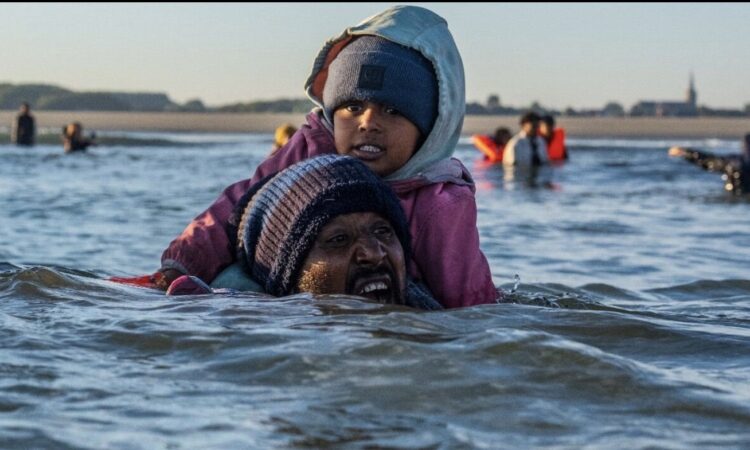
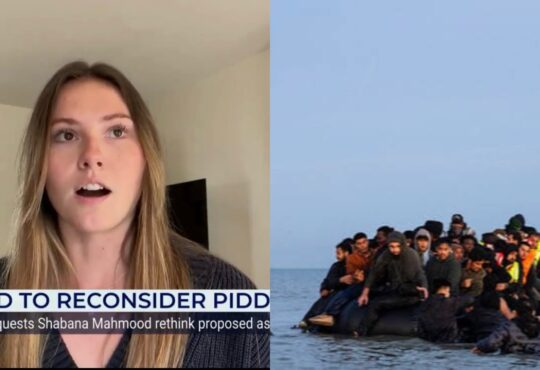
New figures have revealed the growing number of migrants who have died while trying to cross the English Channel to reach the UK, with experts warning that the true number of deaths could be much higher.
According to figures from the Migration Observatory at the University of Oxford, at least 180 migrants have died during small boat crossing attempts since 2018, when crossings started happening in much larger numbers.
However, researchers say this figure may not show the full scale of the tragedy because some deaths may never have been officially recorded.
Dr Mihnea Cuibus, a senior researcher at the Migration Observatory, said around 80% of the recorded deaths happened at sea. Some migrants died while trying to get onto small boats, while others lost their lives after the boats had already entered the water.
In many cases, bodies were later discovered on beaches, making it difficult for authorities to know exactly what happened or when the person died. There have also been cases where migrants died in canals in northern France while boats were travelling towards the sea.
Researchers said another major problem is the lack of information about some of the victims. In certain cases, very little is known about who they were, where they came from or exactly how they died.
This means some deaths could have happened without being added to official records, especially when people disappear at sea and their bodies are never recovered.
Separate figures from the UN International Organization for Migration show an even larger number when deaths on different routes towards the UK are included.
The organisation’s Missing Migrants Project has recorded at least 382 deaths on routes from mainland Europe towards the UK since 2014. These include people who died in the English Channel, on land before attempting the journey and around the Eurotunnel.
Among the 382 recorded deaths were 31 women and 43 children.
The organisation said the remains of 363 people were recovered, while another 19 people were reported missing at sea.
The year 2024 was recorded as the deadliest year for people attempting the Channel route, with 85 people reported dead or missing. A further 22 deaths have been recorded so far in 2026.
However, the IOM stressed that these numbers should only be seen as minimum estimates.
One of the difficulties is that information about migrant deaths can be spread across different countries, police forces, emergency services and other organisations. There is no single system covering every country involved that can easily identify and trace every migrant who disappears during the journey.
This creates the possibility that some people who die or disappear are never included in the official figures.
The IOM also stressed that every number represents a real person and families who may still be waiting to find out what happened to their loved ones.
Oxford University researchers found that drowning remains the most common cause of death among migrants attempting to cross the Channel. More than three quarters of the recorded victims are believed to have died from drowning.
But drowning is not the only danger.
Some migrants have died from crushing or suffocation as large numbers of people try to get onto overcrowded small boats. Dangerous situations can develop on beaches when groups rush towards a dinghy at the same time, while overcrowding can also create serious risks once the boat is at sea.
Identifying those who die can also be extremely difficult. In some cases, bodies are not discovered until days after an incident, making it harder for authorities to establish the person’s identity and exactly what happened.
Researchers found that around three quarters of the recorded victims were men. This is broadly similar to the gender pattern among migrants who successfully reach the UK by small boat.
Information about nationality is even more limited. Researchers were able to identify the nationality of only around half of the people whose deaths were recorded.
Among cases where nationality was known, Eritrea, Afghanistan and Iraq were among the most common countries of origin. These countries have also been major sources of people arriving in the UK through small boat crossings.
The figures highlight how dangerous the Channel route remains despite the relatively short distance between France and Britain. Overcrowded inflatable boats, difficult weather, cold water, strong currents and the rush to board vessels can quickly turn a crossing into a deadly emergency.
And with researchers warning that some deaths and disappearances may never be officially recorded, the real number of people who have lost their lives attempting the journey could be higher than the figures currently available.