
Asylum-Seeking Family Begs to Leave Brand-New Home After Just 15 Days Because of What They Experienced

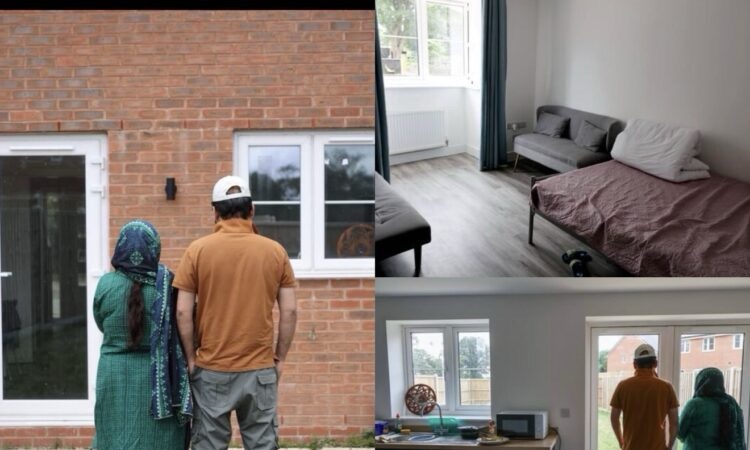
A family of six from Pakistan who are seeking asylum in the UK have asked the Home Office to move them out of a newly built four-bedroom house worth around £250,000, just 15 days after moving in. The family say they are frightened, unhappy and struggling to cope with life in their new neighbourhood, which some local people have nicknamed “Migrant Street.”
Muhammad Nadeem, his wife Shamaila and their four children came to Britain about two years ago after leaving Pakistan. Muhammad said they left their home country because their family had received serious threats, and they hoped to find safety and a better future in the UK.
When they first arrived in Britain, the family settled in Stockport, where Muhammad worked as an Uber driver while holding a work visa. However, after his visa expired, the family applied for asylum. They were then moved from their rented accommodation into a hotel while waiting for the Home Office to decide their application.
Their situation changed again when they were moved about 60 miles away to Stoke Heath, a quiet village in the countryside.
The family were given a newly built four-bedroom house, which is part of a development containing 21 properties. The houses have been set aside to accommodate around 83 asylum seekers as part of the Government’s efforts to reduce the number of people living in asylum hotels.
Although the property is new, spacious and worth approximately £250,000, Muhammad says living there has become a difficult experience for his family.
He explained that the problem is not necessarily the house itself but the location and what his family claims to have experienced since arriving.
According to Muhammad, the village is far away from many important services, including supermarkets, healthcare facilities and other places the family needs to visit regularly.
He said the family began experiencing frightening incidents almost immediately after moving into the property.
Muhammad claimed that just one day after they arrived, his wife and children were outside the house when three people approached them. He said the family became frightened and quickly ran back inside, locking the doors behind them.
Later that same day, he claimed two other people came to their home. One of them was reportedly wearing a face covering and recording him with a mobile phone while knocking on the door.
Muhammad said he asked the individuals to leave, but they allegedly shouted offensive words at the family as they walked away.
These incidents left the family worried about their safety, especially because they had only recently moved into the neighbourhood.
The matter was reported to Serco, the company responsible for managing the asylum accommodation. Following the complaints, security guards were reportedly brought into the area to patrol the neighbourhood during the day and at night.
However, Muhammad says the presence of security officers has not completely removed his family’s fears.
He explained that his children are now afraid to spend time outside, while he and his wife remain worried that something unpleasant could happen again.
The father of four said his children sometimes ask permission to go outside and play, but he often refuses because he is concerned about their safety.
Apart from the reported intimidation, Muhammad said the family is also struggling with the cost of travelling to buy food and other basic items.
He explained that the village does not have enough nearby shops and that travelling to a supermarket can be expensive.
According to him, something as simple as running out of bread can become a major problem because the family may need to pay more than £20 for a return taxi journey to buy groceries.
He said the family receives around £295 every week to support all six members of the household, but transport costs are taking away a significant amount of that money.
Muhammad believes this makes everyday life unnecessarily difficult, particularly for a family that is already depending on limited financial support while waiting for a decision on its asylum application.
He also raised concerns about his health.
Muhammad said he has diabetes and suffers from ongoing back pain. However, since moving to the village, he claims he has been unable to register with a local GP.
He explained that being far away from healthcare services has added to his worries because he needs access to medical support for his conditions.
Another problem, according to Muhammad, is the poor mobile phone signal in the area.
He said this makes the family even more concerned about what could happen during an emergency, particularly if they need to contact someone quickly.
Muhammad revealed that police have provided the family with personal emergency alarms that they can activate if they feel threatened.
He said both he and one of his daughters now carry the alarms when necessary.
The situation has also affected his sleeping habits.
Muhammad explained that he has started sleeping in the front room near the window because he wants to keep an eye on what is happening outside the house.
He said he regularly wakes up during the night to check whether anyone is approaching the property.
As a result, he claims he is no longer getting enough sleep because he constantly worries about the safety of his wife and children.
Muhammad said the experience has been especially upsetting because the family came to Britain hoping to escape fear and threats in Pakistan.
Instead, he claims they are now facing another situation where they feel uncomfortable leaving their home.
The family have now contacted the Home Office and asked to be moved back to Stockport, where they previously lived.
Muhammad explained that they were already familiar with Stockport and had built relationships with friends and relatives in the area.
He believes returning there would allow his family to feel more comfortable and make it easier for them to access shops, schools, healthcare and other important services.
He also argued that the village is not an ideal location for asylum-seeking families who are trying to settle into their new surroundings.
According to him, the lack of nearby services, transport difficulties and concerns about safety make it hard for families to live normally.
Despite these problems, Muhammad made it clear that his family does not want to return to Pakistan.
He said they left their country because of serious threats and still believe Britain offers them a better opportunity to live safely and rebuild their lives.
Muhammad also acknowledged that some local families are waiting for social housing and that the newly built property his family occupies could potentially have been used to accommodate people from the local community.
However, he stressed that his family did not personally choose the house or ask to be moved into the development.
He explained that the accommodation was arranged for them as part of the asylum housing system.
For Muhammad, the most important thing is not the value or appearance of the property but whether his wife and children can live somewhere they feel safe.
The family are now hoping the Home Office will consider their request and allow them to return to Stockport.
Their experience has also raised questions about the challenges of moving asylum seekers from hotels into housing developments in rural communities, particularly where transport, healthcare and other essential services may be difficult to access.
While the Government is trying to reduce the cost of accommodating asylum seekers in hotels, Muhammad’s account shows that providing a house does not necessarily resolve every difficulty a family may face.
For now, the family remain in their new accommodation, hoping they will eventually be moved somewhere they feel more secure and better able to manage their daily lives.