Anyone Who Raised Concerns About Illegal Migrants Was Called Racist — But New Guidance Appears to Prove Why Many Britons Were Worried

Giles Sheldrick argues that the Government has finally acknowledged concerns that many ordinary Britons have raised for years about illegal migration, public safety and the pressure placed on local communities.
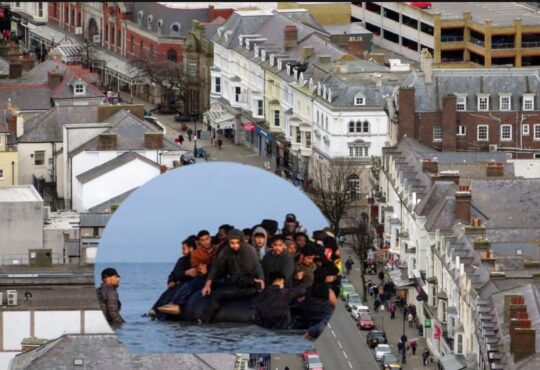
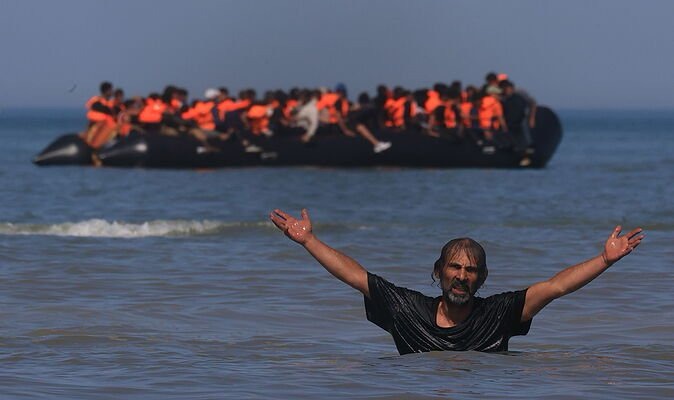
In 2025, 41,472 migrants arrived in the UK by small boats, with many going on to claim asylum. For years, critics of illegal migration were accused of exaggerating the problem or trying to “pull up the drawbridge” against people in desperate need. Supporters of the asylum system argued that many people crossing the Channel were fleeing war, persecution or serious danger in their home countries.
However, concerns about the scale and consequences of the crossings have continued to grow. What was initially treated as a relatively minor problem has developed into a major national issue, with thousands of people arriving across the Channel and entering the asylum system.
It is also important to remember that official figures only account for people who are identified by the authorities. The true number of people living in the UK without lawful status is difficult to establish, making the full scale of the problem difficult to measure.
Communities across Britain have experienced growing tensions linked to accommodation, housing, public services and the wider immigration system. From protests and public disorder to concerns raised by residents in different towns and cities, the issue has become increasingly difficult for politicians to ignore.
Now, a Home Office booklet aimed at asylum seekers has drawn further attention because it explains some of the basic laws and expectations surrounding behaviour in Britain, including laws concerning sexual consent, violence and domestic abuse.
The guide makes clear that having sex with someone without their consent is rape and that rape is a serious criminal offence in the UK. It also explains that sexual activity involving anyone under the age of 16 is illegal, regardless of whether the young person appears to agree to it.
The booklet also warns that physical violence, threats and controlling behaviour can constitute domestic abuse and may amount to serious crimes.
The Government says the guidance is intended to help people who are new to Britain understand the country’s laws and customs. It explains that moving to a new country can be difficult and that laws and social expectations may be different from those in a person’s country of origin.
The document also makes clear that these rules are not exclusive to asylum seekers. They apply to everyone living in the United Kingdom.
The publication comes at a time when the Government is facing intense pressure over illegal migration and the number of people crossing the Channel in small boats. In 2025, Eritreans were among the largest national groups arriving by this route, followed by Afghans, Iranians, Sudanese and Somalis.
The scale of the crossings has also continued to attract attention, with a record 230 people reportedly arriving on a single small boat last week.
There have also been serious criminal cases involving people who crossed the Channel illegally. In one case, Abdulla Ahmadi and Ibrahim Alshafe, both aged 26, and Karin Al-Danasurt, aged 21, were convicted following an attack on a woman on Brighton beach. The three had been living in Home Office accommodation in Horsham, West Sussex, after entering Britain illegally.
Ahmadi, from Iran, and Alshafe, from Egypt, were sentenced to 21 years in prison for rape. Al-Danasurt, also from Egypt, was convicted of rape in connection with the attack and received an 18-year sentence. The judge described the defendants as predatory and callous.
Cases such as this have intensified public debate over how people who enter the country illegally are dealt with, particularly when they are accused or convicted of serious crimes.
The Home Office guidance itself does not mean that asylum seekers as a group are criminals, nor does it establish that people arriving from particular countries are more likely to commit crimes. The vast majority of asylum seekers cannot fairly be judged on the actions of individuals. However, the Government’s decision to spell out basic laws on rape, sexual consent and domestic abuse reflects the importance of ensuring that everyone entering Britain understands the country’s legal standards.
For many members of the public, the bigger question is whether the Government can regain control of the asylum system, reduce dangerous Channel crossings and ensure that people who commit serious offences face appropriate consequences.
The debate over immigration has been going on for years, but the continued arrival of small boats has made it increasingly difficult for the issue to be dismissed as a temporary problem. Communities want answers about housing, public services, security and the long-term cost of supporting people while their asylum claims are processed.
The Government now faces the difficult task of balancing Britain’s legal responsibilities towards people seeking protection with the public’s demand for secure borders and an immigration system that is properly controlled.
For many families, particularly parents concerned about the safety of women and children, the publication of the Home Office booklet will be seen as another sign of how serious the Government believes the issue has become. It is likely to fuel an already heated national debate about illegal migration, crime, integration and what should be expected from anyone who comes to live in Britain.