Anjem Choudary’s ‘right-hand man’ calls for sharia in Britain. His Reasons Will Leave You in Shock

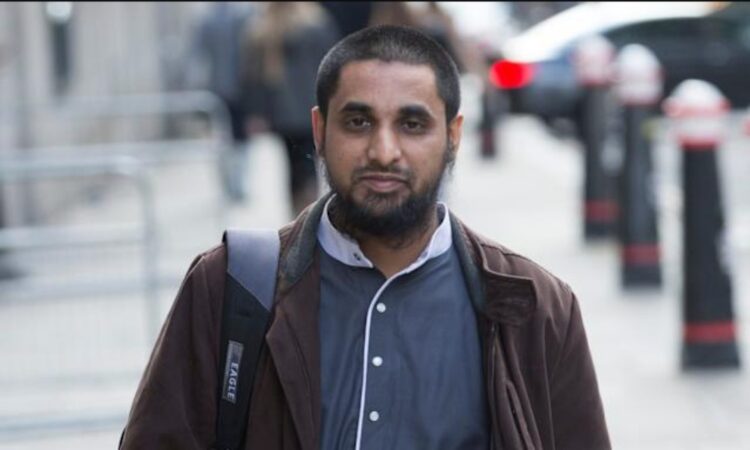
A man who used to work very closely with the extremist preacher Anjem Choudary has been using social media to promote the idea that Islamic law should replace the current legal system in Britain.
The man, Mizanur Rahman, was previously convicted of terrorism offences. He was sent to prison in 2016 along with Choudary because both of them publicly supported the banned extremist group Islamic State.
Despite that history, Rahman has returned to the internet and has been posting videos on platforms like YouTube and TikTok where he shares his views about Islam and politics. In these videos he argues that Britain should adopt sharia, which is a system of religious rules and laws based on Islamic teachings.
In one of his videos, Rahman says that if sharia law was introduced, many problems in society would disappear. He claims that banning things such as alcohol and drugs would reduce crime and make communities much safer.
According to him, when societies follow strict religious laws like this, criminal behaviour almost disappears and people can live peacefully. He argues that this kind of system would make cities like London safer, especially for women. In his view, women would feel comfortable walking outside without fear of harassment or violence.
Rahman also says that sharia is not only about punishment or rules but is a full system that deals with many parts of life. He claims it could even help public services like the NHS. According to him, free healthcare existed in Islamic societies long before modern systems such as the National Health Service were created. Because of that, he argues that Islamic law could actually help support or improve healthcare systems.
The comments were made during a video discussion that was presented as an academic conversation about Muslim politicians in Western cities. The video was titled “Faith in City Hall: The Rise of Muslim Mayors.” During this discussion, Rahman criticised the mayors of London and New York, suggesting they were not truly following Islamic teachings because they had not tried to introduce sharia in their cities.
He appeared to question whether leaders who do not govern using Islamic law can even be considered proper Muslims. In the discussion he suggested that if rulers openly go against Islamic teachings, Muslims should no longer feel obliged to obey them. He went further by saying that people should recognise when leaders act in ways he considers un-Islamic and should work to remove them from power.
Rahman grew up in north London and became involved with extremist circles when he was still a teenager. At the age of 17 he came under the influence of Choudary and another controversial cleric, Omar Bakri Mohammed. Bakri founded the extremist group al‑Muhajiroun, which has been linked to radicalisation in the UK.
While learning from these men, Rahman developed technical skills and worked as a web designer. He helped create online forums where followers of the extremist group could communicate privately. He was also very active on social media under the name Abu Baraa.
His involvement with extremism led to several prison sentences. In 2006 he was jailed for encouraging the murder of people during protests outside the Danish embassy. The demonstrations were linked to anger over cartoons depicting the Prophet Muhammad that had been published in Denmark. Later, in 2016, he and Choudary were again convicted and sent to prison for using the internet to support Islamic State.
Rahman was released from prison in 2018, but strict rules were placed on him. These conditions prevented him from using the internet or social media because authorities believed his online skills made him particularly dangerous in terms of spreading extremist ideas. Some security officials even thought he could be more of a threat online than Choudary.
Those restrictions were eventually lifted in 2021. After that, Rahman returned to social media and began posting sermons and political messages, especially on TikTok. In many of these videos he criticised Israel and promoted hardline religious views to thousands of followers.
He has also appeared on a website offering online courses about Islam that cost around £200. Over the past year he has regularly appeared on an Islamist YouTube channel with another preacher who calls himself Abu Mic.
In one of their discussions, Abu Mic suggested that if sharia law were ever introduced in Britain, the current Mayor of London, Sadiq Khan, could be among the first people executed because he supports LGBT rights. In another part of their conversation, Rahman accused some people in Britain of using Christianity as a way to unite others against people he described as “brown-looking,” claiming this was done to encourage hostility and violence against them.