
A Man and Woman Were Publicly Caned 100 Times Each After They Were Found Guilty of a Terrible Act Under Muslim Sharia Law

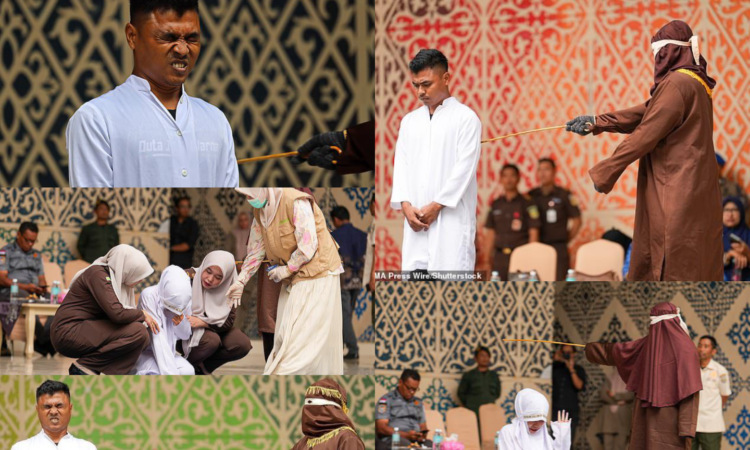
A man and woman were publicly caned 100 times each after they were found guilty of adultery under strict Sharia law in Indonesia’s Aceh province.
The punishment was carried out in Banda Aceh on Thursday in front of members of the public. The scenes showed just how painful the punishment became, particularly for the woman, who appeared to struggle as the caning continued.
The woman was seen kneeling as she received repeated lashes across her back. At one point, she raised her hand and appeared to beg for mercy as the punishment continued. Pictures later showed her collapsing to her knees after receiving the lashes, with officials stepping forward to help her.
The man who was punished alongside her also appeared to be in serious pain. He could be seen reacting each time the cane struck him as officials carried out the sentence.
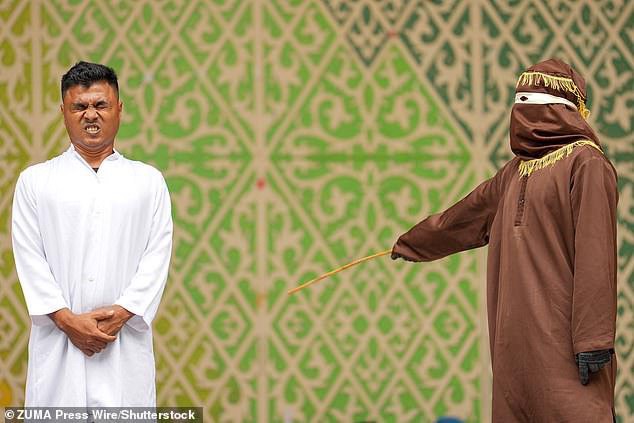
The couple had been found guilty of adultery and were sentenced by the Banda Aceh Sharia Court last month. Each was ordered to receive 100 lashes.
Under the Sharia rules enforced in Aceh, sexual relations outside marriage are forbidden and can lead to serious punishment. Aceh is the only province in Muslim-majority Indonesia where Sharia law is enforced in this way.
Caning is used in the province as punishment for several offences. These can include gambling, drinking alcohol and certain sexual offences, as well as sexual relations between people who are not married to each other.

The punishment is often carried out publicly, meaning other people can watch as those convicted receive their lashes. In some cases, crowds gather around the area and use their phones to take pictures or record videos.
During Thursday’s punishment, the woman’s pain became clear as the number of lashes increased. She was pictured with a painful expression on her face and holding up her hand while the punishment was taking place.
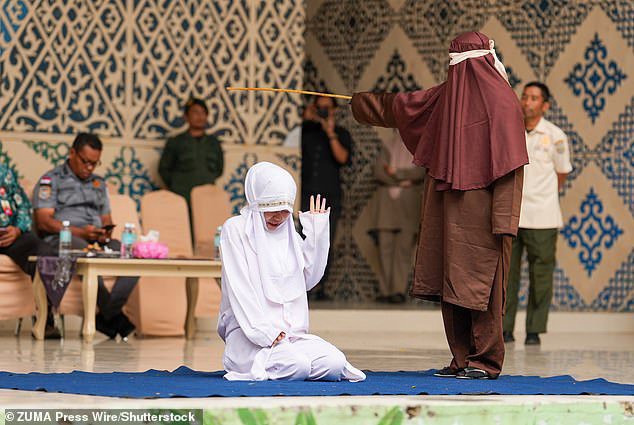
After receiving the full sentence, she was seen on the ground before officials helped her. The images quickly attracted attention because of the severity of the punishment.
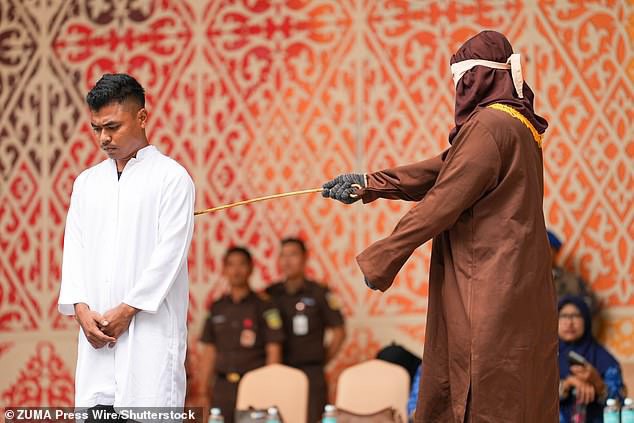
The man also struggled to complete his sentence in one go.
According to local news reports, officials became concerned about his condition after he had received around 60 lashes. His caning was temporarily stopped so he could rest and recover before the remaining punishment was carried out.
Darma Mustika, head of the General Crimes Section of the Banda Aceh District Attorney’s Office, explained that officials believed the man’s health may have been affected or that he was struggling to cope with the whipping.
Officials therefore stopped the punishment for a short period and gave him time to rest.
However, the break did not reduce the total number of lashes he was required to receive. Once officials decided that the punishment could continue, the caning resumed until he had received all 100 lashes ordered by the court.
The couple were not the only people punished that day.
A total of 10 people reportedly received lashes in Banda Aceh on Thursday. The other eight people, including men and women, received between 16 and 21 lashes each.
Those eight people had reportedly been found guilty of breaking Sharia rules after men and women who were not related to each other mixed together at a birthday party.
Under the rules enforced in Aceh, certain forms of close mixing between unrelated men and women can result in punishment.
Public caning has been used in Aceh for years, and the punishment is deliberately carried out where other people may be able to see it. Supporters of the system say this is intended to discourage others from committing similar offences.
Canings have previously taken place outside mosques and in public areas, where crowds sometimes gather to watch.
However, the practice remains highly controversial and has repeatedly been criticised by international human rights organisations.
Amnesty International and Human Rights Watch have both condemned the use of caning. Human rights campaigners argue that the punishment causes unnecessary physical suffering and can also leave people with emotional and psychological trauma.
Amnesty International has said that caning violates international human rights standards and has called for the practice to end. The organisation has described it as cruel, inhuman and degrading punishment and has argued that severe cases can amount to torture.
Local officials in Aceh, however, have defended the system. They say it is part of the province’s implementation of Sharia law and argue that punishments such as public caning can act as a warning to other people.
The latest case has once again brought attention to the difference between Aceh and other parts of Indonesia, where this form of Sharia punishment is not administered in the same way.
It also comes only weeks after another woman was publicly caned in Aceh following accusations involving a TikTok livestream.
In that case, the woman and a man were accused of kissing during a live broadcast on social media. They were later punished under Sharia law.
Pictures from that punishment reportedly showed the woman kneeling as she was caned. She was seen crying out in pain as the punishment continued and eventually lost consciousness, requiring medical attention.

The man involved in the livestream case was also caned.
Thursday’s punishment has now put the issue back in the spotlight, particularly after images showed the latest woman apparently begging for mercy and later collapsing.
While officials in Aceh continue to defend caning as part of the province’s laws and traditions, human rights organisations continue to call for an end to the practice, saying no offence should result in punishment that causes such severe physical pain and public humiliation.