Home Office Uncovers Suspected Scheme Helping Asylum Seekers Avoid Deportation From the UK, and What They Discovered Was Unexpected

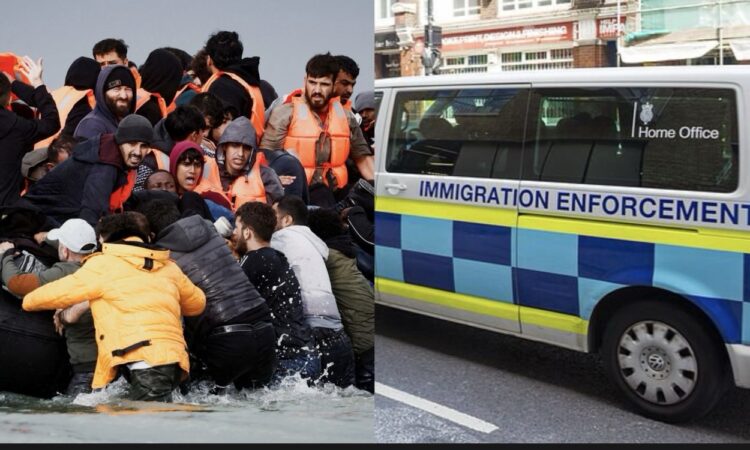
The Home Office is investigating claims that some asylum seekers are pretending to be gay to avoid deportation and secure permission to remain in the United Kingdom.
Investigators believe some migrants may be using false information about their sexuality to convince immigration officials that their lives would be in danger if they were sent back to their home countries.
The investigation has raised fresh concerns about possible abuse of Britain’s asylum system, particularly in cases where people claim they could face violence, imprisonment or persecution because of their sexual orientation.
According to reports, the Home Office is reviewing more than 100 asylum applications suspected of containing false information. The cases are linked to Apanjon, a Bangladeshi LGBT support organisation based in Whitechapel, east London.
Investigators suspect that some applicants may have submitted fake documents, arranged photographs and false letters of support to strengthen their asylum claims.
The purpose of these documents was allegedly to make immigration officials believe the applicants were gay and would face serious danger if they returned to their countries.
Reports suggest that people connected to the suspected operation were charging migrants between £1,000 and £4,500 to help them prepare false evidence.
Police have already carried out raids at addresses believed to be connected to the organisation. Two men suspected of involvement in the alleged scheme were arrested following the operation.
However, the investigation is still ongoing, and the allegations do not mean that everyone connected to the organisation or every asylum seeker who received support from it has committed fraud.
Ejel Khan, the founder of the Muslim LGBT Network, has also raised concerns about people allegedly making false claims about their sexuality to obtain asylum.
Speaking to the Daily Mail, Khan described the situation as a serious problem and claimed that many people were involved.
He explained that some individuals had approached him and offered money in exchange for letters supporting their asylum applications.
According to Khan, some of those people openly admitted that they were not gay but still wanted him to provide documents that could help them convince immigration officials otherwise.
He said he refused to provide such letters because he believed the claims were dishonest.
The investigation comes as figures show a significant increase in the number of people granted asylum in Britain following claims involving their sexual orientation.
In 2021, a total of 677 people were granted protection on these grounds. The number increased to 762 in 2022 before rising sharply to 2,133 in 2023.
However, the increase does not necessarily mean that fraudulent applications have become more common. Part of the rise has been linked to delays in processing asylum applications during the Covid pandemic, which left many cases waiting for decisions.
Nevertheless, the latest allegations have led to questions about how immigration officials check claims involving sexual orientation and whether some applicants are taking advantage of the protections available to people facing genuine persecution.
Under British asylum rules, a person may qualify for protection if they can show that returning to their home country would expose them to persecution because of their sexual orientation.
In some countries, same-sex relationships are criminalised, while people who are gay may also face threats, violence, discrimination or rejection from their communities.
Britain’s asylum system is designed to protect people who face such dangers and cannot obtain protection from the authorities in their home countries.
A major change came in 2010 when the Supreme Court ruled that gay asylum seekers should not be expected to hide their sexuality to avoid persecution after returning home.
Before that decision, some applicants had been refused protection on the grounds that they could avoid danger by keeping their sexuality private.
The ruling established that people should not have to conceal an important part of their identity simply to remain safe.
Following the judgment, Theresa May, who later became Prime Minister, introduced guidance during her time as Home Secretary to help officials assess asylum applications involving sexual orientation.
These protections have helped people who genuinely fear persecution, but concerns have also been raised that dishonest applicants could attempt to exploit the system by presenting fabricated evidence.
One case involved a Bangladeshi asylum seeker identified only as MHK.
The man claimed he was gay and submitted photographs and supporting statements linked to Apanjon to support his application to remain in Britain.
However, when the case reached an immigration tribunal, the judge concluded that the evidence had been deliberately arranged and that the photographs were not genuine proof of his claims.
The judge rejected the application, and the decision was later upheld following an appeal.
As a result, the man was left without permission to remain in the UK.
Another case mentioned in reports involved Saheed Azeez, a Nigerian national who was granted asylum in 2023 after claiming he could be killed because of his sexuality if he returned to Nigeria.
After receiving asylum, Azeez went on to have three children with three different women.
He was also later involved in a parcel fraud operation worth approximately £220,000, which resulted in a prison sentence of more than five years.
Although the case has attracted attention, having children with women does not, by itself, prove that someone is not gay or that an asylum claim was dishonest. Sexual orientation cannot be determined simply by looking at a person’s relationships or family circumstances.
The wider investigation has also raised concerns among campaigners who work to protect people fleeing persecution because of their sexuality.
Prominent LGBT rights campaigner Peter Tatchell said his organisation had previously raised concerns after receiving a large number of asylum requests that it believed might not be genuine.
He warned that fraudulent applications could damage public confidence in the asylum system and make life more difficult for people who genuinely need protection.
Tatchell stressed that protecting the integrity of the asylum process was important because genuine victims of persecution must not be overlooked or denied safety.
Campaigners fear that if immigration officials become increasingly suspicious of applications involving sexuality, people with genuine claims could face additional difficulties proving their circumstances.
At the same time, critics argue that the authorities must take stronger action against anyone found to be deliberately submitting false evidence.
There have also been allegations that some lawyers and refugee support organisations may be helping individuals take advantage of weaknesses in the system. However, these allegations do not establish that such organisations generally are involved in wrongdoing.
The Home Office is now examining the suspected cases to establish whether false evidence was used and whether any organised operation was involved in preparing fraudulent applications.
Investigators will need to determine whether the documents were deliberately fabricated, who was responsible for producing them and whether money changed hands.
The investigation could also help officials identify weaknesses in the process used to assess asylum claims based on sexual orientation.
However, authorities must still ensure that genuine applicants are treated fairly and that people who face real persecution are not wrongly refused protection.
The Home Office has warned that individuals found responsible for wrongdoing in connection with the Apanjon investigation could face removal from the United Kingdom, subject to the relevant legal procedures.
For now, more than 100 applications are reportedly under review, and the investigation remains ongoing.
The case has brought renewed attention to the challenge facing Britain’s immigration authorities: preventing dishonest individuals from abusing the asylum system while continuing to offer protection to people whose lives or freedom may genuinely be at risk if they return home.