
There are many ways powerful politicians in Washington can use their positions. They can push new laws through Congress, stop bills they do not support, pressure other lawmakers, control powerful committees, delay investigations, force important votes or prevent certain issues from ever reaching the House floor.
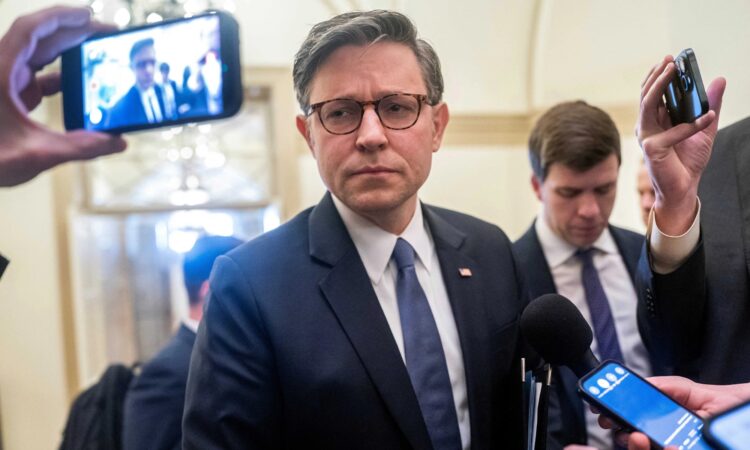
But critics of House Speaker Mike Johnson say he has increasingly relied on another powerful option when political pressure begins to build: sending lawmakers home.
Under Johnson’s leadership, the House of Representatives has repeatedly ended its work earlier than originally planned or removed voting days from its calendar. In 2026, the House reportedly removed 28 scheduled legislative days while adding only four new ones. That means there was a net loss of 24 days from the original schedule — around one-quarter of the days that had initially been planned.
The schedule was shortened again in September. Republican leaders had already removed two weeks of planned House work before the November midterm elections, giving lawmakers additional time away from Washington as they prepared to campaign in their districts.
Then, on September 16, Johnson announced another early departure. Thursday’s scheduled votes were cancelled, allowing House members to leave Washington a day earlier than planned. They are not expected to return for regular House business until after the November elections. (The Washington Post)
The decision immediately brought criticism, including from within Johnson’s own Republican Party.
Republican Congressman Thomas Massie of Kentucky strongly complained about the decision on the House floor. Massie questioned why Republicans, despite controlling the House, were ending congressional business when several major issues remained unresolved.
“We’re calling off Congress? And we’re in the majority?” Massie said during his criticism of the decision. (AP News)
Massie argued that lawmakers should remain in Washington and deal with unfinished business rather than leave early. Among the issues affected by the recess was his effort to force a vote on impeaching Defense Secretary Pete Hegseth over the Iran war. His push connected to the release of additional Jeffrey Epstein-related records was also among the unfinished matters left behind. (AP News)
Johnson, however, has defended the House’s record.
He argues that Republicans have already accomplished a significant amount of work and has pointed to hundreds of bills passed by the House as evidence that lawmakers have been productive. Before members left Washington, Johnson said the House had completed its work and that lawmakers could return if necessary. (AP News)
Supporters of the early recess can also point out that members of Congress do not work only when they are physically voting inside the Capitol. Representatives spend time in their districts meeting residents, attending events, working with staff, helping constituents and carrying out other congressional responsibilities.
However, critics argue that cancelling voting days still has major political consequences.
When the House is not voting, legislation can be delayed. Controversial votes can be postponed. Investigations and other congressional actions may also have to wait. Members can avoid being forced to publicly take positions on difficult issues shortly before an election.
This is why Johnson’s repeated changes to the House calendar have attracted attention. Critics, including Massie, have questioned whether some voting days have been cancelled partly because Republican leaders wanted to avoid politically difficult votes. Johnson has rejected criticism of the House’s productivity and insists that Republicans have delivered major legislative achievements. (AP News)
The wider debate also raises questions about the responsibilities of elected officials and what their oath of office actually requires.
The U.S. Constitution says senators, representatives and other federal and state officials must be bound by an oath or affirmation to support the Constitution. Federal law also sets out an oath requiring covered federal officials to support and defend the Constitution and faithfully perform the duties of their office. (Congress.gov)
But taking an oath does not automatically mean every controversial political decision becomes a criminal offence. Political disagreements, decisions about congressional schedules and arguments about how legislative powers should be used involve constitutional protections and complicated questions about the separation of powers.
That has led some critics to raise a broader question: should Congress examine whether existing laws are strong enough to deal with deliberate abuses of official power that interfere with constitutional government?
Such a proposal would have to be extremely carefully written.
It could not simply make political disagreement a crime. A Democratic administration should not be able to prosecute Republicans simply because they support conservative policies, just as a Republican administration should not be able to prosecute Democrats because they support liberal policies.
Any law would need to identify very specific conduct and require strong evidence of deliberate wrongdoing.
There would also be serious constitutional limits to consider. Members of Congress receive important protections for legitimate legislative activity under the Constitution’s Speech or Debate Clause. Any attempt to create new criminal penalties connected to congressional conduct would therefore face major constitutional questions.
For Democrats, if they gain control of Congress after the November 2026 midterm elections, one option would be to examine these issues through hearings and possible legislation. That could include looking at whether existing federal laws adequately cover intentional misuse of government power and whether any carefully defined additional safeguards are legally justified.
But any rules created would need to apply equally regardless of which political party controls Washington.
A law written while Democrats control Congress could later be used when Republicans hold power, and the same would be true in reverse. That makes clear definitions, constitutional protections and demanding standards of proof especially important.
The larger issue is whether America should depend mainly on political traditions and voluntary respect for established norms, or whether some expectations should be written more clearly into federal law.
Norms can influence political behaviour, but they are not always legally enforceable. When politicians decide that breaking a tradition carries little political cost, that tradition can become weaker.
That does not automatically mean every political norm should become a criminal law. Doing so could create serious dangers of its own, particularly if vague laws allowed prosecutors to target political opponents.
But Congress can still examine where the boundaries should be.
If lawmakers believe certain intentional abuses of public office genuinely threaten the constitutional system, they can debate whether existing laws already address those actions and, where genuine gaps exist, whether carefully written legislation is appropriate.
Any such legislation would need to protect legitimate political disagreement, preserve constitutional rights, clearly define prohibited behaviour and apply the same standards to Republicans, Democrats and everyone else.
Ultimately, the debate goes beyond Mike Johnson, Thomas Massie or the current Republican majority. It concerns how Congress should function regardless of which party holds power.
An oath of office is intended to represent a serious commitment to the Constitution and the responsibilities that come with public office.
The difficult question is what should happen when Americans believe officials have deliberately failed to respect those responsibilities — and whether elections, congressional discipline and existing laws provide enough accountability, or whether additional legal safeguards are necessary.
That is a question Congress itself may eventually have to answer.