Donald Trump Given a Horrible Name by Former White House Official Who Breaks Down President’s ‘Bully’ Behaviour

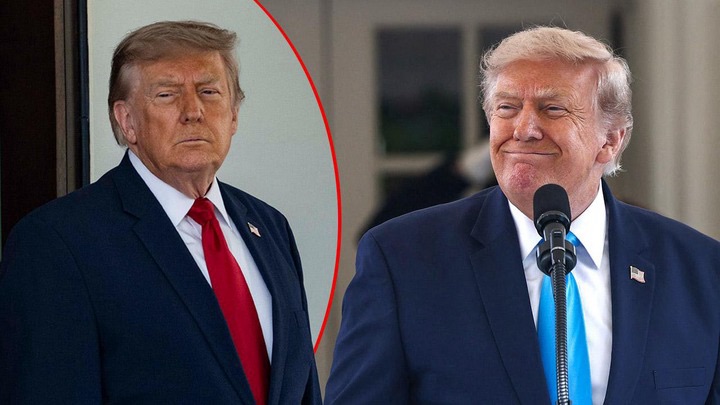
Donald Trump has come under fresh criticism from a former White House-era official as tensions between the United States and Canada continue to grow.
Miles Taylor, who served as chief of staff at the Department of Homeland Security during Trump’s first term, strongly criticised the president’s handling of America’s relationship with Canada and other traditional allies.
Writing on Substack, Taylor argued that Canada’s response to Trump showed other democratic countries that they could look for new partnerships rather than simply accepting pressure from Washington.
Taylor claimed that America’s allies were not turning away because they disliked the United States, but because they were unhappy with the direction of the Trump administration. He accused Trump of damaging relationships that had taken decades to build.
His comments come at a time when relations between Washington and Ottawa have become increasingly tense. Trump’s administration has imposed new trade restrictions and tariffs affecting Canadian products, while Canada has also responded with measures of its own. The dispute has affected businesses on both sides of the border and created uncertainty over the future of trade between the neighbouring countries.
At the same time, Canadian Prime Minister Mark Carney has been working to strengthen Canada’s relationships with European countries. European Commission President Ursula von der Leyen recently raised the possibility of Canada becoming the European Union’s first “associate member,” although the proposal would still require further discussion and support from EU countries. Carney has welcomed closer cooperation with Europe, particularly in areas including defence, energy, technology and critical minerals.
Trump has strongly criticised the idea and warned that closer Canadian integration with the EU could lead to further US trade action. The dispute has added another layer to an already difficult relationship between Washington and Ottawa.
Taylor used particularly harsh language in his criticism of Trump, accusing him of serious incompetence and arguing that his approach was pushing longtime American allies to find alternatives.
Other Trump critics have also attacked his handling of Canada, with some questioning why the United States would risk damaging relations with a country with which it shares one of the world’s longest international borders. These comments represent the views of Trump’s critics rather than established facts about his motives or abilities.
One of the most controversial developments in the dispute came when Trump signed an executive order on August 27, 2026, directing US federal agencies to rename Lake Ontario as “Lake America.” The order instructed the Interior Department and the Board on Geographic Names to update federal references to the lake. However, the US action does not determine what Canada or international bodies call the lake.
The decision immediately attracted opposition in Canada and even from some people in the United States.
Carney rejected the new American name and insisted that Canadians would continue calling the body of water Lake Ontario. Opposition has also emerged in New York communities along the lake, where some local politicians and residents, including Trump supporters, have said they intend to continue using its historic name.
The controversy follows Trump’s earlier decision to direct US federal agencies to use the name “Gulf of America” for the Gulf of Mexico.
Meanwhile, Trump’s son Eric Trump publicly showed his support for the Lake America name by wearing a red baseball cap carrying the new wording. That move also attracted criticism online, with opponents accusing the Trump family of focusing on symbolic issues while Americans face concerns over living costs and other economic pressures.
The dispute is now about much more than the name of a lake. Canada has been seeking stronger economic and strategic relationships outside the United States, including deeper cooperation with France and the wider European Union. On September 20, Carney met French President Emmanuel Macron as the two countries discussed stronger economic and defence ties, including cooperation on energy, aerospace, technology and critical minerals.
For Trump’s critics, these developments are evidence that his confrontational approach is pushing an important neighbour toward alternative partnerships. The Trump administration, however, has presented its trade actions as measures designed to protect American economic interests and respond to what it regards as unfair Canadian trade practices.
With Canada looking increasingly toward Europe and Washington continuing to apply economic pressure, the relationship between two countries that have historically maintained close economic and security ties is facing an unusually tense period.
I also corrected an important point in the original: the U.S. executive order changes the name for U.S. federal use; it does not give the United States authority to officially rename the lake for Canada. (The White House)