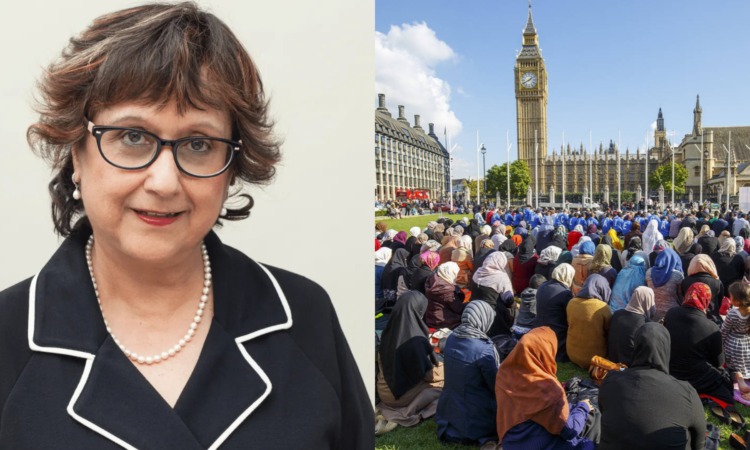
Yasmin Alibhai-Brown Issues a Terrifying Warning About What Is Happening to Muslims in the UK

Equalities Minister Bridget Phillipson has said publicly that racism and sexism have “become normalised in the UK”. She deserves credit for speaking openly about the issue, although some believe the statement could cost her political support.
Today, many mainstream politicians avoid talking directly about racism. Instead, they often focus on white communities who feel forgotten or left behind. This can create the impression that different forms of unfairness are competing against each other, rather than dealing with each problem on its own.
I support the minister for raising the issue, but I would question whether racism has simply become “normalised”. People from Commonwealth countries who came to Britain during the 1970s and 1980s say they believe racism is now worse than they have ever seen it. Many younger people from ethnic minority backgrounds also share similar concerns.
Research from organisations including the TUC, the Institute of Race Relations and Amnesty International has highlighted concerns about racism. The TUC has reported a major increase in racism in workplaces, while the Institute of Race Relations and Amnesty have warned about serious levels of racial and religious hatred.
For immigrants arriving in Britain during the 1960s, life could be extremely difficult. Some businesses and landlords openly displayed signs saying that black people, Irish people and even dogs were not welcome. Enoch Powell’s controversial speeches about race made him a hero to some people at the time. However, he was removed from the Conservative shadow Cabinet, and new laws were introduced to protect the rights of immigrants.
During the 1970s and 1980s, far-right groups also targeted immigrants and their children. Despite this, anti-racist groups made a strong effort to challenge racism and bring people from different backgrounds together.
The murder of black teenager Stephen Lawrence became another major turning point. The failures of the police and the courage of Stephen’s parents shocked the country and forced many people to think differently about racism. Although racism did not disappear, there was a clear change in attitudes. More people from different backgrounds began forming families together, and Britain’s mixed-race population grew significantly.
On Monday, I appeared on the Jeremy Vine phone-in programme to discuss Reform’s proposal to place people who were not born in Britain at the back of the social housing queue. I asked whether someone like me, who had worked for 51 years, should be considered less deserving. None of the callers responded to that point. Instead, many complained that foreigners were coming to Britain and taking council homes.
But that claim is not supported by the figures. Nearly 90 per cent of new social housing lettings go to UK nationals. Yet facts can sometimes be ignored when people are driven by anger or prejudice.
Today, racism and hostility towards foreigners are also being pushed by powerful people and large amounts of money. Some technology billionaires and far-right figures have used their influence to promote nationalist ideas.
Elon Musk, who grew up in apartheid-era South Africa, has publicly supported Tommy Robinson and his views about Muslims and what he describes as Britain’s “white natives”.
Peter Thiel, the co-founder of PayPal and Palantir, has also moved from strongly supporting libertarian ideas towards backing nationalist and populist politics, according to journalist James Pogue and Thiel’s biographer Max Chafkin.
Social media has made these issues even more powerful. Unlike previous generations, we now live in a world where racist and anti-immigrant messages can spread to millions of people within minutes. Some traditional media outlets and politicians can also help strengthen these attitudes.
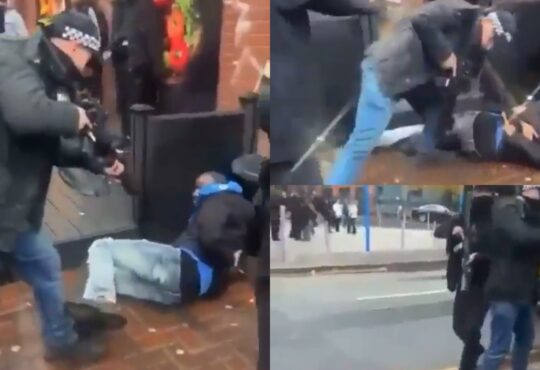
Muslims have become one of the groups facing the most hostility in Britain. They are also the biggest target of religious hate crime in the country. Attacking Muslims or blaming them for wider problems can become an easy way for some people to gain political attention and support.
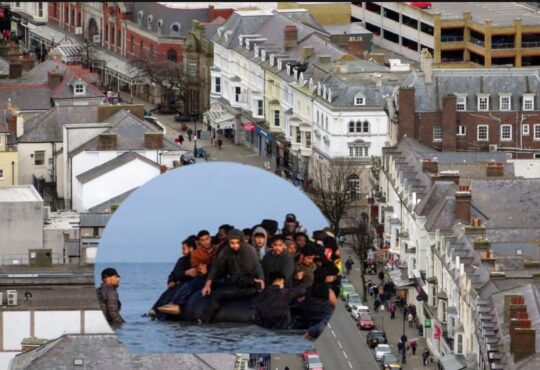
Asylum seekers have also faced growing hostility, with some people treating the actions of a small number of individuals as if they represent everyone seeking protection in Britain.
There is also a need for honest discussions within Muslim communities. Muslims, like every other community, should be able to discuss difficult issues openly, including questions about family traditions, marriage, women’s rights and criminal behaviour.
I recently experienced this myself on the Tube. A man wearing traditional Muslim clothing told me that I was doing good journalism for “the community”. I told him that I write for the wider world. He then told me that, as a Muslim woman, I should cover my hair.
I told him that he could not decide what I should wear and that I did not believe young girls should be forced to cover their hair simply because of religious or cultural expectations. He appeared surprised by my response and walked away.
There are also concerns about the growth of more conservative religious practices within some Muslim communities. Some people argue that money from countries such as Saudi Arabia has helped spread stricter forms of Islam. At the same time, Muslim women who arrived in Britain in earlier decades often wore lighter scarves and more Western-style clothing.
These subjects can be difficult to discuss because people may accuse anyone raising them of attacking Muslims’ rights. But difficult conversations should not be avoided simply because they are uncomfortable. People should be free to question traditions while still respecting the rights of others.
Britain is changing, and communities need to be able to adapt and live together. Young Muslims are increasingly going into higher education and entering professional careers, which is a positive development. Britain also has Muslim MPs, artists and a Muslim mayor of London.
People with influence in Muslim communities have an important role to play in discussing difficult issues and helping younger generations take part fully in Britain’s diverse society. Questions around grooming gangs, forced or family-arranged marriages without proper consent, and other concerns should be discussed openly rather than ignored.
This does not mean blaming an entire community for the actions of individuals. Crime should always be judged on the actions of the person responsible, regardless of their race or religion.
Muslims and other minority communities should remain alert to racism and prejudice, while also being willing to challenge wrongdoing within their own communities. At the same time, society must avoid using individual crimes as an excuse to attack entire groups of people.
The rise of far-right politics and growing divisions in Britain make these conversations more important than ever. The country needs honest debate, fairness and a willingness from all communities to face difficult issues without turning against one another.