
Who Gets Priority Between Asylum Seekers and Britons When It Comes to Council Housing? New Report Reveals the Truth No One Expected

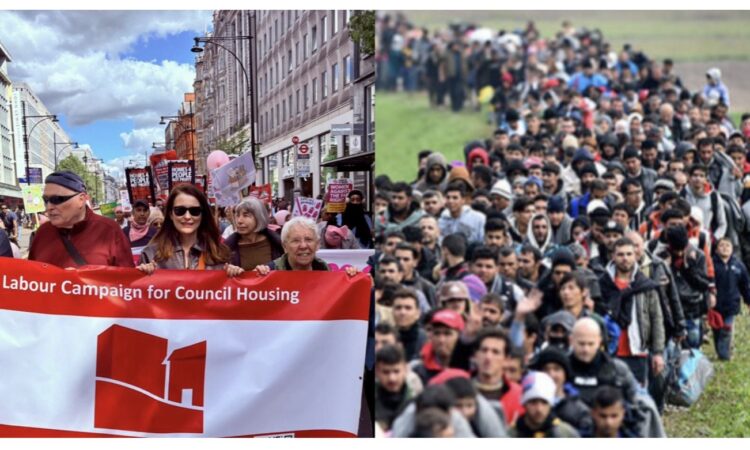
More than 31,000 people are currently waiting for council housing in Edinburgh as the city continues to face a serious shortage of homes and growing pressure on temporary accommodation, according to a report by GB News.
The situation has raised fresh concerns about how council housing is being allocated, particularly after it emerged that some homeless asylum seekers whose applications to remain in the UK have been approved have been able to move ahead of other people waiting for housing.
The policy was introduced by the City of Edinburgh Council in April 2025. Under the system, applications from people on the wider housing waiting list who were not considered disabled, homeless or at risk of violence were temporarily put on hold. The decision was made as the council struggled to deal with increasing demand for the limited number of homes available.
However, applications from asylum seekers who had received permission to remain in Britain and were homeless continued to be processed.
This has led to criticism from some politicians and residents who believe local people have been left waiting while the council deals with growing numbers of people arriving through the asylum system.
The council’s housing waiting list now has more than 31,000 applicants. There are around 42,000 homes available through the council and local housing associations, but demand for accommodation remains extremely high.
Councillors voted on Tuesday to bring back the previous system, which would allow more applications from people on the wider waiting list to be processed again. However, the change is not expected to come into force until October, meaning many people will continue to face uncertainty for several more weeks.
The issue is also linked to Scotland’s homelessness rules. Under the current system, people who are assessed as homeless can be entitled to housing support. Asylum seekers who receive a positive decision from the Home Office can also be treated as homeless if they have nowhere to live and need help from the council.
Edinburgh has seen homelessness increase significantly in recent years. The number of people needing homelessness support has risen by around 75 per cent since the period before the Covid pandemic, putting additional pressure on council services.
Temporary accommodation has been particularly affected. According to figures included in a council report, asylum seekers now make up more than 16 per cent of people being placed in temporary accommodation in Edinburgh. That compares with around one per cent in 2023, showing how quickly the situation has changed.
At the same time, the proportion of temporary accommodation being used by Scottish residents has changed much less dramatically.
The figures have prompted strong criticism from the Scottish Conservatives, who have accused the SNP Government of failing to deal with the growing pressure on Scotland’s housing system.
Tim Eagle MSP, the party’s housing spokesman, said the figures showed the scale of the problem and argued that ordinary Edinburgh residents should not feel they are being pushed further down the waiting list.
He said the rise in homeless asylum seekers using temporary accommodation was adding pressure to a system that was already struggling to cope with demand. He also called on the Scottish Government to consider the effect of its policies on local communities.
However, the council has defended its approach and said the situation is more complicated than simply deciding who should receive housing first.
Internal documents from the City of Edinburgh Council have also highlighted asylum policy as one of several issues that could increase pressure on the city’s housing services.
A council risk assessment warned that changes to asylum policies could lead to more people presenting themselves as homeless in Edinburgh. The document identified policies introduced by both the UK and Scottish Governments as a potential risk to the city’s ability to provide homelessness support.
Another change that has attracted attention was made in 2022, when former First Minister Nicola Sturgeon removed the requirement for council housing applicants to have a local connection to the area where they wanted accommodation.
Critics have argued that the change could have contributed to Edinburgh’s housing pressures because people without an existing connection to the city can potentially seek housing support there if they meet the relevant homelessness rules.
The council is now looking at further measures to deal with the growing demand. Some housing allocations could be paused, while officials are also considering whether new buildings could be converted into accommodation to provide more space for people who need somewhere to live.
The debate has created a difficult situation for the council. On one side, thousands of local residents are waiting for permanent homes, with many facing long delays before they can be offered suitable accommodation. On the other side, the council has legal duties to provide support to people who meet the requirements for homelessness assistance, including some asylum seekers who have been granted permission to remain in the UK.
A City of Edinburgh Council spokesman said the authority continues to monitor why households need temporary accommodation and stressed that not every case of homelessness can be prevented.
The spokesman explained that households who have received a positive asylum decision, as well as some people who have a local connection elsewhere in Scotland, are treated as cases where the council could not have prevented the homelessness before it happened.
The council said it monitors these groups separately from situations where it believes there is a greater opportunity to prevent homelessness, such as people losing their tenancy or experiencing a relationship breakdown.
The authority said this approach helps it understand where the biggest pressures are coming from and where action could be taken to prevent more people from becoming homeless.
Despite the growing pressure, the council said it believes some progress is being made through its emergency housing plan and that it remains focused on increasing housing provision across Edinburgh.
The growing number of people waiting for council housing is likely to remain a major political issue, particularly as the council prepares to change its housing allocation system again in October. With more than 31,000 applicants already waiting and temporary accommodation under increasing pressure, the authorities face a difficult challenge in finding enough homes for everyone who qualifies for support.