
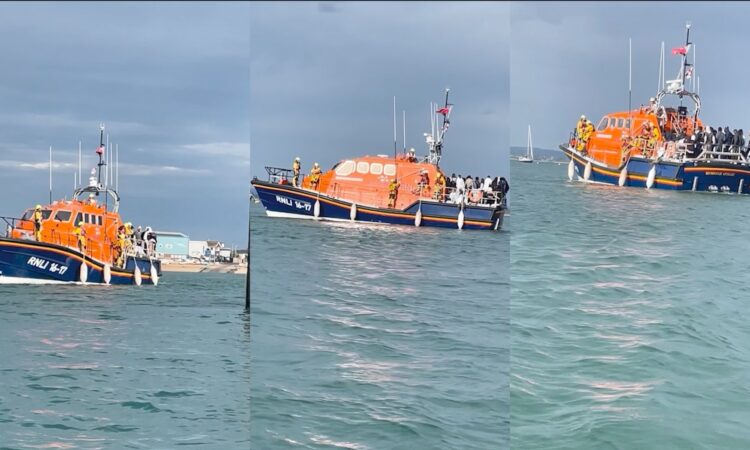
RNLI chief Peter Sparkes has strongly condemned threats and abuse aimed at lifeboat volunteers after they helped bring suspected migrants to shore in Portsmouth.
Mr Sparkes said it was completely unacceptable for volunteers and their families to face threats simply because they were carrying out lifesaving work.
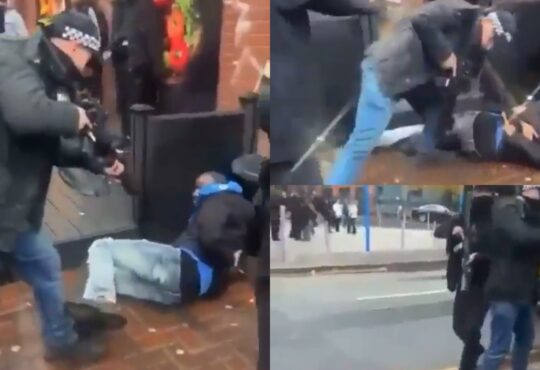
The warning came after hundreds of protesters gathered in Eastney, near Portsmouth, late on Sunday night. Three coaches were being used to transport migrants from the area, but some protesters tried to stop them from leaving.
The situation later became violent, with bricks and rocks reportedly thrown towards police officers. Some people also followed the coaches as they travelled away from Portsmouth towards Dover.
Seven police officers were injured during the disorder.
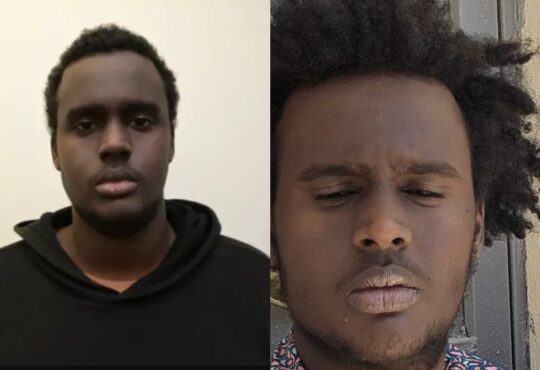
RNLI volunteers also became targets of anger after helping to bring migrants safely to land. Some people called the volunteers “traitors”, while photographs of some crew members were reportedly shared online, raising concerns about their safety and the safety of their families.
Mr Sparkes said there had been false information and misunderstanding about the role of the RNLI and the work its crews carry out in the English Channel.
He explained that RNLI volunteers give up their own time to save lives at sea, regardless of who needs help or why they are in danger.
He said it was deeply concerning that some volunteers and staff had faced abuse online, while others had reportedly experienced threats in person.
According to Mr Sparkes, people hiding behind masks or computer screens should not be threatening volunteers or their families. He said such behaviour was unacceptable in a civilised society and promised that the RNLI would do what it could to protect its workers, volunteers and their families.
The incident began after RNLI vessels were looking for somewhere to bring the migrants ashore. Southampton and Portsmouth Harbour were considered, but the boats were eventually directed to Eastney, several miles away.
Associated British Ports confirmed that crews had been told not to come into Southampton.
When the migrants arrived at Eastney, hundreds of protesters were already in the area. Some reportedly entered the water, while police faced the difficult task of keeping the situation under control.
The migrants then had to be transferred towards the Manston processing centre in Kent. With only one main access road in the area, the large crowd caused further problems for police and other authorities.
Hampshire Police Federation said one of the officers injured during the disorder had only been out of training school for three days.
Spencer Wragg, Chair of Hampshire Police Federation, said officers appeared to become a target while simply trying to police the situation.
He said reports included officers being assaulted, a police officer being pushed from a motorbike and police vehicles being damaged.
Mr Wragg said people have the right to protest peacefully and express their concerns, but attacking police officers, damaging vehicles and intimidating people is not peaceful protest.
He praised officers for remaining professional while working under intense pressure and provocation.
Conservative leader Kemi Badenoch also responded to the incident, saying violence and disorder would not stop small boat crossings. She said tackling the crossings requires a serious plan and an effective deterrent.
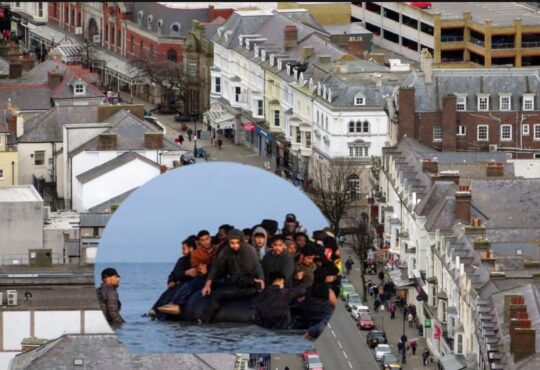
The events followed an unusual Channel crossing involving a large dinghy carrying around 120 people.
The boat reportedly left from an area near Cherbourg in France, far away from the more common departure points around Calais and Dunkirk.
French authorities were reportedly caught by surprise because the boat had been launched from an isolated and rocky area that was not normally expected to be used for migrant crossings.
Within around an hour of setting off, the dinghy was said to be in serious difficulty after its engine failed.
People on board reportedly made emergency Mayday calls using their mobile phones as the boat drifted around 14 miles from the French coast.
A major rescue operation followed, involving five French vessels and two helicopters.
When rescuers reached the dinghy, they found the passengers packed closely together. There were reportedly 20 women and eight children among the approximately 120 people on board.
Rescuers were particularly concerned because only a small number of people were wearing life jackets. Life jackets were then handed out to those on the dinghy.
French rescuers offered to take people off the boat, but according to a rescue source, those on board did not want to be rescued because they wanted to continue towards Britain.
A second outboard motor was eventually made to work, allowing the dinghy to continue its journey.
French rescue vessels continued assisting the boat as it travelled towards British waters. The migrants were eventually brought into Portsmouth, making the incident particularly unusual because Portsmouth is not normally used in this way for Channel arrivals.
The arrival then led to the tense scenes in Eastney, where police, protesters and emergency workers were faced with a difficult situation.
The RNLI has now made clear that while people may have strong opinions about migration and small boat crossings, its volunteers are there to save lives at sea. The organisation says threats and abuse against people carrying out that work should not be accepted.