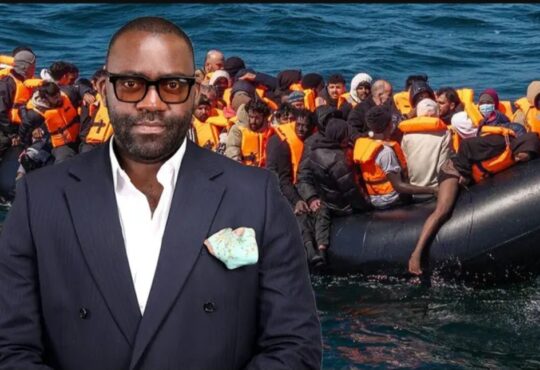
Journalist Who Visited a Migrant Camp Where Around 50 People, Including Young Children, Were Waiting to Cross to Britain Issues a Serious Warning About What She Saw

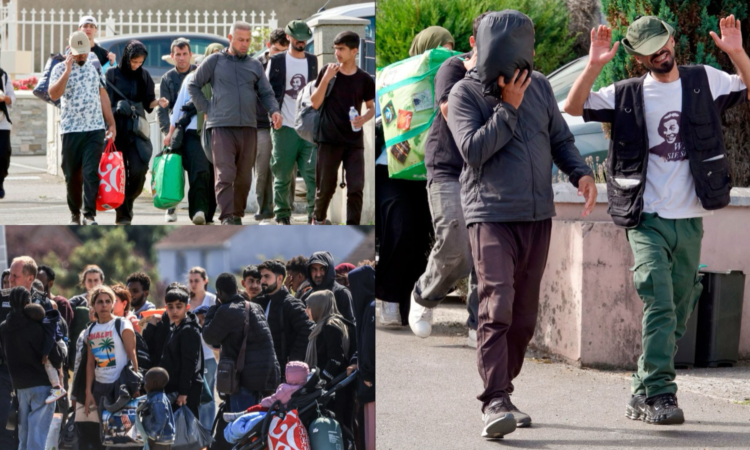
A group of around 50 migrants, including women, young children and families with babies, were seen making their way through northern France as they prepared to cross the English Channel to Britain. Their journey has raised serious concerns about the growing number of families risking their lives on overcrowded boats and the changing methods used by people-smuggling gangs.
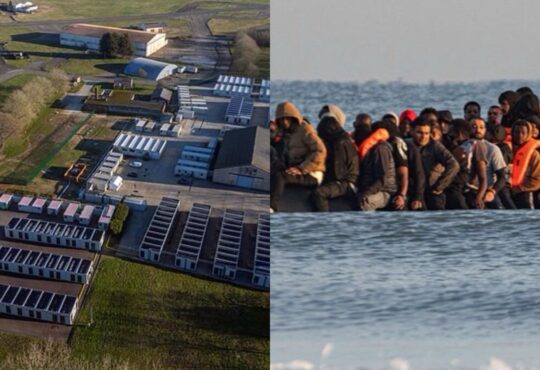
The migrants were followed as they travelled about 40 miles from a large camp in Loon-Plage, near Dunkirk, to Écault Forest, close to Boulogne. The forest has become one of the places where people-smuggling gangs are believed to arrange dangerous boat journeys to the UK.
According to reports, each migrant had paid around £1,200 for the final part of the journey to Britain. However, that money did not cover everything they needed. Those who wanted life jackets had to pay extra, with some sellers inside the camp reportedly charging as much as €50, around £42, for one.
This has raised concerns about how smugglers and other sellers are making money from people who are already in difficult situations. Life jackets are important for anyone travelling across the sea, especially when boats are overcrowded and conditions can change without warning.
Katie Sweetingham, head of operations at the charity Care4Calais, has spoken about what she has witnessed while helping migrants in northern France.
She said charity workers have noticed more women and children arriving at the camps, including families carrying very young babies. According to Sweetingham, the increase became more noticeable after the British Government suspended new applications under its refugee family reunion scheme in September 2025.
She explained that some families previously relied on the scheme to join relatives already living in Britain. With that option unavailable, she believes some have become more willing to take the dangerous journey across the Channel.
Sweetingham warned that the situation is becoming increasingly worrying because children who should be protected are being exposed to serious dangers at sea.
The journey taken by the group of around 50 migrants also showed how organised some of these crossings have become.
They reportedly left the camp in Loon-Plage and travelled to a nearby bus stop, where they boarded a bus to Gravelines. After waiting there, they continued by another bus to Calais.
From Calais, they took a train to Boulogne before boarding another bus towards Écault Forest. After reaching the edge of the forest, they walked along paths leading into the wooded area.
They eventually reached a temporary shelter hidden among the trees, where people preparing for Channel crossings are believed to gather.
A tall man, believed to be Kurdish, appeared to be guiding the group during part of the journey. He was described as having a noticeable tattoo on his right hand.
French police officers, including armed officers, reportedly followed the group during the four-hour journey. Officers were also seen walking behind the migrants as they entered the forest, but they did not stop them at that stage.
The incident has raised further questions about how French authorities are dealing with migrants travelling towards areas known to be used for small-boat crossings.
Meanwhile, people-smuggling gangs are reportedly changing their methods to avoid police patrols and continue sending boats towards Britain.
In the past, many crossings started from areas around Calais and Dunkirk. However, stronger police activity in those locations has reportedly pushed some gangs towards other parts of the French coastline.
One area attracting attention is the Opal Coast, south of Boulogne, where smugglers are believed to be arranging more departures.
Another major concern is the growing use of much larger inflatable boats, sometimes called mega-dinghies.
These boats can carry far more people than the smaller vessels previously used for Channel crossings. However, they are not necessarily designed for such dangerous journeys across open water.
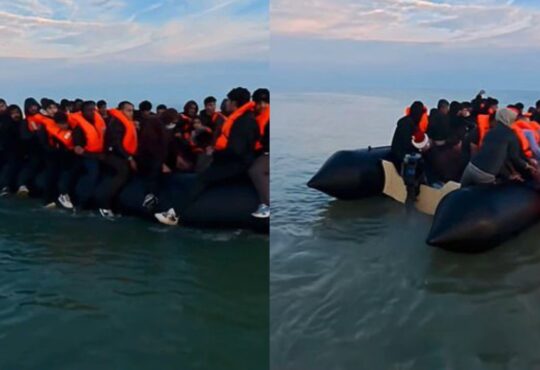
Reports suggest that some boats intended to carry around 40 passengers are being packed with as many as 150 people.
This means passengers may have very little room to move, while the weight of so many people can make the boats more difficult to control.
The danger becomes even greater when children, pregnant women and babies are among those travelling.
According to the report, some of these large inflatable boats are manufactured in China and can be bought for around £1,200.
Smuggling gangs have reportedly found ways to get them delivered to France much faster than before. In some cases, manufacturers are said to be offering air transport, allowing boats to arrive in less than two weeks.
Previously, transporting the boats overland could take several months and cost thousands of pounds.
This quicker supply has made it easier for criminal gangs to replace boats seized by police and continue organising crossings.
The financial rewards can also be enormous. A single overcrowded boat journey could reportedly bring in as much as £200,000 for a smuggling operation, depending on the number of passengers and the amount each person pays.
Sweetingham warned that the larger boats are creating a dangerous situation because smugglers can make more money from each crossing while putting more lives at risk.
She also raised concerns about children travelling without their parents.
Care4Calais workers have reportedly met children as young as 13 who are preparing to cross the Channel alone.
Some of these young people may be pressured into steering the boats. This can create further problems when they arrive in Britain because they may face police investigations over their involvement in operating the vessels.
There are also concerns that some young migrants may struggle to prove their real age to British authorities.
The dangers of these journeys have already been shown by several deadly incidents.
In one incident near Écault Forest, an inflatable boat overturned, leaving one man dead and a baby close to drowning.
On the same day, three women, believed to be in their 20s, 30s and 40s, died after another boat carrying more than 100 people capsized near Loon-Plage.
These tragedies have increased concerns about the number of people being placed inside boats that may not be suitable for carrying such heavy loads across the Channel.
Sweetingham said some migrants have told charity workers that they have personally witnessed friends dying during previous attempts to reach Britain.
Despite these experiences, some continue trying because they believe reaching the UK offers them a better future or an opportunity to reunite with family members.
Figures included in the August report showed how much the situation had changed over five years.
In 2021, an average of 27 people travelled in each boat that successfully reached Britain. By the time of the report, that figure had increased to around 66 people per boat.
The figures showed that 14,561 migrants had arrived in 219 boats during the period covered, compared with 28,526 people arriving in 1,064 boats throughout 2021.
This suggests that although the number of boats may be lower, each vessel can now be carrying far more passengers.
The growing use of overcrowded boats has become a major concern for both British and French authorities, particularly because rescuing large numbers of people from a sinking vessel can be extremely difficult.
French courts have also been dealing with people involved in organising these crossings.
One Egyptian man was sentenced to a year in prison after being convicted in connection with an attempt to transport a reported 173 migrants to Britain in a large inflatable boat. The vessel later caught fire in the Channel.
Another man, identified as Rasoul Halo, was also sentenced to a year in prison after being found transporting an inflatable boat towards a beach.
He reportedly had three passports, including a British passport, when police stopped him. He told investigators that he was helping a friend with a delivery.
The incidents show the difficulties authorities face in trying to stop the gangs behind these dangerous journeys.
For campaigners such as Sweetingham, the biggest concern is that tougher border controls alone may not prevent people from attempting the crossing. Instead, she argues, smugglers are finding different ways to operate, including using larger boats and moving departure points.
At the same time, British authorities face pressure to protect the country’s borders, prevent unauthorised crossings and take stronger action against organised criminal gangs.
The situation has created a difficult challenge for both countries, as they try to stop illegal smuggling operations while preventing further deaths at sea.
The presence of young children and babies among those preparing to make the journey has made the issue particularly worrying.
As long as people continue paying smugglers to reach Britain, there are concerns that criminal gangs will keep finding ways to send boats across the Channel, even when doing so puts passengers in serious danger.
The warning from Care4Calais is that without effective action against smuggling gangs and safer ways for eligible families to seek protection or reunite with relatives, more vulnerable people could continue risking their lives on overcrowded boats.