‘I stopped Sweden’s Illegal migrant wave – this is how UK can End small boat madness

Sweden’s migration minister has said Britain could reduce illegal immigration by following the same policies that have helped Sweden bring asylum applications down to their lowest level in more than 40 years.
Johan Forssell believes the UK can reduce the number of migrants crossing the English Channel in small boats without leaving the European Convention on Human Rights (ECHR).
His comments come as the British government continues to face pressure over the number of migrants arriving in the country through dangerous Channel crossings.
Some British politicians believe the UK must leave the ECHR to make it easier to deport people who have no legal right to remain in the country. However, the Swedish minister believes tougher immigration rules can still work while respecting international human rights laws.
Around 30,000 people arrived in Britain on small boats in the year ending July 31, 2026. Recent crossings have also raised concerns because large numbers of people are travelling in overcrowded boats, putting their lives at risk.
Figures cited in the report also show that Britain received around 178,845 asylum applications between 2018 and 2025, with 79,589 people, representing 44.5%, granted refugee status.
British governments have repeatedly promised to stop illegal immigration and reduce small boat crossings. However, the problem has continued despite different policies introduced over the years.
Sweden, on the other hand, says it has made major progress in reducing the number of people seeking asylum.
Mr Forssell, who is part of Sweden’s right-wing coalition government, believes Britain should consider introducing similar immigration measures.
Speaking to The Telegraph, he explained that Sweden had reduced benefits available to migrants, increased deportations of foreign criminals and introduced rules requiring asylum seekers to stay in special reception centres while their applications are being considered.
According to the minister, these changes have helped Sweden reduce asylum applications significantly.
Sweden expects to receive around 4,200 asylum seekers in 2026, which would be its lowest figure since 1984.
Since the current Swedish government came into power in 2022, asylum applications have reportedly fallen by 75%, while deportations have increased by 60%.
Mr Forssell believes these figures show that governments can reduce immigration by introducing tougher rules and making sure those rules are properly enforced.
He also said people who move to Sweden should be willing to learn the Swedish language, find employment and respect the country’s laws.
According to him, these are reasonable expectations for anyone who wants to settle in another country.
The minister argued that asking migrants to work, follow the law and become part of society should not be considered an extreme political position.
He also warned that Europe is still facing serious immigration challenges.
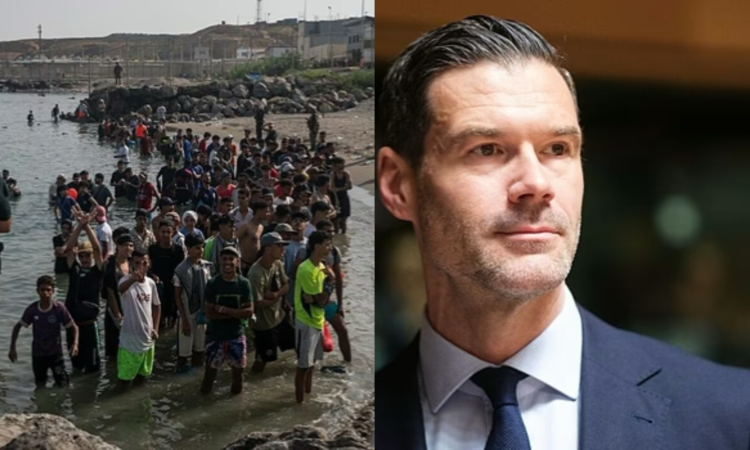
Mr Forssell pointed to the situation in Britain and reports of large numbers of migrants entering the Spanish territory of Ceuta from Morocco.
The report claimed that more than 70,000 people entered Ceuta between July 30 and 31, with many reportedly swimming around border fences. However, that unusually large figure was not independently verified in the supplied report.
The minister believes such developments show why European governments must take border security more seriously.
Immigration has been a major political issue in Sweden for several years.
During the European migrant crisis in 2015, Sweden received more than 162,000 asylum applications.
The large number of arrivals led to growing public concern about immigration, housing, public services and how newcomers could become part of Swedish society.
Over time, immigration became one of the biggest issues in Swedish politics, helping parties that supported tougher border controls gain more public support.
Mr Forssell said his government has since reviewed immigration laws and introduced stricter measures to reduce asylum applications and increase deportations.
He believes Britain could learn from Sweden’s experience rather than continuing to struggle with the same immigration problems.
However, the minister also acknowledged that there is no single policy that can completely solve illegal immigration.
He explained that Sweden had introduced several changes instead of depending on one major decision.
One important issue in Britain is whether the country should remain part of the European Convention on Human Rights.
Some politicians argue that the convention makes deportations difficult because foreign nationals can use human rights protections to challenge removal decisions.
Mr Forssell believes leaving the ECHR is not the only way to tackle the problem.
However, he also wants changes to the convention, arguing that some of its rules can make it difficult to deport foreign nationals who have committed serious crimes.
He said governments should be able to protect their citizens and remove foreign criminals while still respecting human rights and international law.
According to him, Sweden remains committed to its international legal responsibilities, but that should not prevent the government from taking action against people who commit serious offences.
Meanwhile, Reform UK leader Nigel Farage has also presented plans aimed at stopping migrants from crossing the English Channel.
Under a proposal known as Operation Fortress, Reform UK wants the Royal Navy to intercept migrant boats and return them to France or Belgium.
Mr Farage believes the operation could be carried out without breaking international law.
He has described the proposal as a way to prevent dangerous crossings and reduce the number of people risking their lives at sea.
Speaking at a press conference, he said the plan would involve a combined military operation.
However, returning migrants to another country would raise legal and practical questions, including whether France or Belgium would agree to accept them.
The debate over immigration continues as Britain faces pressure to find a lasting solution to small boat crossings.
For Mr Forssell, Sweden’s experience offers an example of how stricter immigration policies could reduce asylum applications and increase deportations.
He believes Britain does not necessarily need to leave international human rights agreements to achieve similar results.
Instead, he argues that the government should review existing immigration laws, introduce tougher rules where necessary and ensure those rules are properly enforced.
Although Sweden and Britain face different immigration challenges, the Swedish minister believes his country’s approach could offer useful lessons for the UK as it searches for ways to reduce illegal immigration and stop dangerous Channel crossings.