DonaldTrump shoots himself in the foot as his own posts hand him a devastating outcome

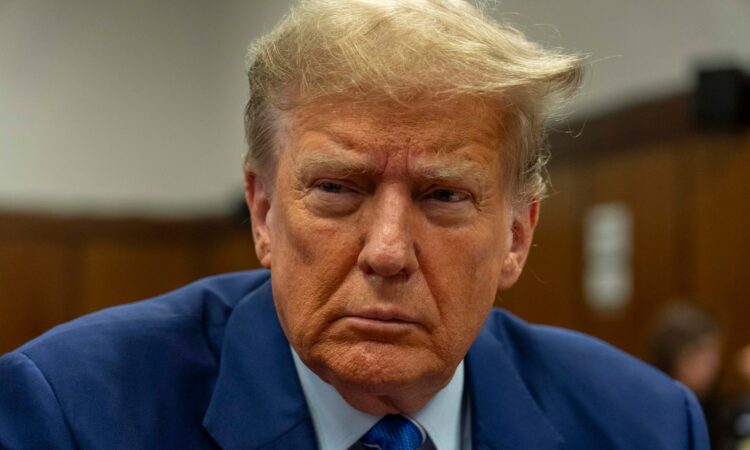
President Donald Trump has suffered a major legal setback after his own social media posts reportedly helped weaken his administration’s arguments in court.
A free speech lawyer said the president’s public comments contradicted what his legal team was telling a federal judge, making it more difficult for the White House to defend its decision to restrict several major news organisations.
Conor Fitzpatrick, the chief supervising attorney for the Foundation for Individual Rights and Expression, discussed the ruling during an interview with CNN presenter Laura Coates on Tuesday. He explained that US District Judge Timothy Kelly, who was appointed by Trump himself, had ruled against the administration’s decision to ban certain media organisations from accessing the White House.
The ruling was a significant victory for CNN, MS NOW and Politico, which had challenged the restrictions in court. As a result, the three news organisations will be allowed to maintain their White House access while the legal battle continues.
Fitzpatrick described the decision as a major victory for press freedom, explaining that the judge had rejected several important arguments presented by the Trump administration.
According to him, the court did not simply find problems with the procedures used to restrict the journalists. The judge also concluded that the administration’s actions raised serious constitutional concerns involving freedom of speech and freedom of the press.
Fitzpatrick explained that Judge Kelly found Trump’s actions amounted to unconstitutional discrimination based on the viewpoints expressed by the news organisations. The judge also determined that the restrictions represented unlawful retaliation against media outlets over their reporting.
This was particularly important because the First Amendment of the US Constitution protects freedom of speech and freedom of the press. It limits the government’s ability to punish journalists or news organisations simply because officials disagree with their reporting or dislike the opinions they express.
The Trump administration had attempted to defend its decision by arguing that the restrictions were necessary for national security. However, Fitzpatrick said the judge was not convinced by that explanation.
He pointed out that the government had failed to provide evidence showing how allowing the affected journalists into the White House would create a national security threat.
According to Fitzpatrick, the judge even noted that the administration had not submitted confidential evidence privately to the court to support its claims. Such evidence could have been considered without being made available to the public if there were genuine security concerns.
The absence of supporting evidence became a major weakness in the government’s case.
However, Fitzpatrick suggested that another problem made the administration’s position even more difficult to defend: Trump’s own statements on social media.
He explained that during the previous week’s court hearing, Justice Department lawyers were arguing that the media restrictions had been introduced for national security reasons.
At the same time, Trump was reportedly posting messages on social media suggesting that the restrictions were connected to news coverage he considered unfair or unfavourable.
This created an obvious contradiction between the president’s public explanation and the legal argument being presented on his behalf.
While government lawyers were asking the judge to accept that the decision was based on security concerns, Trump’s own comments appeared to suggest that his dissatisfaction with certain news organisations had influenced the restrictions.
Fitzpatrick said the contradiction became so noticeable that Judge Kelly directly questioned the Justice Department lawyer about it.
The judge reportedly asked how he was supposed to assess the government’s argument when the president was publicly offering a different explanation from the one his lawyers were presenting in court.
That question highlighted the difficult position facing the administration’s legal team.
Lawyers representing a president must defend government decisions using legal arguments and evidence. However, when the president publicly makes statements that appear to contradict those arguments, those comments can become important evidence in the case.
Fitzpatrick suggested that this was exactly what happened during the dispute over White House press access.
He argued that the court’s decision demonstrated how difficult it was for the administration to maintain that national security had been the genuine reason behind the restrictions.
In his view, the ruling showed that the government’s explanation did not match the circumstances surrounding the decision.
The case also raised wider questions about the relationship between the White House and the American media.
Presidents have frequently criticised journalists and news organisations over reporting they consider inaccurate or unfair. However, the government faces constitutional limits when taking official action against media organisations because of their coverage.
The dispute therefore goes beyond whether Trump approves of CNN, MS NOW or Politico. It concerns whether a president can use government authority to restrict journalists because their reporting is considered hostile or politically unfavourable.
For the affected organisations, the ruling means their journalists can continue covering White House activities without losing access under the challenged restrictions while the case moves through the courts.
During the CNN discussion, Laura Coates responded to Fitzpatrick’s explanation by pointing out that a person’s own statements can become evidence against them in legal proceedings.
Addressing the president directly, she remarked, “What you say can and will be used against you in a court of law, Mr. President.”
Her comment reflected the central issue highlighted during the interview: Trump’s public statements appeared to have undermined the defence his administration was presenting before the judge.
The fact that Judge Kelly was appointed by Trump also attracted attention, as the ruling demonstrated that the judge was prepared to reject the administration’s arguments despite having been nominated to the federal bench by the president.
Nevertheless, the legal dispute is not completely over.
Coates explained that the ruling came at the injunction stage, meaning the court was deciding what should happen while the wider lawsuit continues rather than delivering a final judgment resolving every issue in the case.
The decision protects the news organisations’ access for now, but further legal proceedings could still take place.
The Trump administration may also continue challenging the ruling through the courts.
For the moment, however, the decision represents an important setback for the White House and a victory for the media organisations involved.
It also serves as a reminder that statements made by political leaders outside the courtroom, including comments published on social media, can have serious consequences when their government’s decisions are challenged before a judge.
In this case, according to Fitzpatrick, the president’s own words helped expose the gap between the White House’s public messaging and its legal defence, contributing to a court ruling that went against his administration.