Desperate Stranded Migrant Reveals What He Would Do Instead of Going Back to His Home Country

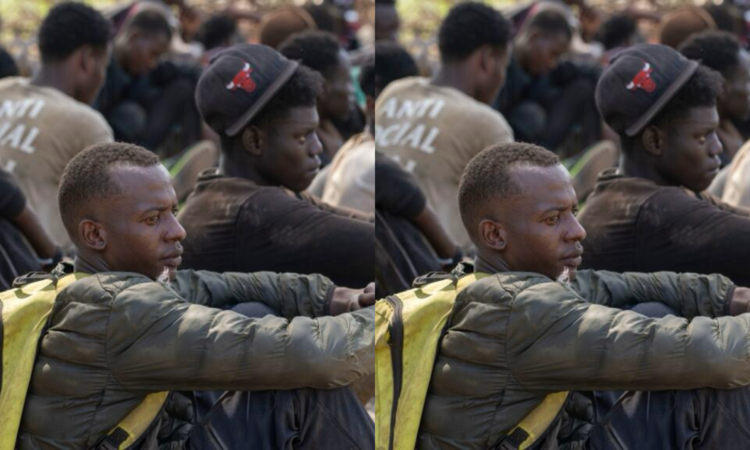
At the end of July, between 70,000 and 80,000 people crossed into the Spanish enclave of Ceuta from neighbouring Morocco. Most of them have since left, but thousands are still there, including many children.
Many of those who remain are asylum seekers from countries such as Sudan, Yemen, Chad, Mali and Egypt. Some have told aid workers that they are afraid to return to Morocco and would rather die than go back.
Spanish authorities have sent more police officers to Ceuta because of fears that another large group of migrants could try to cross the border. On Sunday, hundreds of migrants gathered on a beach to demand the chance to apply for asylum and to protest against being sent back to Morocco.
Maria Jimenez, who works with migrants and asylum seekers, spoke to RFI about the people who are still in Ceuta, their living conditions and how the Spanish authorities are responding to the situation.
RFI asked Jimenez about the number of migrants still in Ceuta. Spanish officials have given different figures. The interior minister estimated that about 5,000 people remained, while the leader of Ceuta said the number could be at least 8,000.
Jimenez said it was difficult to know the exact number because the authorities were not properly counting everyone in the enclave.
She explained that charities and other organisations working on the ground were trying to keep their own records. They register people’s names, countries of origin and ages, especially when they are dealing with children.
Jimenez said local people living around Ceuta were also helping aid workers understand how many migrants were still in the area.
According to her estimate, around 4,000 children remain in Ceuta, mainly around areas such as El Principe and Los Rosales. She said some local residents had been providing food to the children because they were not receiving enough help from the authorities.
She also said local people had allowed a football pitch to be used as a place where women and young girls could sleep. The aim was to stop them from having to sleep outside.
Jimenez claimed that more than two weeks after the mass crossings, there was still not enough official accommodation or support available. She said some people were not even being provided with one proper meal a day.
She added that police had registered around 300 girls who had arrived without parents or other adults looking after them.
When asked about the adults who remained in Ceuta, Jimenez said many were asylum seekers from countries including Sudan, Yemen, Chad, Mali and Egypt.
She estimated that around 3,500 adults were still there. She said this estimate was partly based on information from the Spanish Red Cross, whose volunteers visit the beach each evening and provide food.
Because the volunteers know how many meals they give out, aid workers can use those numbers to get an idea of how many people are still staying in the area.
Jimenez said organisations working on the ground had counted around 7,000 migrants in total, although the real number could be higher because some people were hiding in forests or other areas.
She stressed that not everyone who crossed into Ceuta should simply be treated as someone who can be sent back to Morocco.
According to Jimenez, many of those still there are seeking asylum and say they are afraid of what could happen if they are returned to Morocco.
Some have escaped countries affected by war and serious conflict, including Sudan and Palestine. Jimenez said some people had spent months or even years travelling before reaching Ceuta.
She argued that each person’s situation should be looked at separately, particularly when someone says they could face danger if they are returned.
Jimenez also criticised the authorities for what she described as a lack of proper support. She said she believed that doing very little could be seen as a message to people thinking about travelling to Ceuta: that there is no easy future waiting for them there.
However, she said the current situation could not continue for much longer.
People, she said, need somewhere safe to sleep, food, medical care and clear information about what will happen to them.
She called on the Spanish government to take urgent action because the situation had already continued for more than two weeks and tensions were beginning to grow.
Jimenez said that sending more police officers could help with security, but police alone would not solve the problem.
She said the government would also need to follow legal procedures before removing people from Ceuta. This would be particularly important for children and people who are asking for asylum.
She said authorities should register people properly, provide support for children, give asylum seekers access to the asylum process and provide translators where necessary.
Until decisions are made, she argued that migrants should at least be given safe and decent living conditions.
The situation has also created tension among local residents in Ceuta.
Jimenez said many people were frightened during the first few days because Ceuta is a very small place. The enclave covers around 20 square kilometres and has a population of roughly 80,000 people.
She asked people to imagine what it would be like for tens of thousands of people to suddenly enter a city in a very short period of time.
She said it was understandable that residents were worried and that many felt they had been left to deal with the situation themselves.
However, she said the reaction later changed in some parts of the city, with local residents beginning to help migrants by providing food and other basic support.
There have also been reports of violence and arguments, but Jimenez said she did not believe violence was the main story.
She explained that when thousands of people are living without proper shelter, food or access to basic facilities such as showers, tensions can easily rise.
In her view, some of the conflicts are linked to the difficult living conditions rather than being a simple case of migrants arriving and causing violence.
The situation in Ceuta remains a major challenge for Spanish authorities, local residents and organisations supporting the migrants. The government faces pressure to maintain border security while also dealing with asylum claims and protecting vulnerable people, particularly children.
At the same time, local residents are concerned about how the sudden arrival of large numbers of people could affect their small community.
For the migrants who remain, the biggest questions are where they will sleep, whether they will receive enough food and medical care, and whether they will be allowed to make asylum claims before any decision is made about their future.