
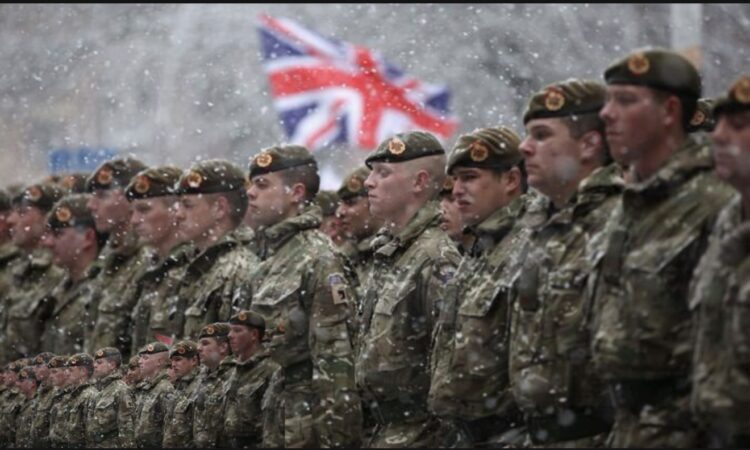
If World War 3 were ever to break out, there could be serious questions about whether people in Britain would be required to join the armed forces. In a major national emergency, the government could consider bringing back conscription, which means people would be legally required to serve their country.
However, this would not happen automatically. The UK does not currently have compulsory military service, so new laws and decisions would be needed before people could be forced to join the Army, Navy or Royal Air Force.
The possibility of a major conflict has become a growing concern as tensions between Russia and Western countries continue. Russia’s war in Ukraine has already created a serious security situation across Europe, while governments are also preparing for the possibility that the conflict could become wider.
Britain has continued to support Ukraine, including through military assistance and other forms of support. This has raised concerns about the country’s security and the possibility of Russia responding to Western involvement. At the same time, there are fears that a wider conflict in Europe could place additional pressure on Britain’s armed forces.
The war in Ukraine has also encouraged several European countries to think more seriously about defence. Some governments have increased military spending, while others have looked at ways of increasing the number of people who could be available to support their armed forces during a serious emergency.
France has already taken steps towards expanding military service and encouraging more young people to become involved with its armed forces. The move came as European countries continued to worry about Russia’s military strength and the possibility of future conflicts.
For Britain, the question of conscription is particularly important because the country has not used compulsory military service for many years. The last form of National Service ended in the early 1960s. Since then, Britain’s armed forces have mainly relied on people who choose to join.
But history shows that this can change quickly during a major war.
During the Second World War, Britain introduced conscription before the war had even officially started. In 1939, the government first brought in military training for certain young men as the international situation became increasingly dangerous.
When Britain declared war on Germany on September 3, 1939, the rules were quickly expanded. Men aged between 18 and 41 were required to register for military service.
This meant that thousands of ordinary men who had never planned to become soldiers were suddenly required to serve. Some were sent into the armed forces, while others were allowed to work in important jobs that were considered essential to the war effort.
Not everyone was required to fight. People who were medically unfit could be exempted, while workers in important industries such as farming, medicine, engineering and food production could also be protected from being called up because their work was needed to keep the country running.
As the war continued, the government expanded the rules even further because more people were needed. By the end of 1941, men up to the age of 51 could be called up for military service. Some older people were also required to take part in other forms of national service.
Women were also eventually brought into the wider war effort, showing how a major conflict can affect almost every part of society.
This history is one reason why people are asking what could happen if Britain ever found itself involved in another large-scale war. If a future government decided that the armed forces did not have enough personnel, it could consider introducing some form of compulsory service.
The exact age range would depend on the law introduced at the time. There is currently no confirmed rule saying that men of a particular age would automatically be forced to fight if World War 3 started.
There have also been concerns about Britain’s military readiness. In recent years, senior politicians and military leaders have warned that the country needs to be prepared for a more dangerous security environment.
Former Defence Secretary Grant Shapps previously warned that Britain was moving from what he described as a “post-war” world towards a “pre-war” world. Senior military figures have also called for Britain to strengthen its armed forces and make sure the country is ready to respond if a serious conflict occurs.
Public opinion on conscription is also divided. A YouGov survey involving more than 3,000 people found that a significant number of people under the age of 40 said they would refuse to join the armed forces if another world war broke out.
Some people said they would still refuse to serve even if Britain faced the threat of an invasion. At the same time, many people supported the idea that women should also be included if compulsory military service were ever introduced.
The question of what would happen to people who refused to serve is also complicated. During the Second World War, people known as conscientious objectors could refuse military service because of deeply held beliefs. However, refusing to serve did not always mean they were simply allowed to stay at home. Some were taken to court, while others were required to carry out alternative work that supported the country during the war.
If Britain ever faced a similar situation in the future, the rules would have to be decided by the government and Parliament. The government would need to determine who would be called up, what ages would be covered, who could receive exemptions and whether people who refused military service would be allowed to perform alternative duties.
For now, there is no current law that automatically forces British men to join the Army if World War 3 breaks out. Any decision to bring back conscription would be a major political step and would depend on the seriousness of the situation and the laws passed by Parliament.
A future conflict could therefore look very different from the Second World War. Modern warfare relies heavily on technology, cyber security, intelligence, drones and other specialist skills, meaning that military service would not necessarily mean that every person called up would be sent directly to the battlefield.
Some people could potentially be needed for logistics, engineering, communications, medical work, cyber operations or other essential roles. The main purpose of any future mobilisation would likely be to provide the country with enough people and skills to respond to a serious national emergency.
For ordinary people, the possibility of conscription remains a worrying subject. Nobody can say with certainty what would happen if a major global war broke out, because it would depend on the circumstances at the time and the decisions made by the British government.
What is clear is that Britain has used compulsory military service before during times of extreme danger. If the country ever faced a similar emergency again, the government could consider bringing back some form of national service, but it would not happen automatically simply because a war had started.