Somali Migrant Jailed for Raping Five Women in Birmingham Wins Court Battle Against NHS After Making a Shocking Claim About What Happened to Him During Ramadan in Prison


A Somali man who was jailed for raping several women in Britain has won a legal battle against the NHS after complaining about how he was given painkillers while serving his prison sentence during the Muslim holy month of Ramadan.
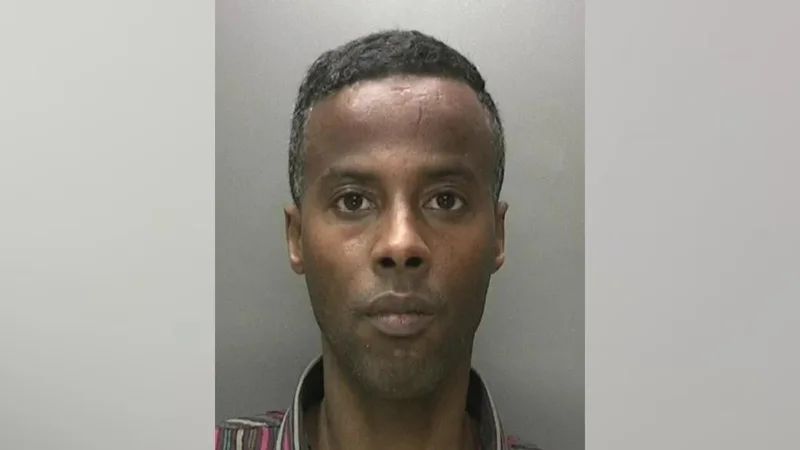
Dahir Ibrahim, 41, took legal action against Birmingham Community Healthcare NHS Trust, arguing that the rules for giving him his prescribed medication made it difficult for him to follow his religious beliefs.
The case has attracted attention because of Ibrahim’s serious criminal history and the fact that he is serving a life sentence for violent sexual offences.
Ibrahim was first sent to prison in 2006 after being convicted of raping three sex workers in Birmingham. During the attacks, he threatened the women with a knife. He received a 10-year prison sentence for those crimes.
However, after his release, he committed further serious offences. In 2016, he was handed a life sentence, with a minimum term of 10 years, for raping two more women in 2014. He had also threatened those victims with weapons.
The latest legal dispute began in May 2019, when Ibrahim was being held at HMP Birmingham.
At the time, prison doctors had prescribed him codeine, a strong painkiller, to help manage pain in his knee. However, the prison had strict rules about when prisoners could receive and take certain medications.
Under those rules, Ibrahim had to visit a medication hatch at specific times in the morning or afternoon. A member of the medical team would then give him the medicine and watch him take it.
The problem arose during Ramadan, when Muslims who are fasting do not eat or drink between dawn and sunset.
Ibrahim argued that taking his medication during the prison’s normal daytime hours would interfere with his religious fasting.
On May 6, 2019, he went to the medication hatch at around 5pm and asked to take his codeine away so he could use it later.
However, a nurse told him that he was not allowed to take the medication back to his cell. She explained that he could only take it at the hatch while being supervised by medical staff.
Ibrahim refused to take the painkiller under those conditions.
The same problem happened over the following two days, leaving him without his usual medication.
He eventually arranged to see the prison’s GP to discuss the situation.
On May 9, doctors gave him paracetamol as a temporary replacement. Unlike codeine, he was allowed to take this medication away from the hatch.
However, Ibrahim claimed that going without codeine had caused him to experience withdrawal symptoms.
He later decided to take legal action against Birmingham Community Healthcare NHS Trust, which was responsible for providing healthcare services at the prison.
He argued that the medication policy treated him unfairly because of his religion. He also claimed that the arrangements interfered with his right to private life and freedom of religion.
The case eventually reached Birmingham County Court in 2024.
After considering the evidence, Judge Mohammed Shakil Najib ruled that the prison’s medication arrangements amounted to indirect religious discrimination.
This means that although the same rules applied to prisoners generally, they placed Ibrahim at a particular disadvantage because he was observing Ramadan.
The judge explained that prisoners who were not fasting for religious reasons did not face the same difficulty when taking medication during the normal hours.
However, the court rejected Ibrahim’s separate claims concerning his right to private life and freedom of religion.
Birmingham Community Healthcare NHS Trust disagreed with the discrimination ruling and decided to appeal.
The trust argued that prisons operate under strict security arrangements and limited staffing, making it difficult to provide routine medication outside normal hours.
It also raised concerns about the wider consequences of the ruling, suggesting that it could encourage similar legal complaints from other prisoners.
The appeal was considered by the High Court during hearings in May and July 2026.
However, in a judgment issued on September 29, Mr Justice Soole rejected the NHS trust’s appeal and upheld the earlier decision in Ibrahim’s favour.
The judge explained that the original ruling was based on the particular facts of Ibrahim’s case and should not automatically be treated as a decision that applies to every similar situation.
Following the judgment, Birmingham Community Healthcare NHS Foundation Trust said it respected the court’s decision and would consider how to apply the findings.
A spokesperson said the organisation was committed to preventing discrimination in the healthcare services it provides at HMP Birmingham.
Meanwhile, Ibrahim remains in prison at HMP Whatton in Nottinghamshire.
He is expected to have his case considered by the Parole Board in the coming months as he approaches the end of the minimum period he must serve under his life sentence.
However, reaching the end of a minimum prison term does not mean a prisoner is automatically released. The Parole Board must first decide whether it is safe for the person to return to the community.
The Home Office has also confirmed that it intends to pursue Ibrahim’s deportation as soon as possible if he is released from prison.
A Home Office spokesperson expressed sympathy for the victims of his crimes and said foreign nationals convicted of serious offences are referred for deportation at the earliest opportunity after sentencing.
The department also said that more than 11,700 foreign criminals, including people convicted of murder and rape, had been removed from Britain since the last general election.
According to the Home Office, this represents a 41 per cent increase compared with the previous two-year period.
The case has raised wider questions about how prisons should balance security rules, medical treatment and prisoners’ religious needs.
While Ibrahim’s serious criminal convictions remain unchanged, the court’s decision makes clear that prisoners still have legal protections against discrimination while serving their sentences.
The ruling does not overturn his convictions, reduce his prison sentence or guarantee his release. It concerns the way his prescribed medication was provided during Ramadan.
For now, Ibrahim remains behind bars, with any future release depending on the Parole Board’s assessment and the Government maintaining its intention to seek his removal from the United Kingdom.