Thousands of Illegal Migrants ‘Heading for UK’ After Being Smuggled Through a Shocking Route That No One Ever Expected

Thousands of migrants are reportedly being smuggled into Europe through secret underground tunnels, raising concerns that some could eventually make their way to the UK.
The tunnels have been discovered beneath the border between Belarus and Lithuania. Smugglers are believed to be digging these hidden passages to help migrants avoid border guards and enter European Union countries without permission.
One of the tunnels, which was about 50 feet long, was discovered in a forest near Kabeliai in southern Lithuania. Footage obtained by The Sun reportedly showed 18 migrants crawling through the narrow underground passage before coming out through a small opening and running into a nearby forest.
Authorities fear that these tunnels could become a new route for migrants hoping to travel across Europe, including those who may eventually attempt to reach Britain.
According to reports, Lithuanian border guards have discovered 12 secret tunnels in 2026, while officers in neighbouring Latvia have found another two. The authorities have been destroying the tunnels as soon as they discover them to stop smugglers from using them again.
Lithuania’s Interior Minister, Martynas Katelynas, warned that the problem was becoming more serious. He said illegal migration was increasing and that underground tunnels were now being used as another way to enter Lithuania without going through official border checkpoints.
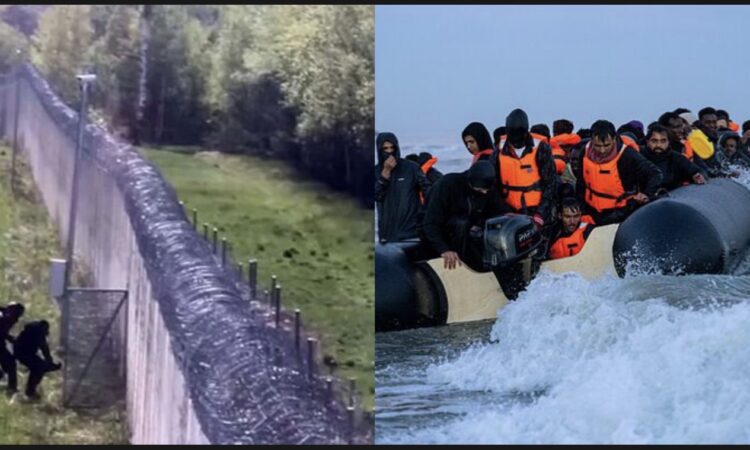
In another discovery, border officers found two tunnels that had been dug beneath a security fence. One of them was reportedly about 130 feet long.
In August, Latvian border guards arrested 28 migrants who had entered the country through an underground passage from Belarus.
Officials say nearly 12,000 attempts to cross Latvia’s border fence have been stopped this year. Despite these efforts, smugglers are reportedly continuing to find new ways to move people across the border.
Some Latvian officials believe Belarus may be helping or allowing these activities to happen.
Captain Vladimirs Sersts, an officer with Latvia’s State Border Guard, explained that migrants have sometimes been seen walking freely near the border fence on the Belarusian side, even though the area is supposed to be restricted.
His comments have increased concerns that the movement of migrants towards the European Union may not be happening without the knowledge of Belarusian authorities.
Belarus is a close ally of Russian President Vladimir Putin, and both Lithuania and Latvia have strongly supported Ukraine since Russia launched its full-scale invasion in 2022.
Some security experts believe the migrant situation could also be part of a wider political strategy to put pressure on European countries.
Margarita Seselgyte, Director of the Institute of International Relations and Political Science at Vilnius University, described the tunnels as a possible form of hybrid attack designed to create fear and uncertainty.
She suggested that one of the aims could be to weaken European support for Ukraine and create disagreements between EU countries.
Lithuania has been dealing with illegal border crossings from Belarus for several years.
Since the border crisis began in 2021, Lithuanian authorities say they have prevented more than 26,000 attempted entries from Belarus. Almost 1,700 attempts have reportedly been stopped in 2026 alone.
However, these security measures do not appear to have completely stopped the smugglers.
In July, Lithuanian border guards discovered another underground tunnel that was still being constructed. The unfinished passage was about 36 feet long before officers found it and stopped the work.
The discoveries have also raised questions about whether some migrants entering Eastern Europe could later travel through other European countries and attempt to reach Britain.
Although there are concerns about the UK becoming a possible destination, there is no confirmed evidence that all the migrants using these tunnels are planning to travel to Britain.
Alp Mehmet, Chairman of Migration Watch UK, criticised the way some European countries deal with migrants attempting to cross borders.
He questioned why France does not take back more migrants who have travelled from French territory to Britain without permission.
Mehmet also criticised the money Britain has paid France to help prevent small boat crossings, arguing that the UK should be receiving better results from the arrangement.
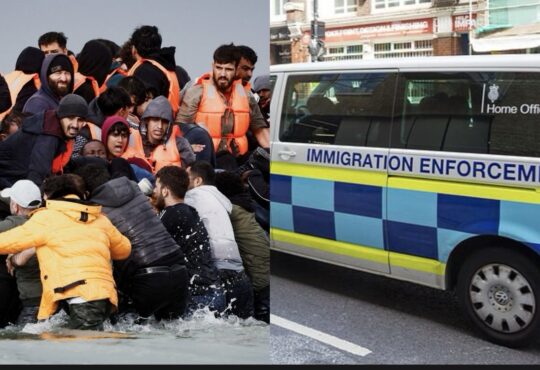
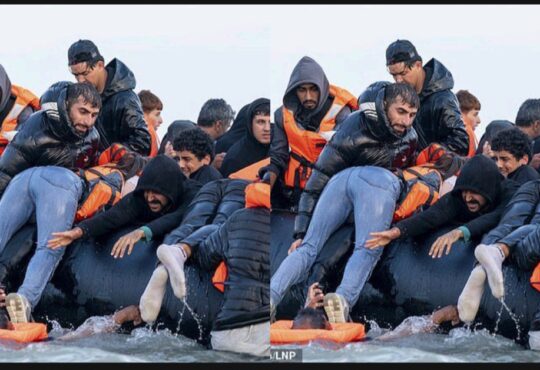
Meanwhile, the dangers faced by migrants trying to reach Britain across the English Channel remain a serious concern.
Earlier this week, two men reportedly died while attempting to cross the Channel in a small boat.
French authorities said the men, believed to be in their 30s and 40s, died after a boat carrying around 90 people left the French coast near Berck on Sunday night.
Three other passengers needed medical treatment after coming into contact with fuel inside the overcrowded vessel.
In a separate incident, another boat carrying around 80 migrants ran aground near Camiers on Sunday morning.
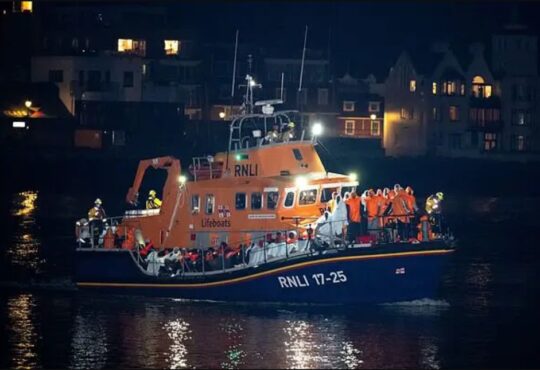
Most of those on board managed to return to the beach, but 11 people had to be rescued after suffering from hypothermia caused by exposure to cold conditions.
French maritime authorities have repeatedly warned migrants about the dangers of attempting to cross the Channel in small inflatable boats.
Officials say these vessels are often overcrowded, poorly equipped and unsuitable for travelling through one of the busiest shipping routes in the world.
Despite these dangers, criminal smuggling networks continue to organise journeys for people hoping to enter Britain.
The British Government has insisted that progress is being made in reducing small boat arrivals.
A spokesman for Prime Minister Andy Burnham recently claimed that Channel crossings had fallen by 44% compared with the previous year.
He also said the summer recorded the lowest number of small boat arrivals in six years.
According to the spokesman, more than 80,000 people who had no legal right to remain in the UK have been removed since the election, representing a reported increase of 52%.
However, the discovery of underground tunnels along Europe’s eastern borders has created fresh concerns about how criminal networks are changing their methods.
Border officers are now facing the challenge of stopping migrants not only at fences, checkpoints and sea crossings, but also through hidden passages dug beneath the ground.
Authorities fear that as security measures become stronger, smugglers may continue developing new and more dangerous routes to move people across international borders.
For Britain, the concern is that some migrants who successfully enter the European Union through these secret tunnels could eventually travel towards France and attempt to cross the English Channel.
For now, officials in Lithuania and Latvia are continuing to search for hidden tunnels, arrest those involved in illegal crossings and destroy underground routes before smugglers can use them again.