Judge Allows Man to Return Home After Police Discover He Secretly Took Thousands of Pictures of Women and Children – What He Did With Them Is Shocking

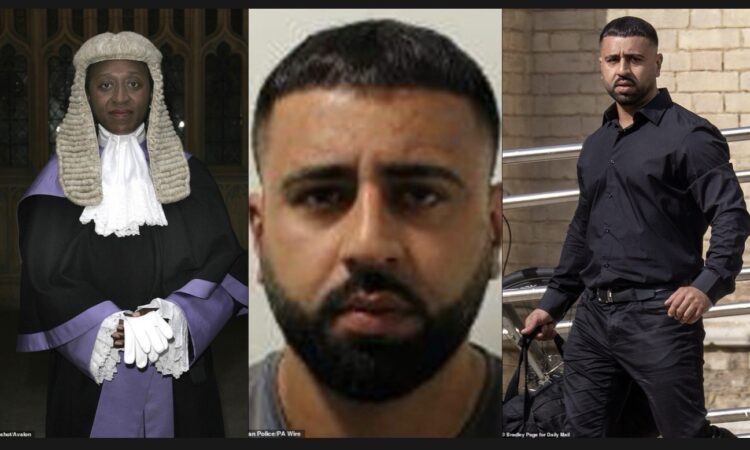
A man who secretly took thousands of pictures of women and children before using artificial intelligence (AI) to create fake naked images was allowed to return to his home despite serious concerns raised by victims, their families and the police.
Zafer Dogan, 32, was sentenced to two years and four months in prison last month after admitting to several offences involving indecent images of children and the misuse of AI technology.
Dogan took more than 5,000 photographs, including pictures of women and young girls who were unaware they were being photographed. Many of the images were taken from the window of his flat in Enfield, north London, which overlooked a children’s playground.
Police discovered that he had used AI software to digitally remove clothing from some of the people in the photographs, creating fake sexual images for his own satisfaction.
However, what has caused further anger is the decision by several judges to allow Dogan to remain on bail at the same address where he committed many of his offences.
New court records have revealed that prosecutors, police officers and the families of his victims repeatedly asked for him to be kept in custody because they feared he could commit further offences.
Despite these concerns, the courts allowed him to return home while waiting to be sentenced.
Dogan was first arrested on July 16 but was released on bail. He was arrested again on August 4 and charged the following day.
On August 6, he appeared before Highbury Corner Magistrates’ Court, where he admitted the charges against him. However, magistrates decided to release him on bail again.
His bail conditions required him to remain in the UK, live at his registered address and avoid unsupervised contact with anyone under 18. He was also allowed to have only one internet-connected device, which had to be registered and made available for police inspection.
The decision was later supported by judges at Wood Green Crown Court.
During one hearing, prosecutors asked for Dogan to be kept in prison while awaiting sentencing. His lawyer suggested that he could instead wear an electronic tag and follow a curfew.
However, Judge Daniel Fugallo decided not to impose either of those measures.
At another hearing, prosecutor Iseult McGrory explained that Dogan had been assessed as posing a high risk and that families were extremely worried about his continued presence in the neighbourhood.
One of the children he targeted lived so close to his flat that the child had to walk past the building regularly.
The situation became so distressing that the family eventually had to move to another home, while the child was forced to change schools.
The prosecutor told the court that families were frightened Dogan might take more photographs or commit further offences. She also explained that the situation was causing serious emotional and psychological harm.
Judge Barbara Mensah said she understood the concerns of the families and had sympathy for what they were experiencing.
However, she explained that the law required specific grounds before someone could be held in custody while awaiting sentencing.
According to the judge, prosecutors needed to show that Dogan was likely to run away, commit further crimes or interfere with witnesses.
She said there was no evidence that he had done any of those things while on bail.
Although she admitted that she might have reached a different decision about his bail conditions, she said she could not simply overturn earlier decisions because she disagreed with them.
The judge also warned that allowing such changes without proper legal grounds could encourage prosecutors to keep bringing cases before different judges until they received the decision they wanted.
Meanwhile, the families of the victims described how the offences had affected their lives.
The mother of a 13-year-old girl said she was completely shocked when police told her what had happened to her daughter.
She said one of her biggest fears was that the fake sexual images could have been shared online and might now be in the possession of other child sex offenders.
The mother of a seven-year-old victim also spoke about the pain her family had experienced.
She explained that she felt powerless because someone had exploited her child and caused damage that could affect the family for years.
Another parent said their lives had been completely turned upside down and questioned why more had not been done to protect them.
During the investigation, officers found thousands of photographs showing women and children carrying out normal daily activities without knowing they were being watched.
Some pictures showed children playing on climbing frames.
The court heard that Dogan had used AI technology to alter photographs of 33 adult women and two children, aged seven and 13, to create sexualised images.
He admitted several offences, including making indecent images of children, possessing extreme pornography, possessing a prohibited image of a child and creating fake intimate images of adults.
The indecent images included 900 category C images, 294 category B images and 653 category A images, the most serious classification.
He also admitted obstructing a police officer during the investigation.
Following his sentencing, Metropolitan Police Commissioner Sir Mark Rowley strongly criticised the decisions that allowed Dogan to remain on bail.
He argued that protecting children should be the main priority when courts make decisions involving offenders who pose a risk to young people.
Sir Mark said it was unacceptable that one family felt they had no choice but to leave their neighbourhood and move into temporary accommodation to escape living near Dogan.
He explained that the move had disrupted the family’s daily life and affected the children’s education.
The police commissioner also raised concerns about pressure on the prison system, suggesting that overcrowding could be contributing to more dangerous offenders being released on bail despite objections from police and prosecutors.
The Prime Minister responded by saying that Sir Mark’s concerns deserved attention and called on those responsible for the criminal justice system to consider what changes might be necessary.
The case has also brought renewed attention to the serious overcrowding problem facing prisons in England and Wales.
A report from the House of Commons Public Accounts Committee previously warned that prisons were operating at between 98 per cent and 99.7 per cent capacity between October 2022 and August 2024.
The committee also found that the number of prisoners being held while awaiting trial or sentencing had reached a record 17,711 in August 2024.
However, decisions about whether defendants should remain in custody or be released on bail are made independently by judges and magistrates.
For the families affected by Dogan’s crimes, the biggest concern remains the impact on their children and the fear caused by knowing that the man responsible was allowed to return to the same neighbourhood.
The case has raised serious questions about how courts balance the legal rights of defendants with the safety and emotional wellbeing of victims, especially when children are involved.