Border Force Stops Lorry After It Arrives in the UK From Rotterdam, Then Officers Find Something Unexpected Hidden in the Back

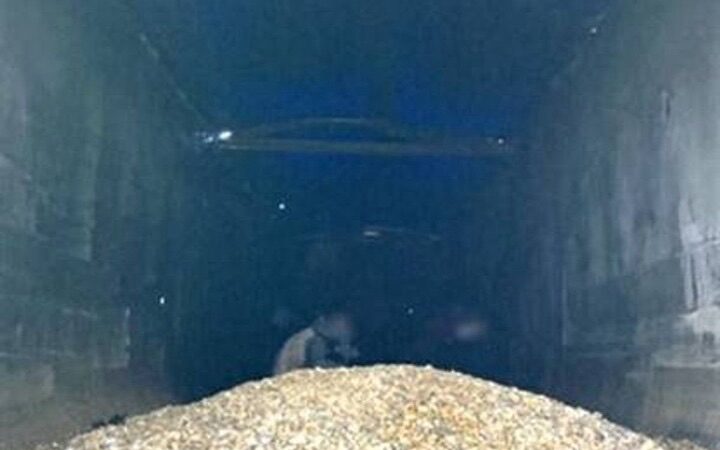
Border Force officers found 13 migrants hiding at the back of a specially modified tipper truck after the vehicle arrived in Hull on an overnight ferry from Rotterdam.
The officers became suspicious of the vehicle after it arrived at King George Docks in Hull. They stopped it and carried out a scan, which showed that people were hidden inside the trailer.
When officers opened the back of the truck, they discovered 13 people crowded together inside. The group included four Albanian nationals and nine Vietnamese nationals. Six of the Vietnamese nationals were believed to be children, while another person also claimed to be under 18.
Hull Crown Court heard that none of the 13 people had permission to enter or remain in the UK.
Costinel Curcan, 41, a Romanian national, admitted being involved in a plan to help the group enter the country illegally. The offence happened between 30 October and 9 November 2022.
Prosecutor Stephen Robinson told the court that Border Force officers stopped two vehicles at King George Docks on 9 November 2022. They had arrived early in the morning on the overnight Pride of Rotterdam ferry.
One vehicle was carrying the specially modified tipper truck, while the other was a Vauxhall Astra. Officials discovered that the drivers apparently knew each other and worked for the same company. Curcan was travelling as a passenger.
Border Force officers decided to examine the tipper truck more closely. A scan showed signs that people were inside the trailer.
When officers opened it, they found the 13 migrants huddled together at the back.
Further checks showed that the truck had been deliberately changed. Wiring connected to the roof had been disconnected, meaning the truck could not open normally to take a load. It also did not have the hydraulic equipment normally needed to unload its contents.
Prosecutors said this showed that the vehicle had been specially adapted to secretly transport people into the UK.
The court also heard that Curcan and another man in the Vauxhall Astra were seen apparently removing or changing SIM cards in their mobile phones. Prosecutors said this suggested there may have been an attempt to remove or interfere with possible evidence.
The other man was also found carrying more than £1,000 in cash.
When Curcan was questioned, he denied knowing that people were hidden inside the truck, although he admitted that he knew the other man.
Prosecutors said the migrants, or at least the trailer carrying them, appeared to have been picked up in Rotterdam before travelling by ferry to Hull.
Curcan later failed to appear in court and was eventually arrested in Folkestone, Kent. He had been kept in custody since 6 April.
The court heard that two other people believed to have been involved, including the drivers of the car and lorry, had not been arrested at the time.
Prosecutors described the operation as a commercial activity and said Curcan had played a role in it. Officers also discovered that the vehicle was displaying false number plates.
Curcan’s lawyer, Philip Mahoney, told the court that the father of four had pleaded guilty and had no previous convictions.
He said Curcan had worked as a lorry driver for around 16 years, travelling between the UK and other parts of Europe without getting into trouble.
According to his lawyer, Curcan later met another man who initially gave him legitimate work. That person eventually became aware that Curcan was having financial difficulties and offered him an opportunity to earn extra money.
Curcan was allegedly promised £800 for his involvement but never received the money.
His lawyer said Curcan originally believed he was simply going to collect the tipper truck and take it to Europe. However, he was later told that he would also have to return on the ferry.
Curcan claimed he did not know that the truck had been specially modified to hide people. His lawyer told the court that he was deeply ashamed of what had happened and described it as a terrible mistake that would also affect his family.
Recorder Brian Whitehead told Curcan that the offence had been carried out for financial gain and described the smuggling operation as relatively sophisticated.
The judge pointed to the way the vehicle had been specially modified, the use of false number plates and the large number of people hidden inside, including children.
Curcan was sentenced to three years and two months in prison.
After the case, Border Security and Asylum Minister Anna Turley welcomed the sentence and said the Government was prepared to tackle different methods used by people-smuggling gangs, including hiding people in lorries and using other secret routes.
She said action against organised immigration crime had increased, including more arrests, convictions and seizures. She also said asylum claims from people entering illegally through lorries, cars or using incorrect documents had fallen by 25 per cent over the previous 12 months.