Mega Dinghy Carrying 140 illegal Migrants Heads Towards the UK Launch From a Place Authorities Did Not Expect

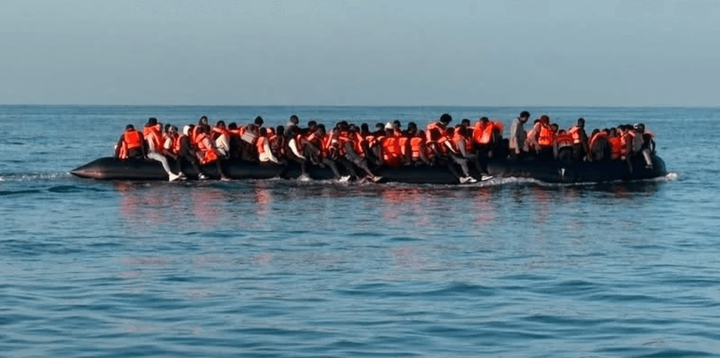
A large dinghy carrying an estimated 140 migrants has reportedly set off from a beach east of Cherbourg in France, taking a much longer and more unusual route towards the UK.
The launch happened just days after Britain and France said progress was being made in reducing the number of small boats crossing the English Channel. However, people-smuggling gangs appear to be changing their tactics by launching boats from areas much further away from the usual departure points.
The French Coastguard confirmed that the dinghy left from an area east of Cherbourg, around 200 nautical miles from the more common launch areas around Dunkirk and Calais.
French authorities believe as many as 140 people could be travelling on the overcrowded vessel.
Several French rescue boats were alerted after the dinghy was spotted in the early hours. The French border and rescue vessel Abeille Liberté was also sent to the area to help monitor the situation.
The dinghy continued travelling north towards the Isle of Wight while French authorities kept watch. As the boat moved closer to British waters, lifeboats from Yarmouth and Bembridge were sent towards the area.
A Coastguard search and rescue aircraft was also seen circling above as emergency teams prepared for the vessel’s possible arrival.
The crossing comes after several days of strong winds prevented small boats from making the journey. A slight improvement in the weather on Sunday allowed several boats to leave the French coast, although conditions in the Channel remained difficult.
GB News reported that six migrant dinghies had been launched by that point in the day, with three already reaching UK waters. The broadcaster estimated that around 300 migrants could arrive in Britain during the day if the crossings continued successfully.
Despite the drop in wind speeds, the sea remained choppy, making the journey particularly dangerous for small and heavily loaded inflatable boats.
One dinghy that departed from the Dunkirk area was reportedly forced to turn around shortly before reaching UK waters at lunchtime.
Another boat was launched from a beach near Dieppe during the early hours. Because of the longer journey involved, it was not expected to reach British waters until later in the evening if it managed to complete the crossing.
The launch from the Cherbourg area is likely to concern both British and French authorities because travelling across the Channel from so far west involves a much longer journey at sea. It could expose passengers to dangerous weather and changing sea conditions for a longer period.
A French Coastguard spokesman said authorities had received reports of a boat carrying approximately 140 migrants west of the Bay of Seine.
Several rescue vessels, patrol boats and a maritime rescue helicopter were deployed to monitor the dinghy and respond if an emergency developed.
The Abeille Liberté later joined the operation and took over some of the monitoring duties from French lifeboat crews as the dinghy continued towards Britain.
French officials said people travelling in small boats often refuse offers of assistance because they are determined to reach the UK. According to the Coastguard, some will only accept help when they believe they are facing a serious emergency.
Authorities also explained that trying to force people from an overcrowded and fragile dinghy onto a rescue vessel can create additional dangers. Because these boats are often heavily overloaded and unstable, officials said intervention has to be carefully considered to avoid causing the vessel to capsize.
The latest crossing also shows how smuggling networks may be willing to use different departure points when weather conditions, policing or enforcement make the traditional routes around Calais and Dunkirk more difficult.
If the Cherbourg boat successfully reaches UK waters, the unusually long journey could raise further questions about whether smugglers are beginning to use more distant parts of the French coastline to get around efforts aimed at stopping Channel crossings.