This brutal doctrine explains what Trump’s done to America — and what’s coming next

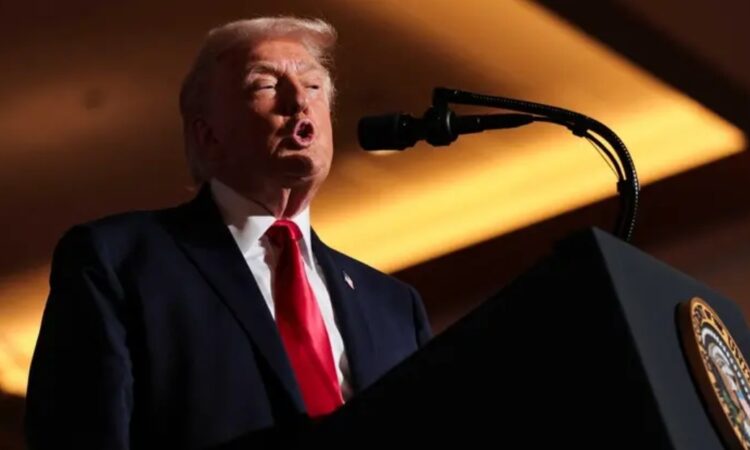
Donald Trump recently gave remarks in Pennsylvania, but the larger issue goes far beyond a single speech. According to this argument, when Trump and the people around him allegedly invaded Venezuela and captured Nicolás Maduro, they crossed a line the United States had respected for nearly a century. Instead of following international law, they openly embraced a way of thinking that mirrors how Vladimir Putin operates: power first, rules later, if at all.
There was a time when Russia genuinely seemed to be moving toward democracy. That period began under Mikhail Gorbachev and lasted for about ten years. During that time, Russia was trying to adopt ideas rooted in the European Enlightenment, such as freedom of speech, shared political power, and government accountability. Those Enlightenment ideas themselves were influenced by Indigenous forms of democracy that European settlers encountered in North America long before the United States existed.
That hopeful period ended when Vladimir Putin rose to power. Once in control, Putin systematically crushed independent institutions. He sued media companies and major law firms into financial ruin so his wealthy allies could take them over. He stacked the courts with loyalists, manipulated elections, and eventually made dissent illegal. Anyone who opposed him was branded an “enemy within” or a “domestic terrorist.” Instead of the government answering to the people, all power began flowing downward from Putin himself. Russia still holds elections, but they are mostly for show, giving the appearance of democracy while functioning as an autocracy.
Putin didn’t stop at reshaping Russia. Through an oligarch named Oleg Deripaska, he paid American political consultant Paul Manafort millions of dollars to help install a pro-Putin president, Viktor Yanukovych, in Ukraine. This was meant to pull Ukraine under Russian control, much like Russia had already done in places such as Belarus, Chechnya, Georgia, and others. When Ukrainians rejected this arrangement in 2014 and voted Yanukovych out in favor of democracy, Putin responded by invading and seizing Crimea. That invasion set the stage for Russia’s full-scale attack on Ukraine in 2022.
Out of these actions emerged what many call the “Putin Doctrine.” Under this worldview, the leader’s personal desires matter more than laws, legislatures, or public opinion. Friends and family are rewarded, enemies are punished, and corruption is treated as normal. International law is dismissed entirely. If a country has something you want, or if its politics don’t suit you, you simply take action through force, cyberwarfare, propaganda, or election interference. Social media manipulation, bots, and paid influencers become weapons just as much as tanks and missiles.
This way of thinking also assumes the world should be divided among a few powerful nations. In this vision, Russia dominates Europe and Eurasia, China controls Asia, and the United States rules the Western Hemisphere. Smaller countries’ wishes do not matter. Power alone decides outcomes.
Paul Manafort later returned to the United States and ran Trump’s 2016 presidential campaign without pay, while allegedly sharing inside political information with Russian intelligence. That information was then used to influence American voters through online propaganda and targeted messaging.
The United States has not always lived up to its ideals, but historically it at least claimed to act in defense of democracy and international norms. Even when America invaded other countries, it usually justified those actions by saying it was promoting freedom or global stability. That approach reflected Enlightenment values that shaped the country’s founding, including the belief that democracy is natural, power should be divided among branches of government, and leaders should serve the public good rather than their personal networks.
According to this critique, Trump fully adopted Putin’s worldview. Through attacks on the press, lawsuits against media outlets, aggressive executive orders, and policies labeling political opponents as potential terrorists, Trump rejected America’s traditional democratic framework. The idea that laws, institutions, and international agreements matter was replaced by the belief that whoever has the biggest military or the strongest grip on power gets to decide everything.
This approach also rejects the rules-based international order created after World War II, which has helped prevent another global conflict for more than eight decades. Instead, it normalizes the idea that capturing or overthrowing foreign leaders by force is acceptable if you can get away with it. History shows where that thinking leads. Adolf Hitler used a similar logic when he invaded neighboring countries, triggering World War II. Southern slaveholding elites followed it when they launched the Civil War. The argument here is that Trump has now brought this same logic into American policy.
America’s founders worried about demagogues, but they believed Congress and the courts would protect the nation from tyranny. They never imagined a future in which an entire political party would be overtaken by wealthy elites and led by a single strongman, nor did they foresee a Supreme Court that would grant a president near-total immunity for crimes committed in office while allowing legalized political bribery.
At this point, the claim is that the strongest remaining defenders of American democracy are the states themselves, particularly Democratic-led states. These states still have significant legal power, especially because a president cannot pardon crimes prosecuted under state law. As the federal government becomes more centralized and authoritarian, states may be the last meaningful check on abuse of power.
The situation is described as urgent. With Trump-aligned figures controlling much of one political party, exerting influence over major media, weakening the justice system, deploying federal forces domestically, and challenging voting rights, Democratic-led states are urged to coordinate and actively resist authoritarian behavior. Citizens in those states are encouraged to pressure their leaders to take action, enforce civil rights laws, protect social safety nets, and show that effective, humane governance is still possible.
Supporters of this view point to clear differences in quality of life between Democratic-led and Republican-led states. Blue states produce the majority of the nation’s economic output and tend to have higher incomes, better education levels, longer life expectancy, and stronger public health outcomes. Red states, by contrast, experience higher rates of poverty, violence, poor health, environmental damage, addiction, and dependence on federal aid. These disparities are presented as evidence that oligarch-driven governance harms ordinary people.
The United States is described as standing at a critical turning point. Without a unifying figure like Abraham Lincoln, the responsibility to defend democracy falls to citizens and state governments. Waiting for the next election may not be enough. The call here is for immediate action to uphold the rule of law, protect democratic norms, and prove that government by the people still works.
The future of the American experiment, this argument concludes, may depend on whether ordinary people demand accountability now rather than later.