
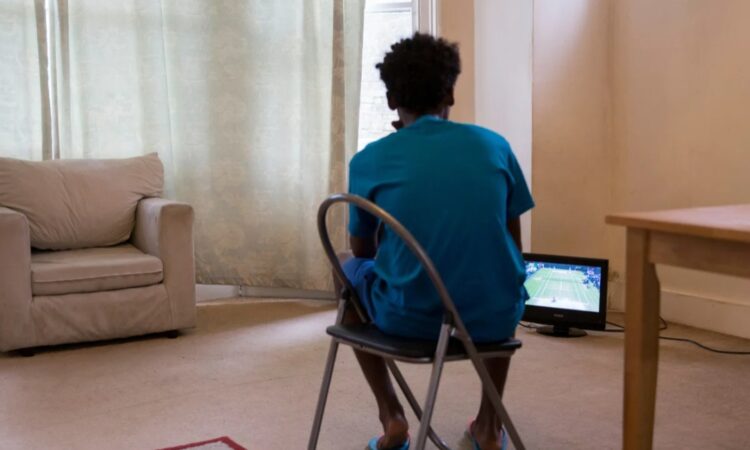
Many people think they understand what life is like for an asylum seeker in the UK, but what is often missing from that understanding is the human cost. It is not just about policies, statistics, or political arguments. It is about fear, trauma, and the long-lasting harm caused when the system gets things wrong.
I know this because I lived through it myself, and I am still living with the consequences today.
I came to the UK as a child, alone, after fleeing war in Afghanistan. I was only 13 years old. My journey was filled with violence, detention, separation from my family, and years of uncertainty. Like many others, I arrived believing Britain was a country built on justice, protection, and opportunity. That belief did not last long.
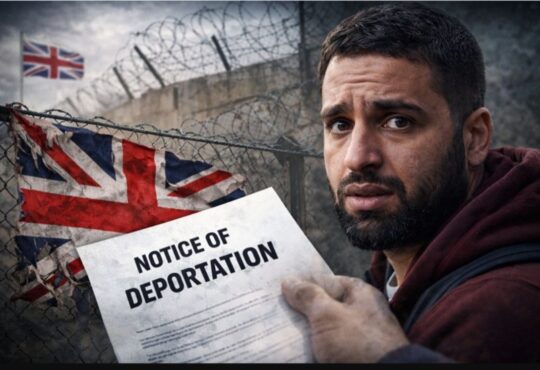
Almost immediately, my age was questioned. For nearly two years, my nationality was listed as “unknown.” I was treated as an adult, denied the protections given to children, and even threatened with deportation to a country the authorities said I was not from. It took three years just to prove my age, and five years before I was officially recognised as a refugee.
On paper, I was fed and given somewhere to sleep. But mentally, I was falling apart. This is one of the biggest misunderstandings about the asylum system. Being alive does not mean being safe. You can have a roof over your head and food to eat, and still be deeply damaged inside.
There is also a common belief that asylum seekers live comfortably, enjoying free housing or being put up in luxury hotels. That is simply not true. Asylum seekers are not allowed to work and cannot access normal benefits. They survive on about £39 a week. Hotel accommodation is not a reward; it is a sign that the system has failed. Many of these places are isolating, unsuitable, and harmful, while private companies make money from long delays that keep people stuck for years.
What people also fail to understand is what living in limbo does to a person.
You are dropped into a country you do not know, without family, without language skills, and without clear guidance on basic things like seeing a doctor, opening a bank account, learning English, or starting to rebuild your life. You are moved from place to place with little warning, constantly losing the fragile support networks you manage to form. Anxiety, depression, and trauma are not rare side effects. They are predictable outcomes.
Not long ago, I witnessed protests outside hotels housing asylum seekers. The protesters claimed they were “protecting women and children,” but in reality, they targeted anyone who looked like an asylum seeker, including me and my family. I was afraid for my children’s safety and had to leave the area.
When asylum seekers are repeatedly described as criminals, rapists, or threats by politicians or sections of the media, it fuels hatred. Crimes are committed by individuals, and when they happen, they should be dealt with firmly and fairly. But blaming entire communities is dangerous and dishonest. It puts innocent people at risk and encourages intimidation and violence.
The language used by those in power matters. When people talk about “illegal migrants,” about people having to “earn” safety, or about keeping human beings in permanent temporary conditions, it sends a clear message. It tells the public that some lives matter less than others, that they are conditional and undeserving. That message spreads quickly and has real consequences.
The result is a system that traps people in uncertainty for years, even when they cannot safely be sent back. Young men and women with skills, dreams, and ambition are left idle, isolated, and worn down. Some eventually break under the pressure. I have seen friends turn to alcohol, drugs, or crime, not because that is who they were, but because the system crushed them over time.
This does not make society safer. It makes it weaker.
The UK hosts less than one per cent of the world’s refugees. Most displaced people stay in neighbouring countries, often far poorer ones. If Britain were truly a “soft touch,” people would not be risking their lives to cross the Channel in small boats.
What has really changed over the years is not the number of refugees, but the attitude toward them. Laws and public language increasingly divide people into those seen as “deserving” and “undeserving.” Family reunion becomes harder. Support for integration is stripped away. Education and work are delayed or denied. Deterrence replaces dignity.
I was saved by kind foster parents, teachers, youth workers, and strangers. I have seen Britain at its best, and it is compassionate, fair, and decent. That Britain still exists.
But I have also seen Britain at its worst, where vulnerable people are blamed for problems they did not create, while the real issues go unaddressed. Underfunded public services, inequality, housing shortages, and a lack of political accountability would still exist even if there were no refugees at all.
As a father, a citizen, and someone who calls this country home, I want an asylum system that works properly. One that makes decisions quickly and fairly, offers safe routes, supports people to integrate, and treats human beings with dignity. Even when decisions are difficult, they can still be made humanely.
What people get wrong about the life of an asylum seeker in the UK is not just the facts. It is the damage caused when those facts are ignored, and when human lives are treated as problems instead of people.