Donald Trump Official Hit With Instant Reality Check After Blaming Biden For Trump’s Struggling Economy

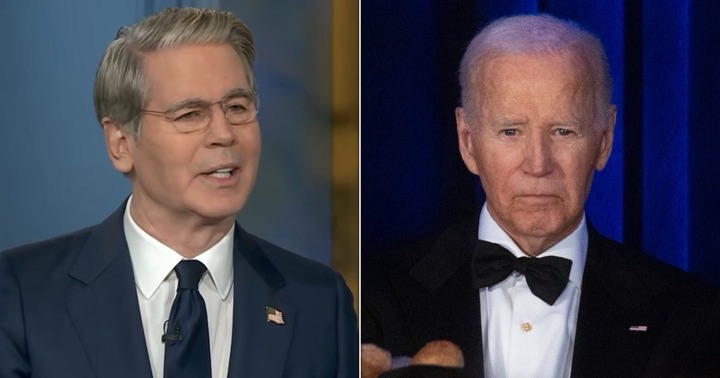
US Treasury Secretary Scott Bessent faced tough questions during a television interview after he blamed former President Joe Biden for the economic problems Americans are experiencing under President Donald Trump.
Bessent appeared on NBC’s Meet the Press on Sunday, where presenter Kristen Welker questioned him about rising prices, inflation and the Trump administration’s handling of the economy.
The interview became tense when Welker asked why the Trump administration was still pointing fingers at Biden instead of accepting responsibility for the country’s economic situation.
Welker raised concerns about the latest inflation figures, which showed that consumer prices in the United States had increased to 3.7%, the fastest rise in five months. She wanted to know whether Trump’s economic policies were making life more expensive for ordinary Americans.
However, Bessent argued that the main problem was the ongoing conflict with Iran, which he said had pushed up energy prices.
He explained that inflation had been improving in several areas before the latest increase. According to him, prescription drug prices had fallen, rents were decreasing and wages were improving.
Bessent insisted that the rise in inflation was mainly caused by higher energy costs. He expressed confidence that prices would eventually come down once the situation involving Iran improved.
But Welker challenged his explanation, pointing out that core inflation does not include food and energy prices. She also reminded him that petrol prices had increased by 44% since the war with Iran began.
The presenter then asked what message Bessent had for Americans who were struggling to pay their bills and wanted the government to improve the economy.
Instead of focusing entirely on the current administration, Bessent brought up the economic situation during Biden’s presidency.
He claimed that Americans suffered badly under Biden because prices increased by 21.5%, while wages rose by only around 17%.
Bessent argued that things were beginning to improve under Trump, saying that workers had experienced a 1.5% increase in wages after accounting for inflation.
Although he admitted that the government was not satisfied with the progress, he insisted that Trump’s economic policies would continue to help American workers earn more money.
He also repeated his belief that energy prices would eventually fall once the conflict with Iran settled down.
However, Welker was not satisfied with his explanation.
She reminded Bessent that Trump had already been in office for 636 days and questioned why his administration was still blaming the previous president for the country’s economic problems.
Welker pointed out that inflation stood at 3% when Trump returned to the White House but had now increased to 3.7%.
She then directly asked when the Trump administration would stop blaming Biden and accept that the current state of the economy was its responsibility.
Bessent responded by saying that the administration was prepared to take ownership of the economy.
He defended Trump’s record, claiming that the United States had created one million private-sector jobs since the beginning of the year.
He also said that more Americans were working than ever before and that the total wealth of American households had reached a record high.
According to Bessent, these achievements showed that the administration’s economic policies were producing positive results despite the challenges caused by rising energy prices.
He continued to argue that the conflict with Iran was a major reason for the recent increase in living costs.
But Welker challenged him again, pointing out that Trump himself had already described the current economy as his own.
She then asked whether Americans could expect petrol prices to fall before the end of the year.
Bessent did not give a clear promise. Instead, he said the situation would depend on what happened with the conflict involving Iran.
His answer suggested that the administration could not guarantee when motorists would begin seeing lower prices at petrol stations.
The exchange highlighted the growing pressure on Trump’s administration as Americans continue to worry about inflation, fuel prices and the cost of everyday necessities.
While Bessent defended the government’s economic record and blamed external events for the latest price increases, Welker repeatedly pressed him on why the administration continued to refer to Biden’s presidency when explaining current economic difficulties.
The interview also showed how the state of the economy remains an important political issue, particularly for families struggling with higher living costs.
For many Americans, the biggest concern is not which president should receive the blame, but when they will begin to see meaningful improvements in their household finances.