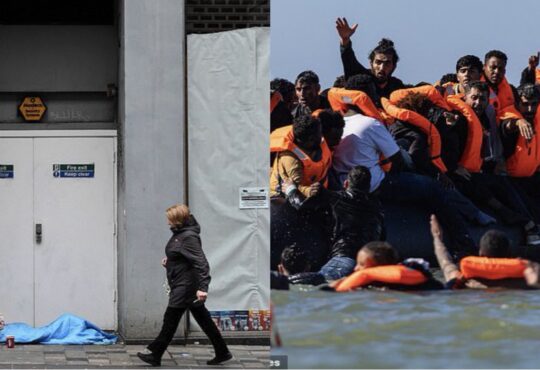
Man Who Came to UK, Later Transitioned to a Woman and Was Granted Asylum, Now Arrested After Home Office Uncovers What She Had Been Secretly Doing to Help Asylum Seekers Remain in the Country

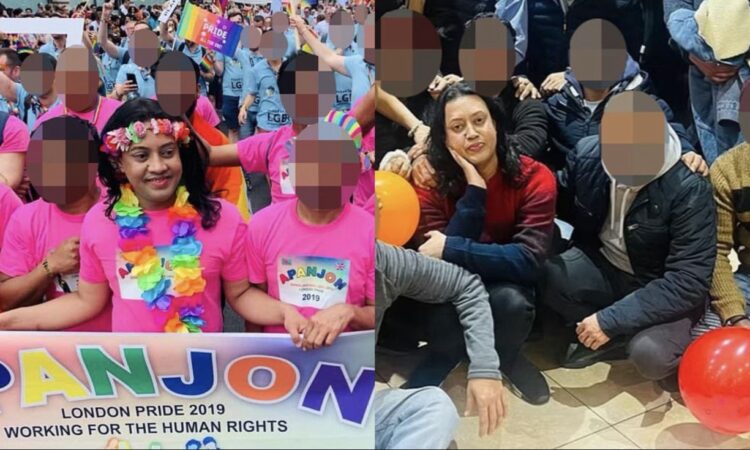
A transgender woman who came to Britain as an asylum seeker has been arrested after authorities accused the LGBTQ organisation she founded of helping migrants make false claims about their sexuality to remain in the UK.
Sajjad Miah, 42, originally came from Bangladesh and was granted asylum in Britain in 2013 after claiming she would face persecution in her home country because of her sexuality.
She arrived in the UK as a 26-year-old man but later transitioned to a woman. After receiving permission to stay in Britain, she established an organisation called Apanjon in east London to support LGBTQ people, particularly those from Bangladesh.
However, the organisation is now at the centre of a major immigration fraud investigation.
According to reports, Home Office investigators suspect that some people connected to the organisation may have been helping heterosexual migrants pretend to be gay so they could claim asylum and avoid being sent back to their home countries.
Officials believe some migrants may have paid as much as £4,500 to obtain documents and other materials intended to make their asylum claims appear genuine.
These allegedly included photographs taken at LGBTQ events, letters of support and other documents suggesting that the applicants were gay and would face danger if they returned home.
Investigators are now reviewing more than 100 asylum applications linked to the organisation to determine whether false information was used to secure permission to remain in Britain.
The investigation led to a series of early morning raids in east London, where immigration officers searched properties connected to the organisation.
Officers reportedly arrived wearing protective equipment and entered Ms Miah’s home, where they seized mobile phones, jewellery and thousands of pounds in cash.
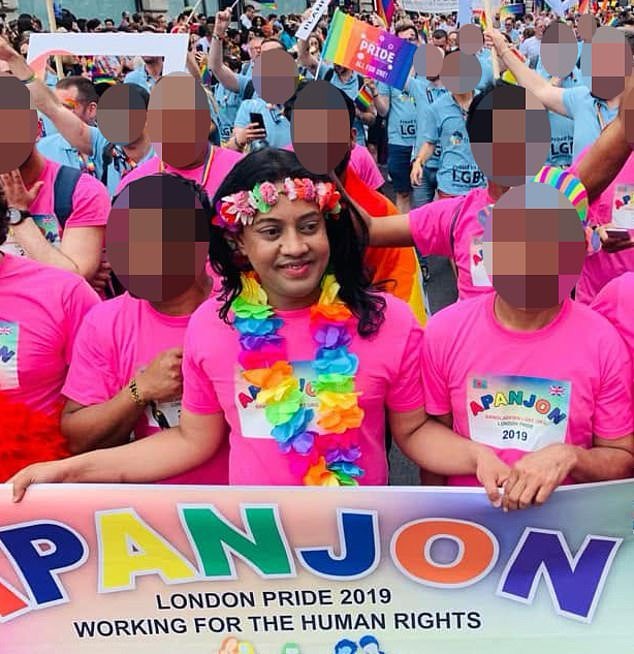
Ms Miah was arrested on suspicion of fraud and immigration offences. Another person believed to be connected to Apanjon was also arrested on similar suspicions, while a third individual was detained on suspicion of being in the country illegally.
The organisation’s office in Whitechapel was also searched as part of the investigation.
People living nearby described the operation as dramatic, with several officers arriving early in the morning while families were preparing their children for school.
One resident said officers could be heard shouting for someone to open the door before entering the building.
Following her release on bail, Ms Miah spoke to the Daily Mail and strongly denied the accusations against her and her organisation.
She explained that she had personally experienced difficulties because of her sexuality while living in Bangladesh and had established Apanjon to help others facing similar problems.
According to her, the organisation only provides letters of support to people after spending several months observing them and checking whether their claims are genuine.
She insisted that Apanjon has never knowingly provided false documents or helped anyone lie about their sexuality to obtain asylum.
Ms Miah also rejected suggestions that the cash and jewellery found during the police raid were connected to illegal activities.
She said the money was intended to pay her rent, while the jewellery belonged to her sister.
She further claimed that the investigation had exposed her to threats from people who disagreed with her work supporting LGBTQ individuals.
According to Ms Miah, she has become afraid to return home because of threats against her life.
Despite these denials, immigration officials are continuing to examine the organisation’s activities.
One major concern is that some asylum seekers allegedly began claiming to be gay only after their earlier applications had been rejected.
Investigators suspect that certain applicants initially sought asylum for political reasons but later changed their claims to say they faced persecution because of their sexuality.
In one case highlighted in the report, a man reportedly raised his sexuality as a reason for seeking protection nine years after making his original asylum application.
Officials are examining whether organisations may have provided supporting evidence for such claims without properly checking whether they were genuine.
The report also stated that immigration judges had previously questioned the reliability of some evidence submitted by Apanjon.
In certain cases, photographs presented as proof of participation in LGBTQ activities were reportedly considered staged or unreliable.
However, the fact that someone changes the grounds of an asylum claim does not automatically mean the new claim is false. Each application must be assessed according to its individual circumstances and supporting evidence.
Apanjon describes itself as an organisation that campaigns for equality, justice and the protection of LGBTQ people from Bangladesh.
Its activities reportedly include community meetings, social events, support for people who want to discuss their sexuality and assistance in accessing legal advice.
The organisation also says it works with solicitors and barristers to help members understand their rights under British law.
But investigators are now trying to establish whether some of these services were allegedly used to support dishonest asylum applications.
The allegations have also raised concerns among other LGBTQ organisations that work with people genuinely escaping persecution.
Ejel Khan, founder of the Muslim LGBT Network, told the Daily Mail that he had previously been approached by people offering money in exchange for letters claiming they were gay.
He said he refused such requests because he believed the individuals were attempting to misuse the asylum system.
According to Khan, dishonest applications can damage the credibility of genuine refugees who need protection because of their sexuality.
The wider issue has attracted attention because British law allows people to seek asylum if they can demonstrate that returning to their home country would expose them to persecution because of their sexual orientation.
In countries where same-sex relationships are criminalised or LGBTQ people face serious threats, individuals may qualify for refugee protection.
Government figures cited in the report show that 2,133 asylum seekers whose claims involved sexual orientation were granted protection in Britain in 2023.
This represented an increase from 762 in 2022 and 677 in 2021.
The figures do not mean that these applications were fraudulent. They show the number of successful claims in which sexual orientation formed part of the reason for seeking asylum.
Among the countries mentioned in the 2023 figures were Pakistan, Bangladesh, Nigeria and India.
The issue has become particularly sensitive because immigration authorities must distinguish between people genuinely facing persecution and those suspected of deliberately providing false information.
British courts have previously ruled that someone should not be expected to hide their sexuality simply to avoid persecution in another country.
This means that people who genuinely face danger because of their sexual orientation may be entitled to protection under refugee law.
At the same time, deliberately creating false evidence or lying to immigration officials can lead to serious legal consequences.
The report also highlighted several other immigration cases in which individuals facing removal from Britain had relied on claims about their sexuality.
One involved a Jamaican man who had been convicted of serious sexual offences but later successfully challenged his deportation after arguing that he would face persecution because he was bisexual.
Another involved a Cameroonian man who had received asylum after claiming to be gay, despite having a wife and child in his home country.
The man maintained that his marriage did not mean his claim about his sexuality was false.
In a separate case, an Egyptian man convicted of raping a 14-year-old girl unsuccessfully attempted to prevent his deportation by claiming he was bisexual.
An immigration judge rejected his appeal and concluded that removing him from Britain remained in the public interest.
These cases have added to the wider debate about how immigration authorities examine asylum applications and what evidence should be required.
Home Secretary Shabana Mahmood has warned that people who deliberately invent stories of persecution are abusing a system intended to protect genuine victims.
She said those who profit from immigration fraud could face prosecution and have money obtained through illegal activities taken away.
She also warned that individuals found to have deliberately deceived immigration authorities could have their claims rejected and face removal from Britain.
Under British law, a conviction for certain asylum-related fraud offences can carry a maximum prison sentence of ten years.
For now, the investigation involving Ms Miah and Apanjon remains ongoing, and the allegations have not been proven in court.
Ms Miah continues to deny wrongdoing and maintains that her organisation exists to support genuine LGBTQ asylum seekers.
The Home Office is expected to examine the applications linked to the group to determine whether any individuals submitted false evidence or obtained immigration protection dishonestly.
The outcome could have serious consequences for anyone found to have committed fraud, while also raising further questions about how the UK can protect genuine refugees without allowing its asylum system to be exploited.