London Mayor Sadiq Khan Convicted and Fined After He Was Taken to Court Over Something He Says He Did Not Do

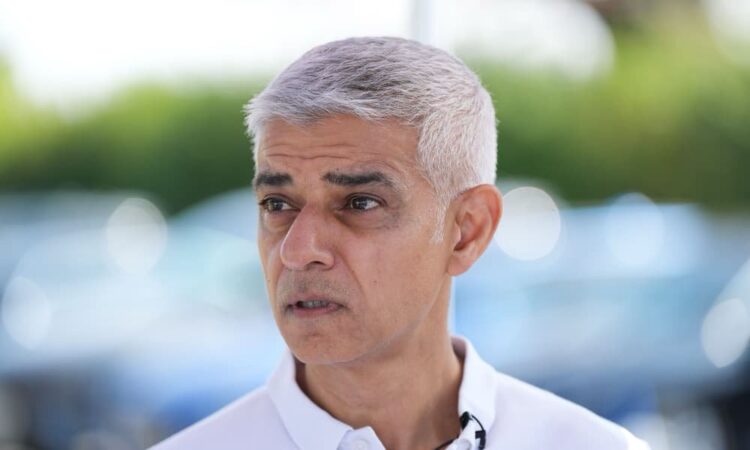
London Mayor Lord Sadiq Khan has been convicted and fined over claims that a 24-year-old Nissan Micra linked to his name was not properly taxed. However, City Hall says the car does not belong to him, raising questions about whether he may have been wrongly convicted.
The 55-year-old Labour politician was found guilty last month of keeping an untaxed vehicle. The case was brought against him by the Driver and Vehicle Licensing Agency (DVLA).
The case was handled through the Single Justice Procedure, a system used to deal with less serious offences without a normal open court hearing. A magistrate considered the case privately in Herefordshire, and Lord Khan was convicted without being present.
He was ordered to pay a £220 fine, £85 in costs and £35.84 for the unpaid vehicle tax. This brought the total amount he was ordered to pay to £340.84.
But the case has taken an unusual turn because City Hall officials say Lord Khan does not own the Nissan Micra involved. They also say the vehicle does not belong to Transport for London (TfL).
This has raised the possibility that someone may have wrongly registered the vehicle using the Mayor’s details.
The situation is particularly notable because of Lord Khan’s controversial expansion of London’s Ultra Low Emission Zone, known as ULEZ. The scheme was expanded across all London boroughs and requires drivers of vehicles that do not meet the required emissions standards to pay a daily charge.
The expansion led to strong opposition from some motorists. At the time, there were reports of people saying they planned to register their vehicles using the Mayor’s name in an attempt to make him responsible for charges.
After the Press Association brought Lord Khan’s conviction to the attention of the DVLA on Tuesday, the agency confirmed that it was reviewing the case and looking into how the prosecution happened.
Another strange detail has also emerged. Court documents reportedly show that letters from the DVLA about the Nissan Micra were not sent directly to the Mayor or to the correct TfL offices.
Instead, the letters were reportedly addressed to another building in Endeavour Square in Stratford, where one of celebrity chef Gordon Ramsay’s restaurants is located.
TfL has offices on the ninth floor of 5 Endeavour Square. However, the DVLA correspondence was reportedly sent to 9 Endeavour Square, which is around a two-minute walk away. Gordon Ramsay’s Bread Street Kitchen, Bar & Rooftop operates in that building.
This could help explain why the letters apparently went unanswered and why Lord Khan did not enter a plea before the case was decided.
The Nissan Micra involved in the case was first registered in 2002. According to court records, its annual vehicle tax expired in September last year.
The DVLA claimed Lord Khan was officially recorded as the keeper of the blue Nissan Micra when it was discovered to be untaxed on January 24. The agency told the court that the Mayor’s name and date of birth were connected to the vehicle in government records.
A letter was then reportedly sent in January asking for confirmation about who owned or kept the vehicle. When no response was received, the DVLA moved ahead with a criminal prosecution.
Magistrate Surinder Gidda convicted Lord Khan at Herefordshire Magistrates’ Court on August 18 after no plea was entered.
A notice of the conviction was also reportedly sent to the same address connected to the Gordon Ramsay restaurant. It ordered Lord Khan to pay the £340.84 bill within 28 days and warned that failure to pay could lead to further action, including increased fines, enforcement by bailiffs or potentially a warrant requiring him to attend court.
The case could now have to be reopened.
People who are convicted without knowing that a criminal case was taking place can ask for the conviction to be reconsidered. This can involve appearing before a court and making a statutory declaration explaining that they were unaware of the proceedings.
Lord Khan could argue that he did not know about the case because the letters were sent to the wrong address.
If the case is reopened and it is established that the Nissan Micra does not belong to him, the DVLA could withdraw the prosecution. Lord Khan could also enter a not guilty plea and challenge the case.
The DVLA itself could also ask the court to reopen the matter after completing its investigation.
The case has also brought fresh attention to the Single Justice Procedure.
The system was introduced in 2015 as a cheaper and quicker way of dealing with less serious criminal offences. Instead of a traditional public hearing, one magistrate can consider a case privately using written information.
Critics have described the system as “conveyor belt justice” because magistrates can deal with large numbers of cases in a single day, sometimes making decisions very quickly.
The system has faced growing criticism over previous mistakes. In 2024, around 59,000 train fare evasion convictions had to be overturned after they were found to have been unlawfully handled. There have also been concerns about children and vulnerable or elderly people being convicted through the system.
Lord Khan’s case could now add to those concerns, particularly if it turns out that he was prosecuted over a car he never owned.
Lord Khan, who became Baron Khan of Tooting after joining the House of Lords in July, may now have to attend court personally if steps are taken to overturn the conviction.
For now, the DVLA is reviewing what happened and investigating how a Nissan Micra that City Hall says has nothing to do with Lord Khan came to be officially linked to his name.