Donald Trump has just received the nuclear codes to destroy Sadiq Khan’s record. Revenge is sweet – Lee Cohen

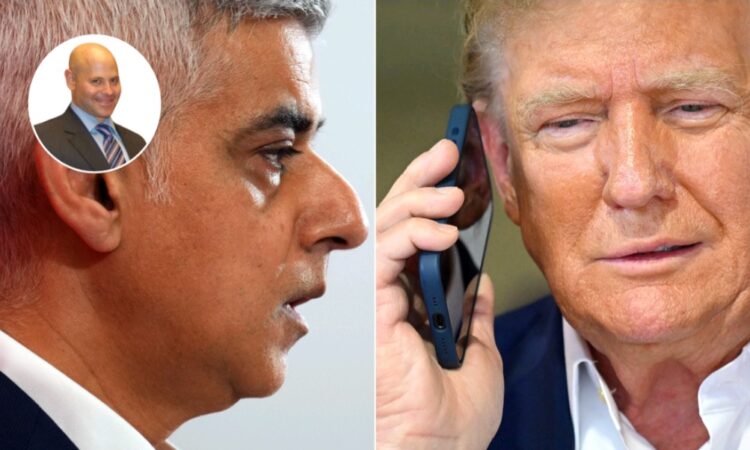
As an American who deeply values the long history and shared traditions between the United States and Britain, it genuinely angers me to watch what I believe is happening to London under Sadiq Khan. From where I stand across the Atlantic, it looks like one of the greatest cities in the world is being slowly mismanaged and pushed in the wrong direction.
I openly support Donald Trump and what I see as strong, patriotic leadership on both sides of the ocean. Over the years, I’ve watched with disbelief as Khan, whom I view as an arrogant Labour insider, has overseen nearly a decade of decline in London. Crime feels more visible, taxes feel heavier, and the city’s identity seems increasingly lost in political slogans rather than real solutions.
In a December 2025 interview with the Financial Times, Khan claimed that Trump criticises London because he is “jealous” of the city’s diversity, liberal values, and multicultural success. That claim doesn’t ring true to me at all. Jealousy is the last emotion Trump would feel toward a city struggling with violence, social tension, and growing insecurity. To me, Khan’s comments sound less like confidence and more like an attempt to distract from his own failures as mayor.
Rather than addressing London’s real problems, Khan appears obsessed with attacking Trump and projecting his own frustrations onto him. Trump called Khan a “terrible mayor” years ago, and with every new issue London faces, that criticism feels increasingly justified. Khan talks as if London is a perfect counterexample to Trump’s ideas, claiming it is safer than American cities and so successful that Trump must envy it. That narrative feels disconnected from reality.
Under Trump’s leadership, many Americans felt a renewed sense of safety, economic strength, and national pride after years of what they saw as weak and confused governance. In contrast, Khan’s London appears to represent the opposite approach: softer policing, high taxes, mass migration without clear control, and endless moral posturing that often seems to ignore the consequences on everyday people.
Knife crime has remained a serious stain on London throughout Khan’s time in office. While there have been fluctuations and some recent improvements, the overall picture is still worrying. Gangs control certain areas, phone theft is widespread, and violent robberies continue to affect ordinary residents. London consistently ranks among the worst areas in England and Wales for knife-related offences, which should be unacceptable for a global capital.
Even though homicide numbers dipped in 2025, stabbings involving teenagers and street-level violence remain far too common. To many observers, this suggests that the core problems have not been solved. Khan often frames violence as a “public health issue,” but critics argue that this language avoids accountability and weakens law enforcement. His policing priorities and tolerance of extreme rhetoric are seen by many as emboldening criminals rather than stopping them.
Trump dealt with similar crime issues in the U.S. through strict enforcement and clear consequences. From this perspective, Khan looks like the British version of failed progressive leadership — moralising endlessly while results continue to disappoint.
Then there’s the financial pressure placed on ordinary Londoners. The expansion of ULEZ charges, with £12.50 daily fees, has hit working-class families and small businesses hardest. Many see it as an unfair punishment rather than a meaningful environmental solution, especially when the mayor himself travels freely and lectures others about climate responsibility. On top of that, congestion charges rose to £18 in early 2026, and enforcement has become increasingly aggressive, with vehicles seized from those who fall behind. To critics, it feels like harsh taxation disguised as green virtue.
Khan often claims that London’s diversity is its greatest strength. But opponents argue that this rhetoric hides deeper issues, including uncontrolled immigration, frequent angry demonstrations, and long-ignored scandals involving grooming gangs. Rising antisemitic incidents in 2025 — among the worst seen in years — have left many Jewish communities feeling unsafe, raising serious questions about how well multicultural harmony is really being protected.
Khan’s public praise for radical political figures abroad only fuels concerns about his priorities. To critics, these gestures suggest ideological loyalty over practical leadership and a failure to stand firmly against extremism and hatred.
From my viewpoint as an American observer, I believe many ordinary Britons quietly feel the same frustration. They see a mayor who seems dismissive of Britain’s history, eager to divide rather than unite, and openly hostile toward leaders who prioritise national interest and public order.
London deserves leadership that restores pride, safety, and confidence, not constant excuses and political grandstanding. Trump feels no envy toward what London has become under Khan. What he feels — and what I feel too — is disappointment and anger at how a once-great city has been allowed to drift so far from what made it special.