
On Christmas Day, Russia sent a clear and deliberate signal to the West by flying its powerful Tu-95MS strategic bombers for more than seven hours over international waters.
The long flight took place over the Norwegian Sea, an area close to northern Britain, and was widely seen as an attempt to provoke NATO during a symbolic time of the year.
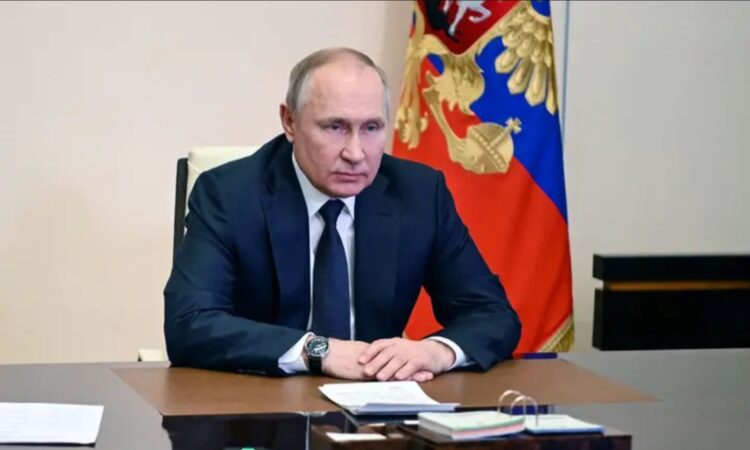
The decision came directly from Russian President Vladimir Putin, who ordered the deployment of the nuclear-capable aircraft, often referred to as “Bears.” Because of the potential threat, NATO was forced to scramble fighter jets to closely monitor and track the bombers as they moved through the region. Russian Su-33 fighter jets were also seen escorting the bombers during parts of the journey, adding to the tension.
Russia’s defence ministry later confirmed the flight, saying the bombers had carried out a “scheduled” mission over neutral waters in the Barents Sea and Norwegian Sea, and that the operation lasted more than seven hours. The statement also admitted that foreign fighter jets shadowed the aircraft at certain points, though it avoided naming which NATO countries were involved.
The Norwegian Sea lies northeast of Scotland, between Norway and Iceland, making it a sensitive area for Western defence forces. The Tu-95 bombers themselves are relics of the Cold War era, first flown in the 1950s, yet they remain a central part of Russia’s nuclear strike capability.
Despite their age, they are still actively used and are instantly recognisable due to their extreme noise. In fact, they are the only propeller-driven strategic bombers still in service anywhere in the world.
These same aircraft have also been used in Russia’s war against Ukraine, where they have launched long-range missile attacks on cities and critical infrastructure. In recent weeks, Ukraine has suffered some of the heaviest bombardments of the conflict.
One major assault involved 51 missiles and more than 650 attack drones, hitting civilian targets and power facilities. The strikes left large parts of the country without electricity and heating during freezing winter conditions.
A key thermal power station in Kryvyi Rih, the hometown of Ukrainian President Volodymyr Zelensky, was directly hit during the attacks. Ukrainian air defences managed to shoot down hundreds of drones and dozens of missiles, but the sheer scale of the assault overwhelmed systems and caused serious damage.
Because Russian strategic bombers were involved in launching those attacks, neighbouring countries were put on high alert. Poland, a NATO member bordering Ukraine, deployed its own fighter jets to protect its airspace.
The Polish Armed Forces confirmed that military aircraft were activated in response to increased Russian air activity near the region.
In a statement, Polish officials said that due to Russian long-range aviation conducting strikes on Ukraine, Polish military aviation had begun operating actively within national airspace, with all necessary forces placed on standby.
Taken together, the Christmas Day bomber flight and the ongoing missile attacks underline growing tensions between Russia and the West.
While Moscow describes such missions as routine, the timing, location, and scale of these operations suggest a clear message of intimidation at a moment traditionally associated with peace and calm.