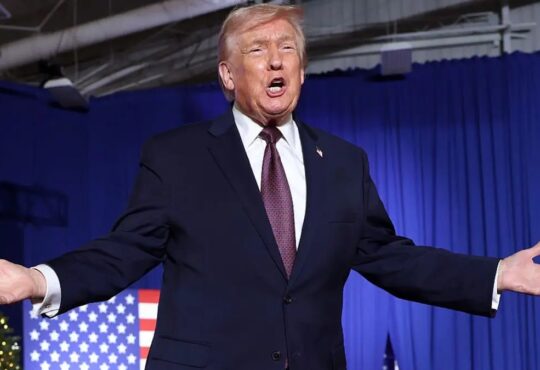

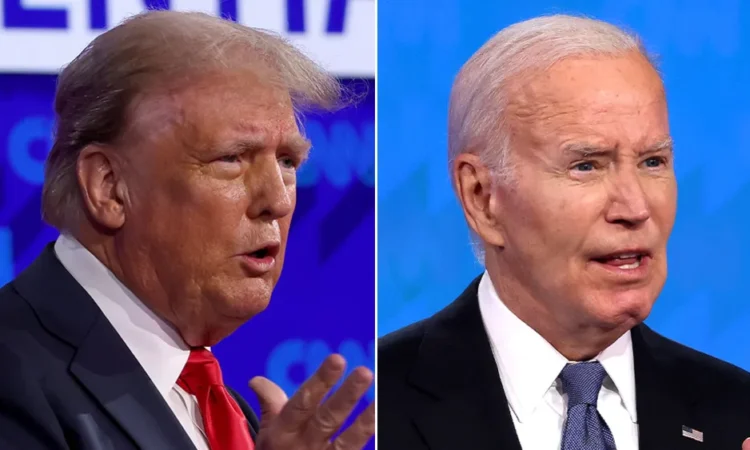
President Donald Trump sent shockwaves through Washington on Wednesday when he announced full pardons for Texas Congressman Henry Cuellar and his wife, Imelda. With one decision, he completely erased the federal bribery and conspiracy charges that had been hanging over the couple for more than a year. The move didn’t just close a legal case — it sparked a political storm, because Trump used the moment to accuse Joe Biden’s administration of abusing power and targeting political opponents.
Cuellar, a Democrat who has served Texas’s 28th District for nearly two decades, had been accused of participating in an international bribery scheme. It was a serious case that had caused distrust within his own party and raised doubts about his future. But with Trump’s unexpected intervention, everything changed in an instant. Trump didn’t just issue a pardon quietly; he used the moment to push a much bigger message. On Truth Social, he claimed the case was not built on real evidence but was a deliberate political attack launched by Biden’s Justice Department because Cuellar disagreed with them on immigration matters.
Trump argued that the Biden administration had spent years using the legal system to punish people who challenged them. He pointed directly to Cuellar as an example of this, saying Biden had tried to remove a member of his own party for speaking out about border security. Trump painted Biden as someone who weaponized the DOJ to go after critics, even those from the same political side, as long as they did not support his policies.
He went further, insisting that not only was Cuellar unfairly targeted, but his wife Imelda was dragged into the ordeal simply for standing with her husband. According to Trump, both of them were victims of a political system that had turned corrupt under Biden. Cuellar had always maintained that he was innocent, but Trump took it upon himself to declare that the entire prosecution was a “nightmare” created by the previous administration.
In typical Trump fashion, he added dramatic flair, saying, “Henry, I don’t know you, but you can sleep well tonight — your nightmare is finally over!” It was a line clearly meant to draw attention and position Trump as the hero of the moment.
The political impact of the pardon is complicated. Cuellar is a centrist Democrat and has often clashed with the progressive wing of his own party. He has taken tougher stances on border issues than many other Democrats, creating tension between him and the left side of the party. When he was indicted, some Democrats quietly distanced themselves, unsure how to defend him without hurting their own political image. Now, the charges have been wiped out by a president from the opposite party — and Trump openly says he did it to expose Biden and humiliate him.
This puts Democrats in an awkward position. Do they defend Cuellar more strongly now that he’s no longer facing charges? Or do they worry about appearing aligned with a move Trump made for his own political reasons? The sudden end of the case leaves many unanswered questions about what this means for the party, especially with an election cycle approaching.
As for the Justice Department, it stayed silent on Wednesday, offering no immediate response. Cuellar himself did not issue a statement either, leaving Washington buzzing with speculation. Some saw Trump’s move as an attempt to appeal to more conservative Democrats or border-state voters. Others viewed it as another example of Trump using the powers of the presidency to settle political scores in public.
Whether one agrees with Trump’s reasoning or not, the impact was clear: he reframed a federal prosecution as a story of political revenge, portraying himself as someone who corrects the actions of his predecessors. The entire situation shifted from a courtroom drama into a loud and messy political fight — one that is likely to spark debates for days, if not weeks, across both parties.